
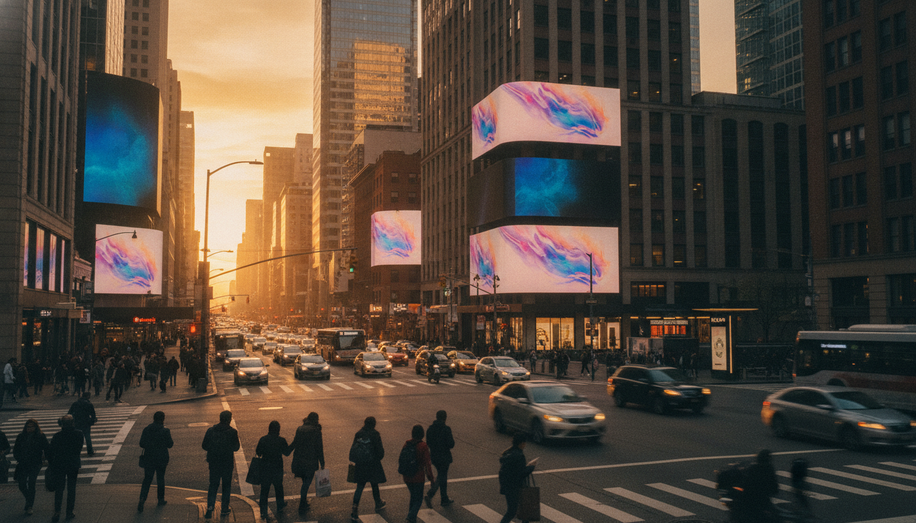

Modern consumer journeys are fluid, requiring brands to coordinate touchpoints across both digital devices and physical spaces. For programmatic media buyers, integrating digital out-of-home (DOOH) into broader multi-channel strategies represents a powerful way to reinforce messaging, boost audience reach, and trigger conversions. Managing these campaigns via a demand-side platform with enterprise-grade DOOH capabilities allows advertisers to harmonize their digital billboards with mobile retargeting, connected TV, and web display ads from a single operational dashboard.
Google Display & Video 360
As Google’s flagship demand-side platform, Google Display & Video 360 (DV360) lets enterprise advertisers buy digital out-of-home (DOOH) inventory programmatically alongside Connected TV (CTV), display, audio, and search campaigns. The platform integrates directly with major SSPs like Vistar Media, Hivestack, Place Exchange, and VIOOH, granting media buyers instant access to premium global screens owned by JCDecaux, Clear Channel, and Lamar. Buyers benefit from unified frequency capping, consolidated reporting, and the ability to leverage Google’s first-party audience signals to target screens near high-indexing consumer footprints. It is highly suited for large agencies and global brands already embedded in the Google Marketing Platform ecosystem who want to centralize their entire multi-channel ad spend without adding a separate, niche platform to their tech stack.
The Trade Desk
Operating as a strictly independent buy-side platform for the open internet, The Trade Desk provides advanced omnichannel capabilities that seamlessly connect digital out-of-home screens to display, mobile, and video budgets. To solve the unique challenge of measuring outdoor ads, the platform features its proprietary Audience Reach Percentage (ARP) metric, which dynamically scores and shifts budget to specific screens showing the highest density of the target audience at any given hour. Marketers can utilize robust identity solutions like Unified ID 2.0 (UID2) to align real-world screen exposure with digital retargeting efforts on mobile devices and connected TVs. While it provides unparalleled data transparency, inventory access, and global scale, it typically requires a substantial minimum spend commitment, making it best suited for enterprise-tier agencies and brands with dedicated programmatic trading desks.
Yahoo DSP
Built on a foundation of diverse native inventory and deep consumer relationships, Yahoo DSP offers a robust multi-channel platform that elevates digital out-of-home advertising with precise data-driven targeting. The platform includes a specialized, interactive DOOH Planner that maps global placements across all major supply-side platforms and venue types, allowing media buyers to filter screens based on audience demographics, location, and real-time interest signals. Through its strategic integration with Adsquare, advertisers can leverage advanced audience scoring and footfall measurement to evaluate physical store visits driven directly by their active outdoor screens. For marketing teams who heavily utilize Yahoo’s exclusive identity data and premium publisher-direct integrations, this platform serves as an efficient vehicle to bridge the digital and physical customer journeys.
StackAdapt
Known for its user-friendly interface and rapid deployment features, StackAdapt is a multi-channel demand-side platform that has rapidly expanded its programmatic DOOH capabilities through integrations with top-tier SSPs like Broadsign’s Place Exchange. The platform excels at guiding advertisers through a unified planning workflow where DOOH can be launched in tandem with native, display, video, audio, and CTV ads. StackAdapt offers advanced real-time reporting features, such as geographical heatmaps and screen-level performance metrics, which demystify the physical world and make outdoor campaign optimization as straightforward as running digital web ads. This platform is a highly functional fit for mid-market agencies and brands looking for an accessible, self-serve omnichannel DSP with zero minimum budget requirements and excellent technical support.
Blindspot
While most options on this list are broad omnichannel heavyweights, Blindspot is a specialized programmatic demand platform designed to seamlessly plug digital out-of-home into multi-channel campaigns without the complexity of a traditional DSP seat. The platform aggregates over 2.5 million digital screens across more than 50 countries on a single map, allowing buyers to book exact billboards by the hour and pay per play, rather than committing to rigid 24/7 contracts. It supports context-aware dynamic creatives that automatically swap based on real-time API triggers like weather, traffic, or live event scores, and provides robust attribution tracking for web lift, foot traffic, sign-ups, and offline sales. This makes it an excellent, low-barrier fit for agile growth brands and independent agencies that want to launch campaigns in about 15 minutes, though it may not be the primary choice for massive enterprises that require a single bespoke DSP to house all of their non-DOOH programmatic media.
Final Thoughts
Integrating digital out-of-home into an omnichannel programmatic framework is no longer an experimental tactic; it is now a baseline expectation for high-performing modern campaigns. Whether media buyers choose a comprehensive, multi-channel enterprise DSP or a specialized, self-serve DOOH execution platform, the key to success lies in orchestrating consistent messaging across both personal screens and the public environment. By breaking down the silos between offline and online channels, brands can maximize their media budgets and drive measurable lift across every stage of the funnel.
Frequently Asked Questions
How does retargeting work after someone is exposed to a DOOH ad?
To coordinate cross-channel campaigns, programmatic platforms leverage mobile advertising IDs (MAIDs) associated with devices located near a digital billboard during its active ad play. Once these anonymized device IDs are captured in a privacy-compliant manner, they are mapped to the advertiser’s omnichannel DSP, enabling sequential retargeting via mobile web, in-app, or Connected TV ads. This bridges the gap between public awareness and private, lower-funnel action.
What are the main differences between a dedicated DOOH platform and an omnichannel DSP?
An omnichannel DSP allows advertisers to manage all programmatic media, including web display, video, social, and TV, under a unified budget and workflow, which makes cross-channel frequency capping much simpler. In contrast, dedicated DOOH platforms specialize strictly in physical screen execution, offering more granular controls such as hourly scheduling, hyper-local venue targeting, and immediate weather or traffic creative triggers. Choosing between them depends on whether an advertiser prioritizes workflow consolidation or execution-level detail.
How do programmatic platforms measure the real-world impact of DOOH campaigns?
Modern measurement capabilities go far beyond estimating simple impressions, relying instead on location data and digital tracking to prove return on investment. Platforms use mobile-location data to track foot traffic lift to brick-and-mortar stores, matching exposed devices against a control group to isolate the exact impact of the billboard. For digital conversions, platforms can tie exposure time and location to web lift, mobile app sign-ups, and online sales through specialized attribution windows.