
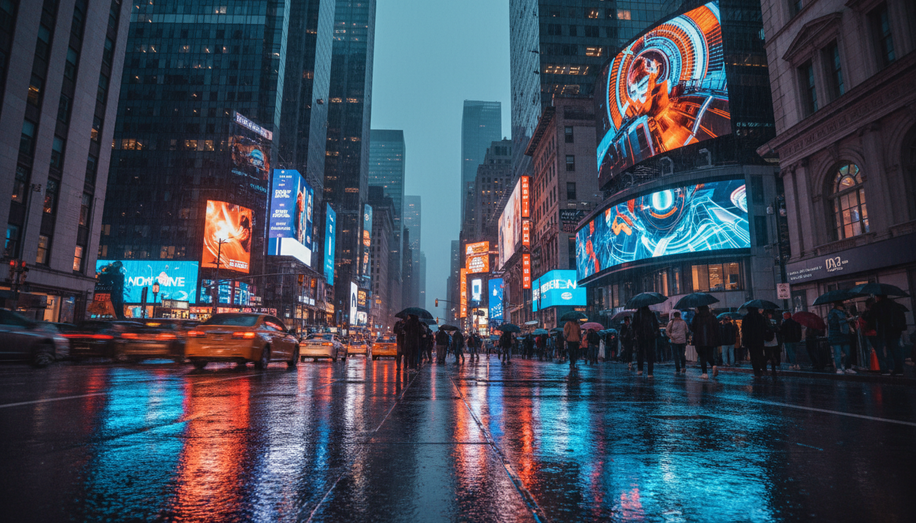

In an era when attention is fragmented and consumer journeys unfold across dozens of touchpoints, out-of-home advertising has taken on a new creative role: not just delivering messages, but sustaining stories. The billboard, bus shelter, transit platform, and digital screen are no longer isolated canvases. Used strategically, they can function as chapters in a larger brand narrative, unfolding over time in public view and rewarding audiences who encounter the campaign repeatedly.
That shift has changed how marketers think about OOH. Traditionally, the medium was judged on reach, frequency, and visual impact. Those fundamentals still matter, but the most effective campaigns now do something more ambitious. They build continuity. They invite curiosity. They create a sense that the brand is not simply broadcasting a slogan, but revealing a story piece by piece. In the right hands, a series of placements can turn the city into a stage and the audience into witnesses to an unfolding idea.
The power of this approach lies in repetition with progression. A one-off poster can arrest attention, but a campaign that evolves across multiple sites and moments can build memory. Each execution becomes an installment, whether it introduces a character, establishes a problem, teases a solution, or reveals a payoff. This sequential structure is especially effective in urban environments, where commuters and pedestrians move through the same spaces daily. Familiarity breeds anticipation. A message seen once may be noticed; a message seen across a week, a month, or a season begins to feel like part of the landscape.
Long-running campaigns also allow brands to create emotional texture, something OOH is increasingly well suited to do. Because the medium is public and shared, it lends itself to stories about collective experience: commuting, weather, local rituals, neighborhood identity, cultural moments. When a brand references the realities of the environment around it, the story feels rooted rather than imposed. That context matters. A campaign that adapts to place can feel less like advertising and more like commentary, which makes the narrative more memorable and the brand more human.
Some of the strongest OOH storytelling doesn’t attempt to explain everything at once. Instead, it leaves room for imagination. A compelling visual, a fragment of copy, or a recurring symbol can create a thread that audiences follow across formats and neighborhoods. This restraint is important. OOH has limited time to speak, and the instinct to overexplain can flatten the story. Better to offer a beginning, a tension, or a clue, then let the next placement deepen the picture. In this way, the medium mirrors serial storytelling in film, publishing, and episodic digital content. The audience is invited to keep up.
Brand storytelling on OOH also benefits from consistency of identity. A campaign may change in message or imagery over time, but it should still feel unmistakably connected to a single narrative world. Color, typography, tone, characters, and recurring visual motifs all help establish that continuity. The best long-form OOH campaigns maintain enough sameness to be recognized instantly, while evolving enough to keep interest alive. This balance is what transforms a campaign from a set of ads into a branded experience.
Digital out-of-home has expanded the possibilities further. With rotating creative, time-based scheduling, and location-specific messaging, brands can tailor narrative beats to different audiences and moments of day. A morning commuter may see one chapter; an evening crowd another. The story can respond to weather, traffic, events, or cultural milestones, making the narrative feel alive in the environment rather than merely placed within it. That responsiveness can be powerful, particularly when the storyline is designed to build over time rather than resolve in a single burst.
Of course, not every brand needs a dramatic saga. Some of the most effective OOH narratives are understated: a product launched gradually, a mission revealed through successive messages, a social cause framed through a series of public reminders. The common denominator is coherence. Every placement should feel like it belongs to the same larger idea. When brands resist the temptation to treat each billboard as a standalone creative exercise, they unlock one of OOH’s greatest strengths: its ability to make audiences feel as though they are encountering a story in motion.
Public space offers something digital channels often cannot: a shared, physical, collective form of attention. People do not just see OOH ads; they pass through them, revisit them, and talk about them. That makes the medium especially suited to narrative work. A well-planned campaign can mark time, build suspense, and deepen recognition in ways that shorter-form media struggle to match. On the OOH canvas, brand storytelling becomes less about a single impression and more about an evolving presence—one that meets people where they are, and stays with them as the story unfolds.
Executing such nuanced, multi-chapter narratives demands sophisticated tools to ensure coherence and impact across time and space. Platforms like Blindspot empower marketers with advanced location intelligence and programmatic DOOH campaign management, enabling the precise sequencing and dynamic adaptation of story beats across public spaces. This ensures each chapter resonates with specific audiences and moments, turning mere impressions into a compelling, unfolding brand journey. Learn more at https://seeblindspot.com/