
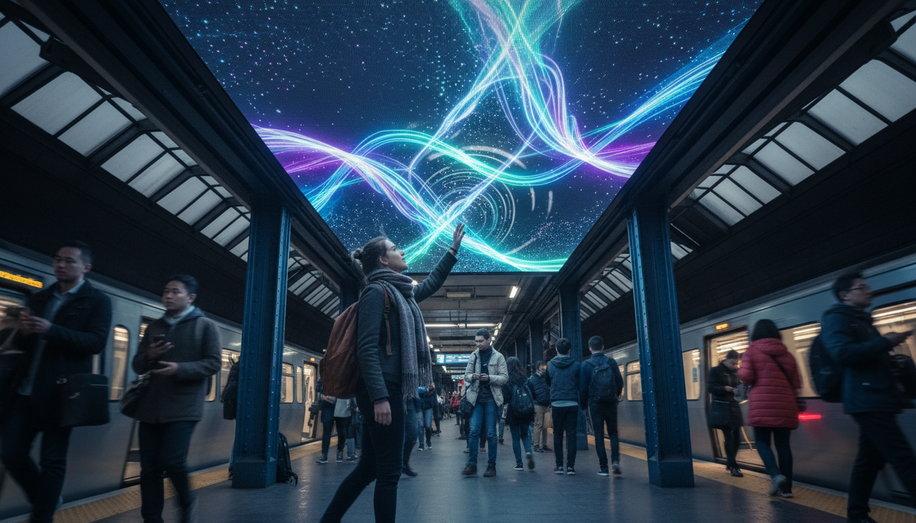

In the bustling streets of global cities, where static billboards once reigned supreme, a new era of out-of-home (OOH) advertising is unfolding—one that transforms passive glances into active encounters. Interactive OOH has surged beyond the novelty of augmented reality (AR) illusions and eye-popping 3D visuals, embracing a tactile, multisensory revolution powered by touchscreens, gesture controls, sound immersion, NFC taps, and QR scans. This evolution isn’t just about grabbing attention; it’s about forging real-time connections that drive measurable engagement and ROI, as brands leverage data-driven tech to meet consumers where they stand.
The journey began with the digitization of OOH, evolving from painted posters to high-resolution LED screens capable of dynamic content swaps. But interactivity marked the true pivot. Early adopters like Grand Visual pioneered campaigns where motion sensors triggered personalized messages, turning sidewalks into playgrounds. Today, touchscreens dominate urban kiosks and retail facades, inviting pedestrians to swipe through product demos or polls. In smart cities, these hybrid displays split duties: one panel beams ads while another offers interactive maps or transit info, blending commerce with utility. A Google Play campaign with oOh! Media exemplified this, letting users tap or scan for exclusive media, proving touch’s power to bridge physical and digital worlds.
Gesture control takes it further, sidestepping hygiene concerns post-pandemic with hands-free flair. Cameras embedded in displays track air waves— a fist pump might explode fireworks on-screen, or a wave could unlock a discount code. Broadsign notes this tech’s rise in DOOH, where less precise but stylish gestures outperform basic touch in high-traffic zones. Imagine Times Square: NASCAR shattered the Guinness World Record for the loudest billboard not with visuals alone, but by revving a full-scale engine replica, letting passersby feel the roar and vibration. Sound integration amplifies this sensory shift, syncing audio cues to gestures for immersive stunts that echo through crowds, creating shareable moments that amplify reach on social media.
NFC and QR codes extend interactivity contactlessly, turning every smartphone into a key. Tap a screen, and your phone unlocks tailored offers; scan a code, and you’re funneled to e-commerce or retargeted ads. StackAdapt highlights how these tools track the full customer journey—from scan to purchase—enabling precise attribution in an era of omnichannel campaigns. Geofencing pairs with them, pushing follow-up notifications as users wander, while programmatic DOOH (pDOOH) from platforms like Vistar Media uses AI to swap creatives in real-time based on weather, traffic, or audience demographics. No longer one-size-fits-all, ads now nod to passersby with hyper-local relevance, like weather-responsive apparel promotions.
This multisensory toolkit yields hard data: interactive OOH boasts higher dwell times, engagement rates up to 40% above static formats, and quantifiable lifts in foot traffic and sales. Vistar’s evolution from manual planning to AI-powered execution means campaigns adapt on the fly, measuring beyond impressions to true ROI. Yet challenges persist—hardware costs, network reliability, and privacy in data collection demand savvy software like Broadsign’s dynamic playback systems that support all these inputs seamlessly.
Looking ahead, the fusion of these technologies hints at even bolder frontiers. Hybrid setups with VR headsets at kiosks could plunge users into 360-degree brand worlds, while AR filters via QR let shoppers “try on” products in real space. Street Fight predicts call-to-action integrations will standardize, with POOH automating buys across inventories. As 5G blankets cities, low-latency gesture-sound combos will proliferate, making billboards communal experiences—think crowds directing a digital orchestra or voting on live polls that shape the ad itself.
Interactive OOH isn’t a gimmick; it’s the future of advertising in shared spaces, where technology dissolves the fourth wall between brand and bystander. By inviting touch, taps, waves, and listens, it reclaims the medium’s primal strength: commanding presence in the physical world, now supercharged for the digital age. Brands ignoring this shift risk fading into the background noise, while pioneers are rewriting the rules of engagement, one interaction at a time.
Navigating this dynamic, data-rich environment requires sophisticated tools to manage and measure the multisensory revolution. Platforms like Blindspot offer the essential capabilities for real-time campaign performance tracking, programmatic DOOH campaign management, and robust ROI measurement and attribution, ensuring brands can precisely quantify the impact of every interactive encounter, from a gesture to a scan. This empowers advertisers to optimize their strategies, transforming innovative OOH experiences into verifiable business outcomes. Explore their solutions at https://seeblindspot.com/