
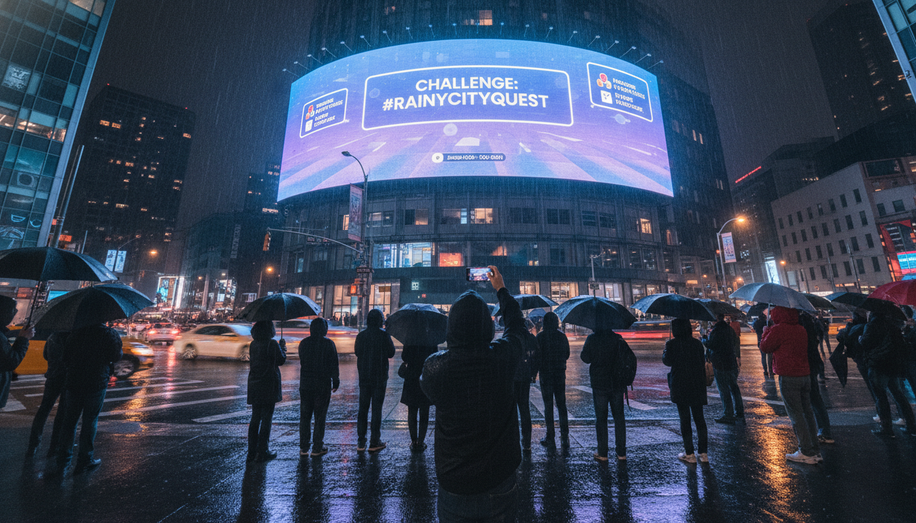

In the bustling streets of urban centers, where towering billboards and immersive digital displays command attention, out-of-home (OOH) advertising is undergoing a digital renaissance. No longer confined to passive observation, today’s OOH campaigns are engineered as catalysts for user-generated content (UGC) and viral explosions on social media. By weaving interactive elements into the fabric of physical ads, brands are transforming fleeting roadside glances into enduring online conversations, exponentially amplifying their reach and fostering authentic engagement.
Consider the power of a simple prompt etched into a massive billboard: a catchy hashtag, a QR code, or an audacious call-to-action daring passersby to snap a photo and share. This seamless bridge between the tangible and virtual has proven transformative. Research from recent Harris Poll surveys reveals that 67% of adults have spotted OOH ads incorporating social media hooks like handles, QR codes, or promotions, with 52% reporting heightened likelihood to interact with the brand online. Nearly half admit these encounters sway their decisions to follow brands on platforms like Instagram and TikTok. In high-traffic urban zones, where 79% of residents in cities over a million strong say they’re prone to act after seeing an OOH ad, the potential for virality is electric.
One of the most potent tactics is designing ads as irresistible photo backdrops. Clever copywriting, 3D installations, or larger-than-life visuals turn public spaces into meme-worthy spectacles. A striking example comes from campaigns where murals explode into augmented reality (AR) animations via smartphone cameras—users point, watch a product leap from the screen in 3D glory, and instantly post the magic to their feeds. Brands like those partnering with Clear Channel Outdoor have seen this spark shareable moments, creating feedback loops where street-level visibility fuels online buzz. As one industry expert notes, “OOH’s visual storytelling is tailor-made for social; it’s the spark that ignites user participation.”
User-generated content thrives when OOH ads invite collaboration. Contests that require entrants to photograph the ad and post with a branded hashtag drive participation and organic spread. Imagine a transit wrap challenging commuters: “Snap this ad, tag #StreetArtChallenge, and win exclusive merch.” This not only generates floods of UGC but builds community, as participants tag friends and amplify the narrative. Influencer partnerships supercharge the effect—local creators dispatched to iconic locations like Times Square or London’s Piccadilly Circus produce polished content that their followers devour, lending credibility and extending reach to niche audiences. Data from the Out-of-Home Advertising Association of America (OAAA) underscores how such integrations enhance social strategies, with OOH acting as the credible launchpad for digital follower growth.
Interactive tech elevates this further. QR codes and NFC tags embedded in billboards lead to AR experiences, discount drops, or personalized filters, prompting immediate shares. A mural in a vibrant city square might unlock a brand’s AR lens, turning users into virtual endorsers as they overlay products onto their selfies. Real-time engagement seals the deal: live social polls tied to the ad’s theme or geo-targeted challenges capitalize on the momentum, drawing consumers from sidewalk to screen in seconds. Brands leveraging these in culturally resonant moments—think ads riffing on trending memes or seasonal events—see virality skyrocket, as shareable content proliferates unchecked.
The synergy yields measurable wins. OOH not only boosts awareness but influences behaviors: 45% of adults report OOH ads shaping their social media habits, per industry benchmarks. In an era of fragmented attention, this cross-channel approach creates immersive brand worlds where physical encounters beget digital devotion. Companies like JCDecaux and OUTFRONT Media offer tailored amplification services, tracking UGC metrics to refine campaigns in real time.
Yet success hinges on cohesion. It’s not enough to slap a hashtag on a static board; narratives must flow fluidly across channels. Place ads in iconic, high-visibility spots to heighten perceived prestige—65% of viewers in such locations are more likely to act, sharing elevates trustworthiness. Focus on shareability: bold visuals, emotional hooks, and clear CTAs that feel personal, not promotional.
As social platforms evolve, OOH’s role as the “social screen” grows undeniable. By prompting UGC and virality, these campaigns don’t just advertise—they mobilize audiences into brand evangelists, turning one-off impressions into perpetual online echoes. In a crowded media landscape, the street has become the ultimate content studio, where every glance holds the promise of going viral.
Blindspot can specifically address the need for data-driven virality in OOH. Through its robust location intelligence and site selection, brands can strategically pinpoint iconic, high-visibility spots where OOH ads are most likely to convert glances into shareable moments, maximizing the potential for UGC and online amplification. Furthermore, Blindspot’s real-time campaign performance tracking and ROI measurement provide critical insights, allowing advertisers to precisely attribute social media engagement and follower growth directly back to their OOH initiatives, thereby optimizing future campaigns for peak virality and measurable digital devotion. Learn more at https://seeblindspot.com/