
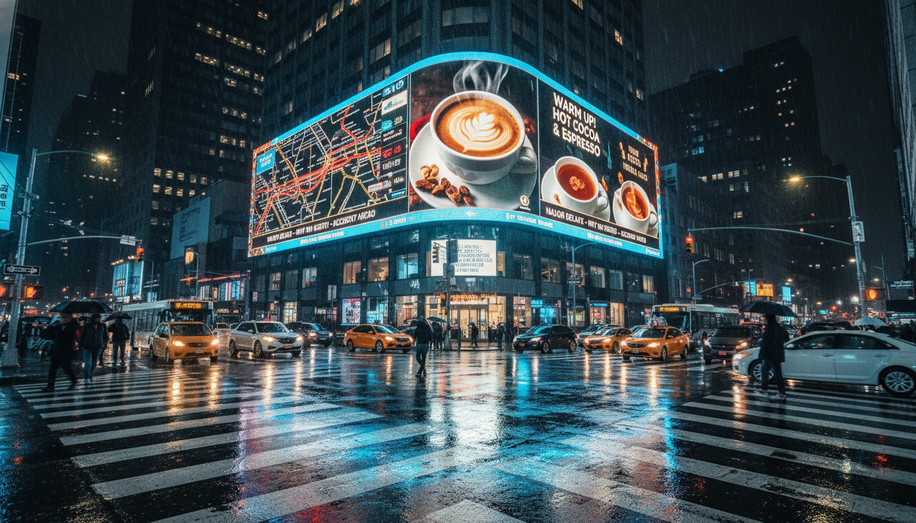

In the bustling arteries of urban life, where digital out-of-home (DOOH) screens flicker ceaselessly, a quiet revolution is underway. Static billboards, once the unchallenged kings of outdoor advertising, are yielding to dynamic content automation—a sophisticated fusion of real-time data feeds and algorithmic intelligence that crafts hyper-relevant messages on the fly. No longer do campaigns require teams of creatives huddled over editing suites, frantically updating visuals for every twist of weather or sporting event. Instead, automation pulls from live streams like sports scores, meteorological updates, and news feeds to transform DOOH into a responsive, living medium that speaks directly to passersby, fostering genuine connections without the drag of manual intervention.
This shift is powered by Dynamic Creative Optimization (DCO), a programmatic powerhouse that ingests data inputs—location, time of day, weather conditions, user behavior—and spits out tailored ads in milliseconds. Picture a Caribbean tourism board’s screens in a snowy Northeast U.S. city: as local thermometers plummet, the creative automatically swaps in balmy beach footage overlaid with the destination’s current 85-degree paradise temps, pulled from real-time APIs. Or consider a sports drink brand during the Super Bowl; live scores from APIs trigger on-screen updates, morphing generic promotions into victory anthems synced to the game’s pulse. These aren’t pre-scheduled tricks but automated responses, orchestrated by platforms like those from Vistar Media or Broadsign, which layer first-party data with ambient signals such as foot traffic or even on-site sensors detecting audience demographics.
The beauty lies in its seamlessness. Traditional OOH demanded painstaking manual uploads, often rendering campaigns obsolete amid fast-moving events. Dynamic automation flips the script. HTML5-based creatives, for instance, enable screens to rewrite text, swap images, or animate elements based on triggers—rain prompts umbrella ads from a local retailer; a stock market surge activates financial service promos. JCDecaux highlights how moderated social media feeds or browser search trends can integrate effortlessly, turning screens into helpful companions rather than shouting billboards. “Data integration offers instantaneous updates to match audience needs,” the company notes, emphasizing content that’s “tuned in” rather than tone-deaf.
Contextual relevance is the secret sauce. Screenverse Media explains that DCO goes beyond personalization by cross-referencing engagement metrics in real-time, running A/B tests to refine what resonates. During major events like the World Cup, ads featuring live scores don’t just inform; they captivate, boosting dwell time and recall. Grand Visual likens it to the display ad world’s cookie model, now supercharged for DOOH with offline data like geographic proximity or daypart shifts—morning commuters see coffee enticements, evening shoppers get dinner deals. Vistar Media envisions countdowns to store openings or weather-tied wardrobe suggestions, evolving OOH from passive exposure to interactive storytelling.
Yet, the true game-changer is scalability. Small businesses, once priced out of sophisticated OOH, now leverage AI-driven tools to punch above their weight. The U.S. Chamber of Commerce spotlights how these platforms analyze mobility patterns, traffic flows, and local conditions to forecast optimal ad slots, maximizing ROI without a marketing army. Broadsign underscores the “limitless” triggers: financial tickers for Wall Street crowds, event calendars for festivals, even visual sensors spotting family groups to pivot to kid-friendly messaging. Neuron Daily frames dynamic DOOH as advertising that “optimizes in real-time” against real-world flux, from news breaks to seasonal shifts.
Critics might worry about overload or privacy, but advancements sidestep these pitfalls. AI processes anonymized datasets—think aggregate weather APIs or public sports feeds—without compromising user data, as eMarketer observes in its coverage of sports-tech synergies. Attribution has sharpened too, linking screen views to foot traffic lifts and conversions, lending performance credibility to what was once a branding plaything. StackAdapt predicts this data-driven precision will define OOH’s future, blending physical presence with digital agility.
As cities densify and attention fragments, dynamic content automation isn’t just an upgrade—it’s survival. Brands that master it, from global giants to local shops, deliver messaging that feels prescient, not pushy. In an era craving relevance, DOOH screens pulsing with live data aren’t advertisements; they’re conversations, automated at scale, proving that the most compelling stories tell themselves in real time.