
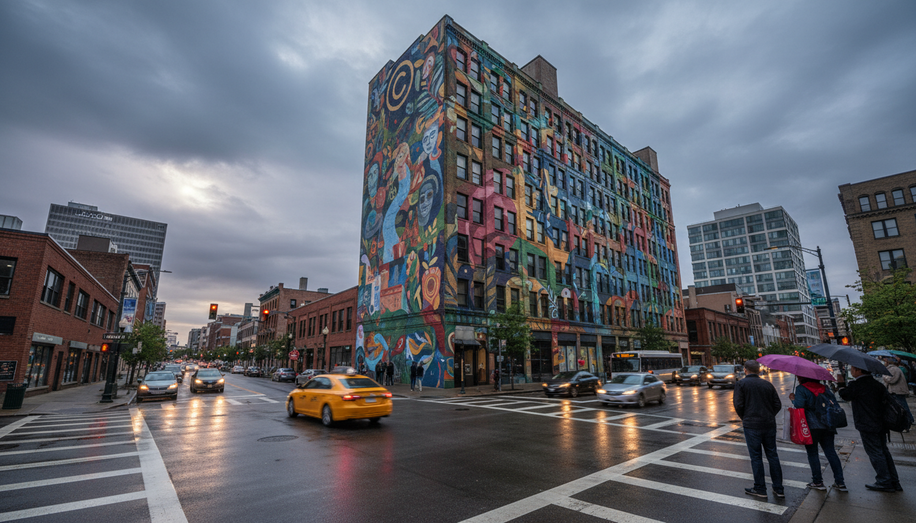

Since the early 2000s, hand-painted advertising murals have staged a remarkable comeback across urban landscapes, fundamentally reshaping how brands connect with audiences in the out-of-home (OOH) advertising space. New York and Los Angeles have led this resurgence, but the movement has spread to smaller metropolitan areas and towns, signaling a broader cultural shift away from digital saturation toward tactile, community-embedded messaging. What was once cold brick along grey streets has transformed into vibrant canvases that blend artistic integrity with commercial purpose, creating a new paradigm where advertising transcends its traditional role.
The resurgence of hand-painted murals represents more than nostalgic aestheticism. Brands have recognized that allowing artistry to take center stage creates something fundamentally different from large printed or digital signs. Unlike advertisements scrolled past in seconds, painted murals command sustained attention through vibrant colors, intricate details, and sheer scale. They become landmarks within communities, integral to the urban fabric itself, generating a sense of place that generic advertising cannot achieve. This visual allure translates directly into brand impact: murals imprint messages in the minds of passersby, creating memorable impressions that extend far beyond the moment of viewing.
In an era dominated by digital screens and algorithmic feeds, painted murals offer something increasingly rare: authenticity rooted in physical presence. They foster genuine connections by embedding brand messages within the physical environment rather than filtering them through devices. This distinction matters profoundly. In a society obsessed with instant gratification, hand-painted murals paradoxically ground viewers in their immediate surroundings while simultaneously creating shareable social media moments. Murals become destinations unto themselves, attracting crowds eager to engage with the artwork and document their experiences online. This organic interaction amplifies brand visibility while building authentic community engagement that transcends traditional marketing metrics.
The longevity factor further distinguishes mural advertising from its digital counterparts. Once completed, a hand-painted mural can remain intact for many months, continuously delivering brand exposure with minimal maintenance. This durability ensures that investment yields long-term returns, making it a cost-effective strategy despite potentially higher upfront costs compared to temporary digital placements. The mural doesn’t disappear when the algorithm changes or budgets shift; it persists as a permanent fixture in the community consciousness.
Perhaps most crucially, effective mural advertising taps into local culture and narrative. When artists incorporate elements of local history, values, and identity into their designs, they create emotional connections that transcend mere commercial messaging. Communities recognize when brands demonstrate genuine commitment to their surroundings rather than treating them as interchangeable advertising surfaces. This alignment with local narratives earns the respect and loyalty of residents, who become brand advocates precisely because the mural enhanced rather than exploited their environment.
The craft itself deserves recognition. Hand-painted murals require skilled artistry and strategic execution; they cannot be mass-produced or algorithmically optimized. This limitation has become an unexpected strength. Brands that invest in legitimate artistic collaboration signal something different to audiences—a willingness to prioritize quality and authenticity over pure efficiency. The resurgence of this hand-crafted media demonstrates that advertising can transcend its own message, that brands can have impact extending far beyond a wall’s commercial function.
As augmented reality and other technologies continue reshaping the advertising landscape, hand-painted murals endure as a counterintuitive choice that works precisely because it resists technological mediation. They represent a deliberate rejection of ephemeral digital noise in favor of something permanent, artistic, and rooted in specific communities. For brands seeking meaningful engagement rather than mere impressions, the mural offers a powerful reminder that sometimes the most innovative advertising strategy is returning to craft, authenticity, and genuine human connection.