
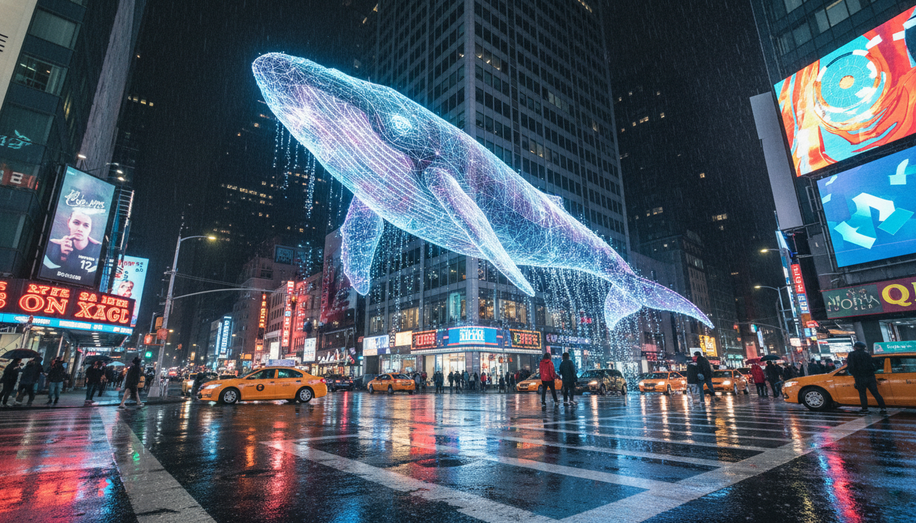

In the bustling heart of a city square, a shimmering hologram of a luxury car materializes from thin air, its headlights piercing the evening fog as virtual doors swing open for passersby to “step inside” via their smartphones. This is no longer science fiction—it’s the vanguard of out-of-home (OOH) advertising, where holographic projections and advanced 3D displays are poised to redefine public spaces as dynamic canvases for brand storytelling. As costs plummet and technology matures, these innovations promise to eclipse traditional billboards, turning everyday environments into immersive theaters of commerce.
Holographic advertising operates through sophisticated optics: lasers, mirrors, and lenses housed in compact “holographic routers” diffract light to conjure three-dimensional images that float untethered in open space, requiring no glasses or screens. Unlike flat digital displays, these holograms possess genuine depth, mimicking how human eyes perceive the world, which fosters seamless integration into real-life scenes. Princeton researchers have recently advanced this frontier with miniature devices that sharpen holographic clarity, paving the way for high-definition visuals embeddable in everyday eyewear or public fixtures. In OOH contexts, the result is mesmerizing: a 3D holographic spokesperson gestures invitingly from a mall atrium, or a floating product demo pulses above a subway platform, drawing crowds with lifelike interactivity.
Practical applications are already proliferating in high-traffic zones. Shopping malls, with their prolonged dwell times, emerge as prime real estate, where holograms can showcase interactive apparel try-ons or swirling beverage pours that entice shoppers to linger and share on social media. Trade shows amplify this potential; exhibitors deploy hovering 3D models to dominate booths, transforming static displays into viral spectacles. Even healthcare waiting rooms benefit, with educational holograms illustrating treatment options in vivid detail, boosting patient engagement without overwhelming 2D posters. Movie theaters preview blockbusters via ethereal trailers that leap from screens into lobbies, heightening anticipation. Globally, major brands have piloted these technologies, reporting surges in sales and reach, as the novelty cuts through urban visual clutter.
What elevates these displays beyond novelty is their fusion with complementary technologies. Advanced 3D OOH has evolved from optical illusions to responsive ecosystems, incorporating Internet of Things (IoT) sensors for real-time adaptation. Imagine a billboard that morphs its holographic message based on weather—summoning sun hats during heatwaves or umbrellas in rain—or tailors content to time of day and demographics, detected via anonymized crowd analytics. Programmatic booking enables instantaneous swaps, ensuring relevance in fluxing environments like event venues or transit hubs. Augmented reality (AR) layers deepen immersion: viewers scan a hologram with their phones to unlock mini-games, virtual fittings, or personalized offers, bridging physical and digital realms.
The interactivity factor is transformative. Holograms invite touchless gestures or app-linked responses, capturing dwell time and engagement data that traditional OOH metrics overlook. This yields shareable moments—a pedestrian films a dancing holographic mascot, sparking organic virality—and quantifiable insights into viewer behavior, refining future campaigns. Versatility shines in deployment: units are portable for pop-ups, scalable for massive urban installations, and energy-efficient as hardware miniaturizes. In public spaces, they enhance safety too, projecting warnings or navigation aids during crowds.
Looking ahead, the trajectory points to ubiquity. As holographic tech democratizes—much like digital screens supplanted print—billboards may fully yield to 3D holograms by the decade’s end, with demand surging as evidenced by recent adoption spikes among top brands. Ongoing research in light diffraction and compact projectors signals even crisper, larger-scale visuals, potentially weaving holograms into architecture itself: facades that “breathe” brand narratives or streets alive with synchronized projections. Integrated with AI-driven personalization and 5G connectivity, OOH will evolve into conversational media—holograms that “recognize” repeat visitors and adapt narratives accordingly.
Challenges persist: high initial costs, though falling, demand strategic investment, while brightness limitations in daylight require hybrid solutions like mist screens or adaptive lighting. Regulatory hurdles around light pollution and data privacy loom, but precedents from digital OOH suggest swift resolution. Yet the upside eclipses these: holographic and 3D displays don’t just advertise; they orchestrate experiences that imprint on memory, fostering emotional connections in an ad-saturated world.
Ultimately, these technologies herald a renaissance for OOH, converting passive spectators into active participants. Public spaces, once blanketed in static messages, will pulse with depth and dialogue, where a glance sparks discovery and a gesture seals transactions. For advertisers, the message is clear: the future isn’t flat—it’s vividly, interactively three-dimensional.