
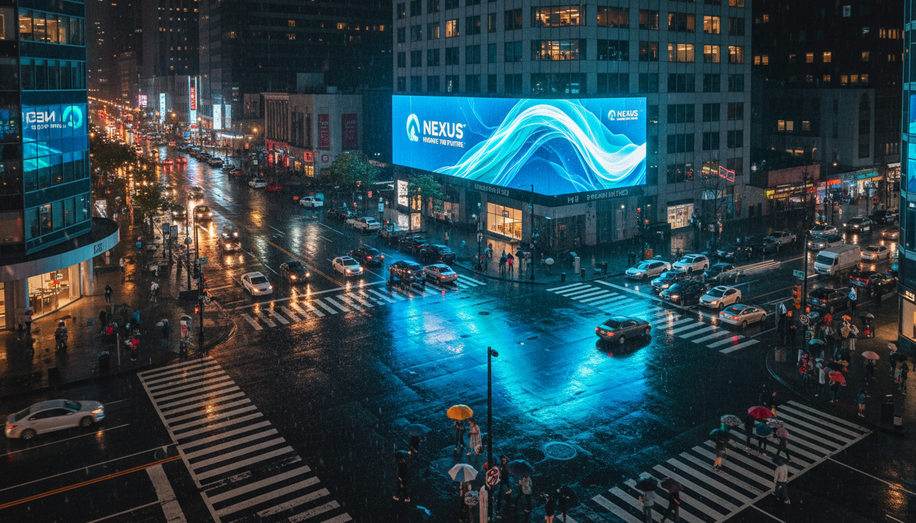

In today’s fiercely competitive talent markets, where skilled professionals are bombarded with digital noise, out-of-home (OOH) advertising cuts through the clutter by meeting candidates exactly where they live, work, and play. From towering billboards along commuter routes to dynamic digital screens in business districts and stadiums, OOH delivers unmissable messages that build employer brand awareness and propel recruitment efforts forward.
This resurgence of OOH in talent acquisition stems from its proven ability to spark action among both active job seekers and passive talent who aren’t scrolling LinkedIn. Research from the Out of Home Advertising Association of America (OAAA) and ComScore reveals that 41% of people exposed to an OOH ad subsequently search for the advertiser online, while OOH drives online activity at over five times the expected rate and 382% more effectively than TV ads. Employers like tech startups have harnessed this power by deploying LED billboard trucks near innovation hubs and university campuses, swiftly filling specialized engineering roles and generating a surge of qualified applicants while elevating their brand in the process.
Strategic placement is the cornerstone of OOH’s effectiveness in recruitment. Advertisements positioned in high-traffic zones—business districts for leadership roles, industrial hubs for shift workers, university campuses for interns, or medical facilities for healthcare pros—ensure messages land with precision. During major events like the Big Game, OOH amplifies reach through concentrated audience density in stadiums and transit areas, where extended dwell times allow for deeper engagement. Here, forward-thinking companies forgo generic “We’re Hiring” pleas in favor of compelling narratives about mission, culture, and impact, fostering long-term brand recognition that prompts later applications.
Digital out-of-home (DOOH) takes this further with always-on flexibility. Screens in office complexes can rotate real-time job postings, highlighting urgency with immediate-start deadlines or career progression perks, tailored to the audience’s daily routines. Integration with QR codes, custom URLs, and social handles bridges the physical-to-digital gap, turning passive viewers into active applicants as they snap photos for sharing, extending organic reach. Mobile billboards and trucks add mobility, circling career fairs, networking events, or logistics zones to pursue elusive demographics overlooked by static channels.
Cost-efficiency bolsters OOH’s appeal in budget-conscious recruitment. Solomon Partners data positions OOH with the lowest cost per thousand impressions (CPMs) among traditional media, rivaling digital pricing while delivering broader exposure. Unlike online ads vulnerable to ad blockers or fleeting attention spans, OOH works around the clock across all shifts, reaching three recruiting audiences—day, evening, and night—for the price of one, without geographic limits. This amplifies other channels: an OOH sighting primes candidates for email campaigns or job board visits, boosting overall funnel performance.
Real-world campaigns underscore these advantages. A tech firm struggling with engineer shortages parked billboard trucks at key campuses and hubs, not only filling vacancies faster than expected but also cementing employer branding among young talent. At high-profile sporting spectacles, consistent OOH presence across events builds cumulative equity, signaling stability and leadership to career-minded pros. Even in tight markets, OOH raises awareness among passive candidates who dominate skilled pools, sparking interest that traditional media like print or TV often misses.
Critics might dismiss OOH as outdated, yet evolving tech like programmatic DOOH and data-driven targeting prove otherwise. Agencies now segment audiences by flow—VIP zones for exec hires, concourses for volume roles—maximizing relevance. For HR teams, this means transforming recruitment from transactional postings into immersive brand experiences that resonate in everyday environments.
Ultimately, OOH elevates talent acquisition by humanizing employer brands in tangible spaces. In an era where 70% of professionals discover opportunities offline through word-of-mouth or serendipity, ignoring OOH risks ceding ground to rivals who embrace it. Companies weaving OOH into multi-channel strategies—pairing it with SEO, social, and ATS tools—not only attract top talent but also cultivate loyalty from the first impression. As markets tighten further, those who meet candidates amid their commutes, coffees, and concerts will dominate the race for human capital.
Blindspot empowers HR teams to navigate these complex talent markets by leveraging location intelligence for precise ad placement and programmatic DOOH to deliver dynamic, targeted messages. Its robust audience measurement and ROI attribution tools provide clarity on campaign effectiveness, ensuring OOH investments translate directly into attracting and hiring the best human capital. https://seeblindspot.com/