
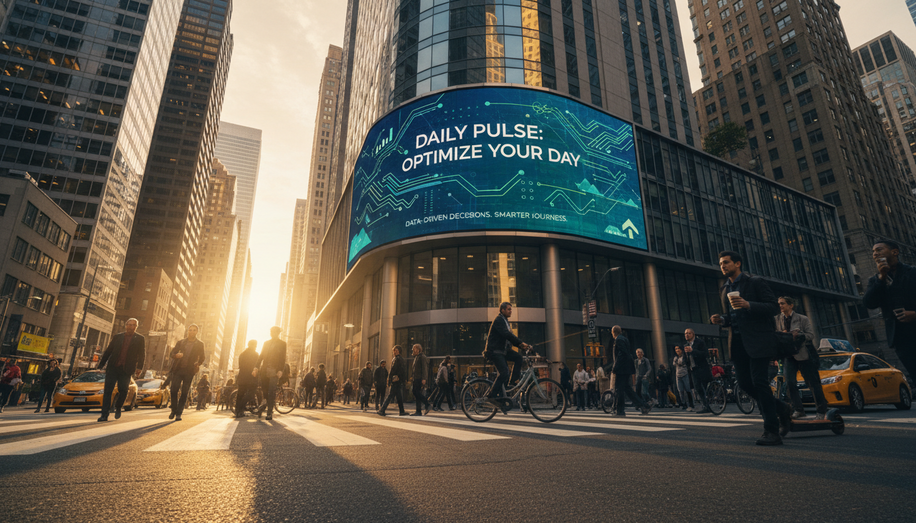

In the high-stakes world of digital out-of-home (DOOH) advertising, the journey from raw data to captivating creative begins long before screens light up city streets or shopping malls. Advertisers who harness real-time audience insights, demographic breakdowns, and behavioral patterns at the design stage craft initial campaigns that resonate deeply, setting the foundation for maximum impact without relying on post-launch tweaks. This upfront integration transforms guesswork into precision, distinguishing it sharply from dynamic optimization, where content shifts in real time based on live triggers like weather or footfall.
Consider the power of demographic analysis in shaping a campaign’s core messaging. Modern DOOH platforms employ mobile location data, sensor technology, and AI modeling to profile audiences with remarkable accuracy, estimating age, gender, and even family composition near screens. Before a single creative is finalized, brands can analyze historical and projected audience data from specific locations—say, a bustling urban transit hub versus a suburban retail strip. For instance, if data reveals a midday surge of young professionals in business attire, designers might prioritize sleek visuals emphasizing productivity tools or quick-lunch options, using bold typography and minimalist imagery to mirror their fast-paced lives. This isn’t about swapping ads on the fly; it’s embedding audience profiles into the static blueprint of the creative itself, ensuring the messaging aligns from the outset.
Behavioral patterns elevate this process further, turning passive observations into predictive design fuel. Platforms like ARSA’s DOOH Audience Meter track dwell time—how long eyes linger on screens—and engagement metrics, revealing not just who passes by but how they interact. Armed with this, creative teams can anticipate behaviors: high dwell times in retail environments signal opportunities for detailed storytelling, prompting longer-form narratives with calls-to-action tailored to impulse buyers, while fleeting commuter glances demand punchy, 5-second bursts of color and motion. Retail sales trends and product availability data, integrated pre-launch, allow designers to foreground in-demand items, crafting visuals that feel prescient rather than promotional. One retailer, for example, used footfall patterns to design screens showing weather-appropriate apparel during peak shopping hours, boosting relevance without any runtime adjustments.
Real-time audience data, often anonymized through location signals and AI, provides the temporal edge. Unlike traditional OOH’s broad traffic estimates, this intel forecasts peak exposure windows by time of day or event proximity. A campaign for a sports drink might draw from commuter data to feature morning rush-hour visuals of energized athletes, transitioning in design intent to afternoon hydration reminders based on predicted office worker flows— all locked in during the ideation phase. This preemptive layering ensures the creative’s emotional hook lands precisely when behaviors align, driving up to 40% higher engagement through contextual resonance alone.
The distinction from dynamic creative optimization (DCO) is crucial: while DCO adapts live—swapping elements for weather or events—the data-to-design approach informs the immutable core. DCO thrives on A/B testing mid-flight, refining based on real-time engagement; initial design, by contrast, uses synthesized insights to build a robust launch creative that stands strong independently. Brands like those partnering with Blindspot leverage audience demographics, dwell analytics, and consumer profiles to personalize messaging upfront, creating DOOH that feels bespoke to public spaces from Times Square to local malls. This method complements omnichannel strategies, bridging physical encounters with digital journeys for amplified recall and sales lift.
Yet, success hinges on seamless data integration. Advertisers must fuse first- and third-party sources—footfall, traffic patterns, even online behavior proxies—into design briefs early. Proprietary tools like Bauer Media’s Radar blend offline movement with digital paths, yielding holistic profiles that guide color palettes, imagery, and copy tone. A coffee chain, informed by morning commuter demographics and dwell data, might design steaming cup visuals with urgent “Grab Now” messaging, proven to spike foot traffic without post-launch pivots.
Privacy remains paramount, with all profiling anonymized to comply with regulations, building trust while delivering precision. Forward-thinking networks position themselves as data-driven powerhouses, justifying premium rates through verifiable metrics like exposure by age group or location-specific reach. As DOOH evolves, those who master this from-data-to-design pipeline don’t just advertise—they anticipate, crafting high-impact creatives that capture attention in an instant and linger in memory.
The proof lies in outcomes: campaigns rooted in these insights report superior ROI, with measurability rivaling digital channels. By prioritizing audience realities over assumptions, DOOH moves from spectacle to strategy, proving that the most effective ads aren’t just seen—they’re felt.