
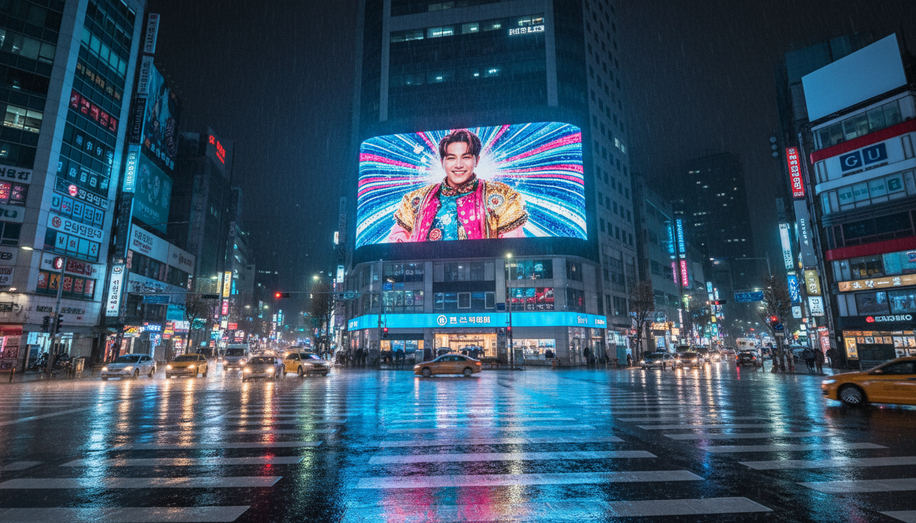

In the bustling streets of Tokyo, a vibrant Coca-Cola campaign unfolds with pastel hues and subtle cherry blossom motifs, evoking Japan’s reverence for seasonal beauty and harmony. Contrast this with São Paulo’s dynamic billboards, where bold colors and rhythmic samba-inspired visuals pulse with Brazil’s festive energy. These examples underscore a fundamental truth in out-of-home (OOH) advertising: success hinges on adapting to cultural contexts, visual languages, and social norms, transforming potential missteps into resonant connections across global markets.
Cultural sensitivity begins with decoding symbols that carry vastly different meanings worldwide. White, symbolizing purity in Western cultures, represents mourning in much of Asia, a nuance that could doom a bridal campaign if overlooked. Similarly, a thumbs-up gesture, innocuous in the U.S., offends in parts of the Middle East and South America. Brands venturing into new territories must invest in deep research—beyond mere translation—to grasp historical contexts, religious practices, and social hierarchies. Hiring local creatives and cultural strategists ensures authenticity, avoiding stereotypes or tokenism that erode trust. Nike exemplifies this mastery: its “Just Do It” slogan adapts seamlessly, featuring female athletes in India to challenge gender norms in a nation where women’s sports have long been sidelined, fostering empowerment over imposition.
Visual language amplifies these adaptations. In high-context cultures like Japan or Saudi Arabia, subtlety reigns; indirect messaging and minimalist designs respect collectivist values and modesty norms, preventing alienation. Low-context markets, such as the U.S. or Germany, favor explicit, direct appeals that cut through the noise of urban environments. Colors play a pivotal role too—red signals luck in China but danger in South Africa—demanding transcreation, where core brand identity persists amid localized nuances. Heineken’s OOH campaigns illustrate this: data-driven digital out-of-home (DOOH) in Brazil leverages soccer passion with transcreated messaging, maintaining global consistency while tapping local fervor.
Social norms dictate placement and timing with equal precision. In multicultural hubs like the U.S., OOH targets ethnic enclaves—Hispanic neighborhoods via clinics for health messages, Black communities through barbershops for men’s wellness—using bilingual creatives to boost resonance. Studies show 56% of Hispanic, 58% of Black, and 59% of Asian-American consumers notice culturally attuned OOH more keenly, driving engagement and trust. Granular targeting by ZIP code, layering census data on language prevalence and venue footfall, outperforms broad demographics, as seen in pilots at ethnic grocers or places of worship. In India, campaigns align with festivals like Diwali, placing festive visuals near high-traffic markets to mirror communal celebrations without disrupting daily rhythms.
Humor, a potent OOH tool, demands the utmost caution. What amuses in the UK’s irreverent billboards might bewilder or insult in more hierarchical societies like Japan, where group harmony trumps individual wit. Santa Claus campaigns reveal enduring adaptability: reimagined as Sinterklaas in the Netherlands or Hoteiosho in Japan, the figure retains joyful essence through localized visuals, proving brands thrive by flexing cultural muscles.
Technology enhances these strategies without overriding them. DOOH’s real-time capabilities allow dynamic content shifts—promoting Women’s UEFA Champions League in Europe with locale-specific cheers—while respecting privacy norms stricter in Europe than Asia. Yet, data must inform, not dictate; spontaneous consumer processing amplifies cultural differences, making authentic representation key over algorithmic generality.
Challenges persist: global brands risk cultural imperialism by standardizing campaigns, as historical OOH has perpetuated exclusions. Ethical inclusivity counters this, depicting diverse body types, genders, and families thoughtfully, not as checkboxes. In the Middle East, modesty codes shape imagery, sidelining skin exposure for elegant silhouettes that honor local values.
Ultimately, effective global OOH forges emotional bonds by centering lived experiences. In-language ads excel for comprehension in immigrant-heavy areas, like healthcare outreach in U.S. Latino ZIPs, while bilingual tests gauge acculturation. Placement near behaviors—pharmacies for wellness, schools for youth—amplifies impact. As markets diversify, brands ignoring these nuances forfeit loyalty; those embracing them, like Nike or Heineken, not only engage but shape cultural conversations, proving OOH’s power as a bridge across worlds.
Mastering OOH’s global cultural imperative demands precision. Blindspot’s advanced **audience measurement and location intelligence** empower brands to identify and target specific cultural contexts—from ethnic enclaves to festival-aligned sites—while its **programmatic DOOH capabilities** facilitate real-time content adaptation for unparalleled local resonance. Discover how to forge authentic global connections at https://seeblindspot.com/.