
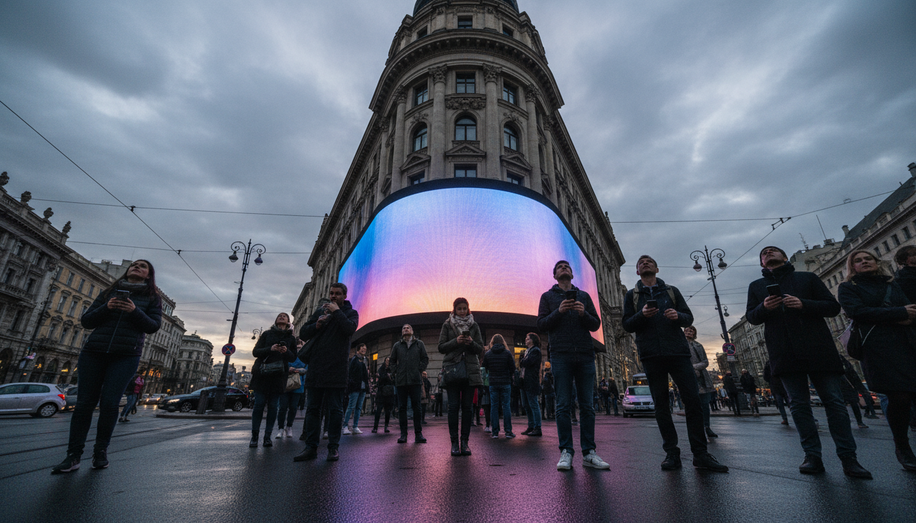

In the bustling heart of a city square, a towering digital billboard doesn’t just flash images—it hums with the subtle rustle of wind-swept dunes and distant echoes of footsteps on sand. Passersby pause, their senses pulled into an auditory illusion that transforms a static ad into a portal for a trail-running brand’s rugged world. This is the new frontier of out-of-home (OOH) advertising: ambient soundscapes that layer subtle audio onto visual displays, forging immersive experiences that linger long after the moment passes.
Traditional OOH has long relied on bold visuals to cut through urban clutter, but as public spaces saturate with imagery, attention spans demand more. Enter multi-sensory campaigns, where sound becomes the secret weapon. By synchronizing ambient audio—think soft waves lapping at a shore for a coastal getaway or the crackle of fresh coffee beans for a morning brew—advertisers elevate billboards from passive posters to dynamic environments. These aren’t blaring jingles; they’re carefully crafted sound designs that blend seamlessly with surroundings, surprising without overwhelming. JCDecaux, a global OOH leader, notes that adding sound accompaniment to visuals grabs attention and amplifies message impact, turning ads into “immersive brand experiences” that engage multiple senses.
The appeal lies in psychology and placement. Ambient advertising thrives on unexpected integration, placing messages in high-traffic spots like train stations, parks, or shopping centers where everyday life unfolds. Incorporating sound flips the script on sensory overload: while 91% of consumers shun intrusive ads, subtle audio weaves into the environment, fostering recall without disruption. Studies show ambient formats are 68% more engaging than traditional ones, boosting brand memory by up to 30%. Priority Outdoor emphasizes this “wow factor,” where creative audio placements make direct impacts on minds, often sparking virality and media buzz.
Technology makes it feasible and versatile. Simple speakers deliver baseline soundscapes, but innovations push boundaries. Motion sensors trigger personalized audio bursts—a runner’s stride might sync with accelerating desert winds, as in a 2025 Mafate X campaign that paired real-time Unreal Engine visuals with layered heat and trail sounds. Headphone jacks offer intimate, one-on-one interactions, while digital touchscreens demand user activation, blending audio-visual content via call-to-action prompts. Advanced tools like OUIBot connect OOH to smartphones, piping exclusive soundscapes directly to apps for prolonged engagement. Camphouse highlights interactive installations that play branded sounds in public spaces, turning sidewalks or benches into promotional soundstages without altering the natural flow.
Real-world examples illustrate the potency. Imagine stairs reimagined as piano keys, each step chiming a melodic brand tune, or bus shelters mimicking living rooms with ambient fireplace crackles promoting cozy home goods. A coffee campaign might embed the aroma-like sizzle of brewing paired with low-frequency percolator hums on urban panels, drawing commuters into a sensory ritual. These aren’t gimmicks; they’re economical evolutions of ambient OOH, which uses fewer materials for outsized visibility and cost savings compared to standard billboards. Hello Starling reports such tactics not only captivate but also enhance brand image through sheer creativity, fitting naturally into daily routines.
Yet, execution demands precision to avoid pitfalls. Sound must be subtle—overly loud elements risk annoyance in noise-polluted cities, where visual noise already breeds aggression. Regulations vary: some locales cap decibels or ban audio in residential zones, urging planners toward directional speakers or time-based activations. Synchronization is key; mismatched audio erodes immersion, while seamless layering—like syncing rainfall patter with a weather app promo—creates emotional resonance. Data from Broadsign’s 2025 roundup shows immersive OOH with sound outperforming static peers, with runners in the Mafate installation lingering longer and sharing footage organically.
Brands across sectors are leaning in. Luxury watchmakers pair ticking mechanisms with holographic displays in airport lounges; beverage giants simulate fizz and clink in transit hubs. Superside’s 2026 inspirations forecast this trend dominating, as OOH evolves from art-like interruptions to participatory worlds. The result? Deeper connections: consumers don’t just see a brand—they feel it, hear it, inhabit it momentarily.
As OOH battles digital fatigue, ambient soundscapes offer a tactile edge, proving that in advertising’s arms race for attention, the ears may hold the ultimate advantage. This fusion of subtlety and tech heralds a richer era, where public spaces pulse with branded symphonies, redefining immersion one whisper at a time.