
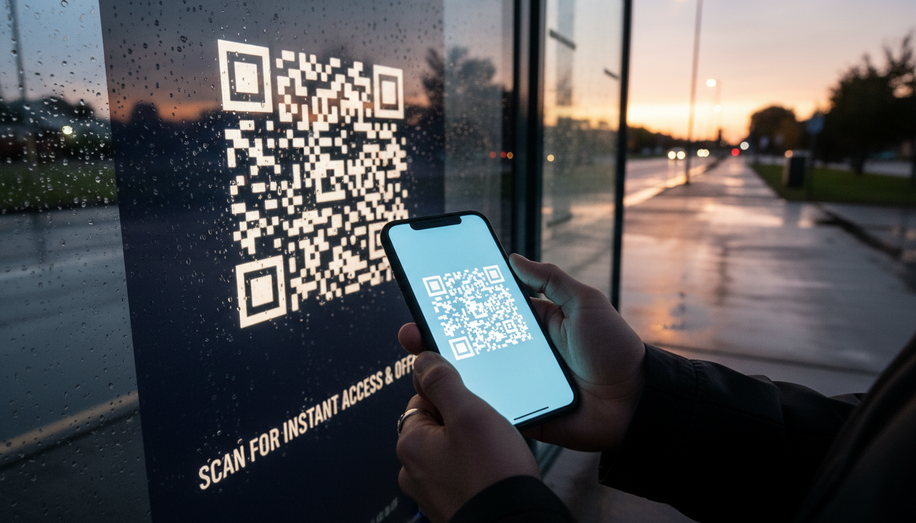

In the bustling streets of urban centers and along highways pulsing with commuter traffic, out-of-home (OOH) advertising has evolved from a static billboard shout into a dynamic bridge to the digital world. Advertisers are increasingly leveraging OOH not just for awareness, but as a precise drive-to-web strategy, compelling passersby to scan QR codes, visit custom URLs, or dive into online content with irresistible calls to action. This fusion of physical presence and digital activation is reshaping campaigns, turning fleeting glances into measurable online engagements.
Nielsen’s research underscores OOH’s outsized impact: it stands as the most effective offline medium for sparking online activity, generating four times the expected online activations per ad dollar spent compared to TV, radio, or print. Accounting for just 7 percent of combined ad spend across traditional media, OOH drives 26 percent of gross search activations, a testament to its efficiency in prompting searches, website visits, and social interactions. Google’s data reinforces this, revealing that 48 percent of consumers head to a brand’s site after spotting an OOH ad, while the Location-Based Marketing Association reports up to 20 percent lifts in web traffic and 10 percent in sales from such exposures.
At the heart of this strategy lie QR codes and short, memorable URLs, simple yet powerful gateways etched onto billboards, transit shelters, and digital out-of-home (DOOH) screens. A fashion brand might plaster a transit ad with a QR code linking to an exclusive online discount, instantly funneling street-level curiosity into e-commerce carts. Coffee chains deploy digital billboards near transit hubs, where commuters scan codes for app downloads or loyalty perks, later reinforced by geofenced mobile retargeting that serves tailored digital ads to those same devices. These tactics bridge the physical-digital divide seamlessly, with DOOH’s remote updatability amplifying urgency—ads can shift in seconds based on weather, traffic, or time of day, like a car dealership promoting SUVs on snowy mornings or hybrids during rush hour.
Programmatic DOOH takes this further, enabling hyper-targeted activations tied to real-world behaviors. Advertisers can trigger sunny getaway promotions on chilly days or competitor-proximity blasts within a one-kilometer radius, ensuring relevance that screams “act now.” First-party data supercharges personalization: brands layer their customer insights onto OOH buys, delivering messages to the right audiences in physical spaces, fostering deeper connections that spill online. Dentsu highlights how mobile data illuminates consumer movements, optimizing OOH placements for location, frequency, and context to influence shifting behaviors at scale.
Cross-channel synergy magnifies these efforts. Aligning OOH visuals, tone, and messaging with online campaigns creates omnipresence—a skincare line’s “Glow Wherever You Go” billboard headline echoes across Instagram and TikTok, boosting recall and trust. Synced timing adds momentum: a music festival unveils its lineup simultaneously on city billboards and social feeds, sparking immediate buzz and ticket hunts. For full-funnel impact, OOH spans awareness to retention. Consideration-stage ads in high-traffic zones tout new products with QR-linked landing pages; conversion pushes near stores drive foot traffic; in-store DOOH offers post-purchase discounts via scans.
Measurement tools seal the deal, providing accountability once elusive in OOH. Platforms track web lift, app downloads, foot traffic, and brand lift from billboards or transit ads, revealing spikes in site visits or searches near campaign sites. Unique tracking links and pixel data quantify how OOH exposure fuels online behaviors, from a fitness app’s download surge in billboarded neighborhoods to broader ROI gains. The Out-of-Home Advertising Association of America (OAAA) notes OOH can lift brand awareness by 48 percent, while integrated strategies yield higher engagement, conversions, and loyalty than siloed efforts.
Yet innovation thrives on creativity. Beyond codes, bold CTAs like “Text ‘GLOW’ to 12345 for your deal” or social handles prompt instant shares and follows. DOOH’s agility allows real-time tweaks—sports scores triggering fan gear ads or events amplifying nearby promotions—keeping audiences hooked. Big tech’s heavy OOH investments signal validation: these giants bet on its ability to outperform even banner ads in driving searches and social lifts.
Challenges persist, from ensuring scannability in motion to navigating data privacy, but advertisers adept at integration reap rewards. OOH’s mass reach—touching 90 percent of the U.S. population monthly—pairs perfectly with digital precision, delivering stronger storytelling, recall, and ROI. As programmatic platforms and analytics mature, OOH solidifies as indispensable for guiding offline eyes to online actions, proving the street is the ultimate digital on-ramp.