
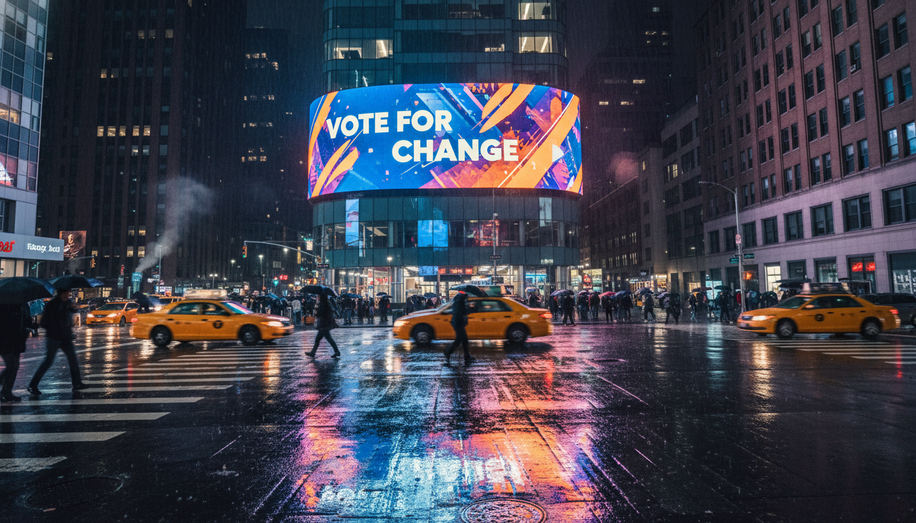

Out-of-home (OOH) advertising has long transcended commercial pursuits, emerging as a vital force for public good by amplifying non-profits and government initiatives on health, civic engagement, and social advocacy. Placed in high-traffic spaces like billboards, bus shelters, and transit hubs, these campaigns deliver unmissable messages that spur awareness and tangible action, reaching diverse audiences without relying on personal data.
The OOH industry’s commitment to societal impact dates back to the early 1900s, when providers began offering free ad space for charitable causes—a tradition that persists today with over $500 million donated annually to non-profits unable to afford paid media. Local OOH companies typically grant space on a first-come, first-served basis to qualifying 501(c)(3) organizations, covering posting fees while exposing messages to broad markets for 30 days or more. This pro bono model has enabled countless public service announcements (PSAs) to flourish, proving OOH’s role as a cost-effective amplifier for under-resourced groups.
In public health campaigns, OOH shines by creating urgency and driving behavior change. Government agencies have leveraged billboards and street furniture to promote vaccination drives, anti-smoking efforts, and mental health awareness, capitalizing on the medium’s high visibility in everyday environments. One standout example involved multi-channel efforts combining OOH with digital extensions, registering over 11 million actions—from clinic visits to online pledges—demonstrating how static and digital OOH formats prompt real-world responses. A Harris Poll survey found that 76% of digital OOH viewers took follow-on steps, such as watching related videos or making purchases related to health products, underscoring the medium’s power to convert passive exposure into active engagement. These campaigns thrive because OOH ads are unavoidable, lingering in commuters’ minds long after a glance, with roadside and transit placements recalled by up to 46% of audiences.
Civic engagement campaigns further illustrate OOH’s community-building prowess. Public sector communicators deploy ads at bus stops and transit stations to rally participation in consultations, workshops, and voting drives, fostering transparency and accountability. By highlighting community meetings and policy feedback opportunities, these visuals encourage citizens to shape decisions on infrastructure and public spending, leading to more sustainable outcomes. Non-profits have mirrored this success, using donated OOH space to boost voter turnout and civic literacy. The medium’s strategic placement in urban corridors ensures broad demographic reach, from shoppers to event-goers, while integrating social media hashtags amplifies online buzz and idea-sharing.
Social advocacy efforts reveal OOH’s capacity for profound cultural shifts. Campaigns tackling climate resilience, for instance, have informed communities about mitigation strategies against greenhouse gases, promoting adaptive solutions through visually striking billboards. Non-profits advocating for social justice or environmental policy changes place ads in high-impact locations to evoke empathy and mobilize support, often blending provocative imagery with clear calls-to-action like petition signatures or donations. JCDecaux’s initiatives exemplify this evolution, transforming street furniture into multifunctional assets—equipped with defibrillators, free Wi-Fi, and USB chargers—that not only advertise causes but enhance urban sustainability. Such innovations strengthen community ties, build government credibility, and position OOH as a partner in resilience-building.
The data backs OOH’s outsized influence: consumers trust it more than social media, with 31% viewing it favorably and 49% deeming it more reliable. Its privacy-safe nature, targeting by location rather than user data, aligns perfectly with public campaigns wary of digital scrutiny. Moreover, OOH’s longevity—ads dwell in public view—delivers enduring impressions at lower costs than fleeting online formats, making it ideal for non-profits stretching limited budgets.
Critics might question OOH’s measurability, yet metrics like increased program participation and multi-million action tallies refute this. Sustainable practices, such as energy-efficient LED displays, further enhance its appeal, yielding cost savings and reputational gains for providers supporting public good.
As cities grow denser and issues more urgent, OOH remains indispensable for non-profits and governments. By harnessing billboards, transit ads, and interactive street elements, these entities not only raise awareness but ignite action—proving that advertising, when wielded for the public good, forges stronger, more engaged communities.