
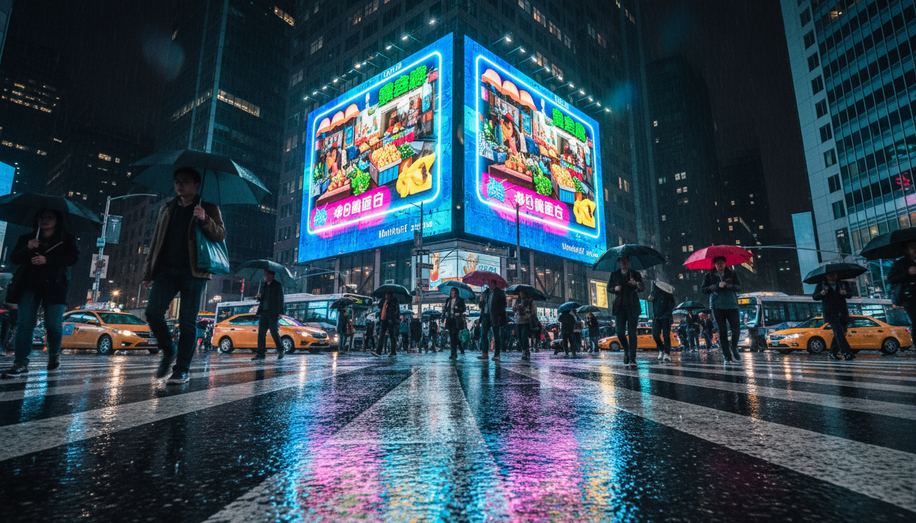

In the bustling streets of modern cities, where glances at billboards last mere seconds, out-of-home (OOH) advertising is evolving from passive spectacle to playful playground. Gamification infuses these public displays with game-like elements—challenges, rewards, leaderboards, and augmented reality (AR)—transforming fleeting encounters into immersive experiences that spur participation and linger in memory. Brands leveraging this approach report heightened engagement, as audiences willingly extend their interaction beyond a quick look, scanning QR codes, competing in real-time contests, or embarking on city-wide scavenger hunts.
Consider Chick-fil-A’s “Code Moo” campaign, where the brand’s iconic cows pitted against a fictional rival in weekly missions tied to its loyalty app. OOH billboards amplified the game, directing passersby to download the app and join the fray, blending nostalgia with digital rewards like free food items. This strategy not only drove app downloads but fostered emotional ties, turning casual viewers into repeat customers who felt invested in the narrative. Such integrations exemplify how gamified OOH bridges physical spaces and mobile devices, creating “phygital” moments—physical ads triggering digital play—that boost dwell time and conversion rates.
The mechanics behind this shift are straightforward yet potent. At its core, gamification applies video game principles to OOH: points for scanning a digital screen, badges for sharing progress on social media, or levels unlocked by visiting multiple ad locations. Digital OOH (DOOH) screens enable dynamic features like live leaderboards displaying top local scorers, prompting spontaneous competition among commuters. AR overlays, accessible via smartphone, turn static posters into interactive hunts; imagine a brand like a sneaker company challenging users to “collect” virtual pairs scattered across bus stops, redeemable for discounts. Simplicity reigns supreme—games must load in seconds and demand minimal effort to avoid frustrating time-strapped urbanites.
Rewards serve as the hook, tapping into innate motivations for fun, competition, and gain. Whether a coffee voucher for quizzing brand trivia on a touchscreen kiosk or exclusive app content for photo challenges, incentives elevate participation from optional to irresistible. Research underscores the payoff: interactive OOH yields stronger recall than traditional formats, as active involvement forges emotional connections, making brands more memorable amid digital noise. One study on gamified OOH found it customizes interactions to products, enhancing effectiveness through tailored challenges that align with consumer desires.
Yet success hinges on audience insight. Marketers must pinpoint what drives their demographic—younger crowds crave competition and social sharing, while families respond to collaborative hunts or educational quizzes. Placement matters too: high-traffic zones like transit hubs suit quick-tap games, while sprawling urban scavenger hunts thrive in pedestrian-heavy areas, extending engagement across days. Technologies like anamorphic 3D displays or platforms such as Ocean Outdoors’ Deepscreen Alive add narrative depth, letting users “enter” a brand’s world via gesture controls or NFC taps.
Data emerges as a hidden gem. Gamified campaigns track scans, completions, and shares, offering granular metrics on demographics, peak times, and conversion paths—far surpassing impression counts from static ads. This fuels optimization: real-time DOOH updates can spotlight top performers or tie into nearby store stock, as seen in omnichannel strategies amplifying major events. The result? Higher ROI, with engaged players more likely to heed calls-to-action, from app installs to purchases.
Critics might argue complexity risks alienating non-tech-savvy groups, but evidence counters this: broad appeal stems from intuitive design, resonating especially with Gen Z and millennials who expect play in every interaction. Brands like those using Web3 for immersive loyalty programs further innovate, weaving OOH into blockchain-based quests that reward digital assets. As attention fragments, gamified OOH reclaims it by making advertising a voluntary adventure.
Looking ahead, the fusion of AI-driven personalization—adapting challenges to viewer data—and expanding 5G networks promises even richer experiences, like multiplayer AR battles synced across city screens. For OOH pros, the message is clear: in a glance-dominated world, play wins. By ditching the hard sell for joyful challenges, campaigns don’t just capture eyes—they enlist hearts, turning public spaces into brand battlegrounds where everyone leaves a winner.
To fully capitalize on this evolving landscape, robust analytics are paramount. Platforms like Blindspot offer the precise **audience measurement, location intelligence for optimal placement, and real-time campaign performance tracking** necessary to prove ROI and refine these interactive strategies, ensuring brands not only engage but also convert. Discover how to empower your gamified OOH campaigns at https://seeblindspot.com/