
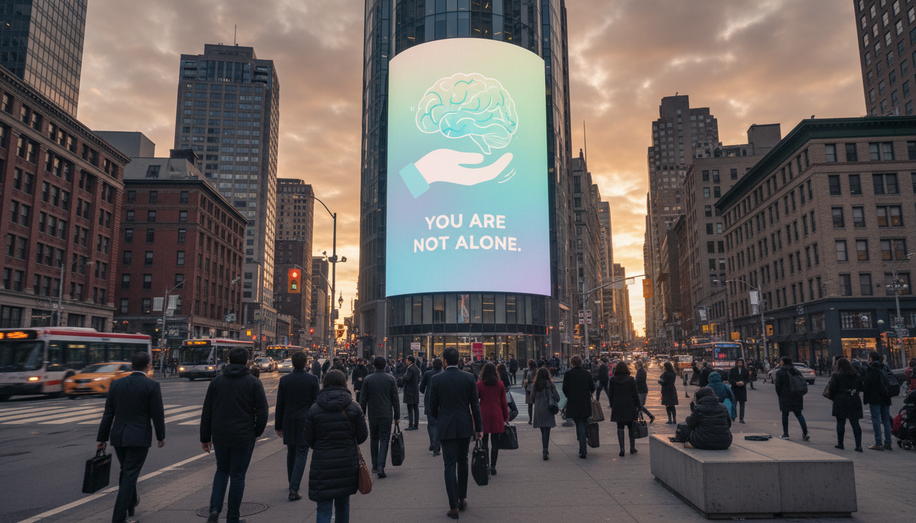

In the bustling public spaces of cities and suburbs, where commuters rush past billboards and pedestrians glance at transit shelters, out-of-home (OOH) advertising has emerged as a vital tool for healthcare marketers navigating a landscape fraught with sensitivity and regulation. Unlike digital channels cluttered with ad fatigue, OOH delivers unskippable messages in real-world contexts, fostering trust and awareness for services from urgent care to specialized treatments. Recent surveys by the Out-of-Home Advertising Association of America (OAAA) and The Harris Poll show a surge in adult consumers noticing these ads, underscoring their renewed relevance amid fragmented media consumption.
Healthcare’s unique challenges—addressing personal health concerns, complying with strict advertising guidelines, and building patient confidence—demand tailored OOH strategies that prioritize ethics alongside impact. Providers must convey empathy and expertise without exploiting vulnerabilities, often focusing on education over hard sells. For instance, urgent care centers and retail clinics benefit from hyper-local placements near their facilities, where ads can highlight on-demand services like flu shots or minor injury care. This proximity turns everyday drives into opportunities for contextual relevance, drawing patients who seek affordable alternatives to emergency rooms.
Pharmaceutical companies exemplify ethical tailoring, blending bold visuals with responsible messaging. AbbVie’s campaign for Skyrizi, a psoriasis treatment, paired OOH billboards in major cities with digital efforts, featuring patient success stories and clear calls to action. The billboards amplified broad reach, contributing to heightened awareness and prescription increases within a year, all while adhering to FDA guidelines on claims and disclosures. Similarly, an over-the-counter allergy medication brand timed digital OOH (DOOH) panels for peak spring season in high-traffic spots like Los Angeles shopping centers and Boston urban panels. Facing outward, these screens targeted allergy sufferers in real time, leveraging location data for relevance and boosting purchase consideration through timely relief messaging.
Local practices demonstrate OOH’s power in community building. Perfect Smiles Family Dentistry in Moore, Oklahoma, deployed strategically placed billboards near residential areas and intersections, showcasing smiling patients and Dr. Rick Freeman’s image alongside appointment prompts. The result: production soared over $300,000 in the first year, with cumulative growth exceeding $1.75 million over six years, transforming a plateaued practice into a sought-after local staple. Esse Health in St. Louis used mobile-targeted OOH to introduce new physician Dr. Cockerel, generating 105,000 impressions and a 0.50% click-through rate—67% above benchmarks—while lifting her weekly patient visits to four.
Ethical considerations are paramount, especially for sensitive topics like mental health or chronic illness. OOH succeeds by emphasizing accessibility and empowerment, avoiding fear-based tactics that could alienate audiences. Virtua Health in New Jersey partnered with Carvertise for vehicle wraps on 25 rideshare cars, enhanced by geofencing for digital retargeting. Exposure drove an 18.81% visitation rate to their website, far outpacing the 14.68% control group, proving how mobile OOH embeds healthcare messaging into daily routines without intrusion. During insurance open enrollment, high-traffic billboards, buses, and place-based ads in grocery stores or gas stations repeat messages to commuters, embedding brand familiarity ethically to aid informed decisions.
Innovation amplifies these efforts. DOOH’s dynamic capabilities allow real-time adjustments, such as allergy ads syncing with pollen counts, while data integration with mobile tracks outcomes like site visits or searches. Strategic planning—selecting highways for broad reach or transit for urban demographics—ensures precision without waste. The OAAA notes OOH builds TV-level affinity, driving consideration in the patient funnel.
Yet success hinges on balance: vivid designs with concise copy, compliant language, and measurable goals. Healthcare marketers must audit placements for audience fit, ensuring ads near clinics don’t overwhelm but invite. As privacy laws tighten and consumers demand authenticity, OOH’s public-space ethos—visible, shared, unfiltered—positions it as a trustworthy medium. In an industry where trust translates to action, OOH not only reaches but resonates, ethically guiding patients toward care in the spaces they inhabit daily. Ensuring such OOH endeavors are both impactful and ethically sound demands advanced tools. Platforms like Blindspot empower healthcare marketers to precisely leverage location intelligence for optimal site selection and manage programmatic DOOH campaigns dynamically, ensuring messages resonate with the right audiences at the most relevant moments while upholding ethical standards. By providing robust real-time performance tracking and ROI measurement, Blindspot enables a data-driven approach to OOH, proving accountability and refining strategies to ethically guide patients toward essential care. Learn more at https://seeblindspot.com/