
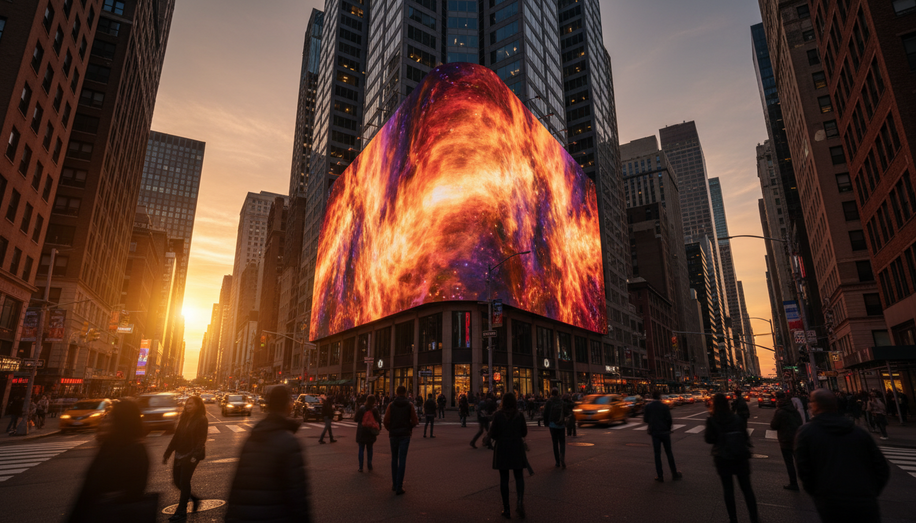

In cities worldwide, out-of-home (OOH) advertising structures—billboards, digital screens, bus shelters, and kiosks—have long served as conduits for commercial messages, but a quiet revolution is redefining their purpose. These ubiquitous platforms are evolving into dynamic canvases for public art, injecting urban landscapes with creativity, fostering community identity, and enhancing aesthetic appeal in ways that transcend sales pitches. By partnering with artists and cultural initiatives, OOH providers are transforming concrete jungles into vibrant galleries, proving that advertising infrastructure can catalyze cultural enrichment without sacrificing visibility.
Consider Paris’s iconic Morris columns, those cylindrical kiosks installed since 1868 that have dotted the city’s streets as visual landmarks. Originally designed for posters, they now host contemporary art displays under initiatives like those from JCDecaux, blending historical heritage with modern expression. This evolution makes fine art accessible to passersby who might never enter a gallery, turning routine commutes into encounters with cultural heritage. Similarly, in Guatemala City, JCDecaux has collaborated with the Rozas-Botrán Foundation for over 13 years to convert advertising panels into an open-air gallery. Local artists’ works adorn panels across the metropolis, democratizing art and infusing the urban fabric with homegrown narratives that strengthen community bonds.
This fusion of OOH and public art echoes landmark installations that have reshaped city identities. Anish Kapoor’s Cloud Gate, known as “The Bean,” in Chicago’s Millennium Park turned an underused public space into a global draw, attracting 25 million visitors annually through its interactive, reflective form. Before its 2006 unveiling, the park languished; afterward, it became a symbol of urban renewal, inviting participation that mirrors how OOH panels can engage the public beyond passive viewing. In a parallel vein, artist Ken Gonzales-Day’s billboard projects at Los Angeles Union Station from 2015 to 2016 depicted the region’s wild landscapes—native species and natural vistas—on massive OOH surfaces. Commissioned by METRO Arts, these works softened stark station corridors and parking lots, offering commuters moments of contemplation amid the rush, while instilling local pride and drawing attention to California’s environmental heritage.
OOH’s adaptability shines in temporary, high-impact campaigns that blend commerce with culture. During the COVID-19 era, when museums shuttered, Los Angeles’s TBC foundation commandeered billboards to showcase contemporary art and graffiti by emerging artists. Gigantic canvases brought exhibitions to the streets, reconnecting isolated residents with creative expression and proving OOH’s role in cultural continuity during crises. In New York, the nonprofit Art in Ad Places took a bolder approach, partnering with 55 artists to commandeer one outdoor ad space weekly for over a year. These unsanctioned takeovers replaced ads with provocative works, sparking conversations on public space ownership and challenging the commercialization of cityscapes.
Even brands have embraced this shift, leveraging OOH for artistic interventions that enrich rather than exploit. Fendi transformed Rome’s Colosseo Quadrato—a stark fascist-era building—into a colossal canvas, inviting graffiti artist Pokras Lampas in 2017 to cover its square rooftop with intricate designs. This repurposing turned a symbol of rationalist architecture into a beacon of global street art, merging fashion branding with urban revitalization. Oatly, the plant-based milk company, playfully subverted expectations with murals disguised as hand-painted street art, cheekily declaring, “We made this ad look like street art so you would like it better.” Such meta-commentary highlights OOH’s potential to critique its own medium while beautifying walls.
These examples illustrate broader impacts. Christo and Jeanne-Claude’s 2016 Floating Piers on Lake Iseo drew 1.2 million visitors in 16 days, boosting local tourism by 30 percent and revitalizing economies through immersive art. OOH initiatives yield similar ripple effects: JCDecaux’s Guatemala project not only beautifies but cultivates emerging talent, while Gonzales-Day’s station billboards enhanced transit hubs, making them destinations rather than mere thoroughfares. Interactive works amplify this further. Olafur Eliasson’s artificial waterfalls along New York City’s East River in 2008 married nature and urbanity, using scale to provoke wonder; OOH screens could replicate such incongruity with dynamic digital art, questioning viewers’ place in their surroundings.
Yet challenges persist. Ephemeral installations like Robert Smithson’s Spiral Jetty, which emerges and recedes with Utah’s Great Salt Lake waters, remind us that OOH art must balance permanence with adaptability—digital formats allow rotation of works, keeping spaces fresh. Regulatory hurdles and commercial priorities demand creative partnerships, as seen in Invader’s unauthorized mosaic “Space Invaders” across 79 cities since 1998, which bypasses permissions to make art universally accessible. Still, successes abound: Alexander Calder’s La Grande Vitesse in Grand Rapids, Michigan, the first federally funded public art in 1969, sparked controversy but endures as a plaza focal point, offering varied perspectives from every angle—much like OOH’s multi-view potential.
As urban populations swell and digital fatigue sets in, OOH’s pivot to public art positions it as an essential urban enricher. By serving as platforms for reflection, interaction, and identity-building, these structures elevate daily life, turning ads into art and cities into canvases. The message is clear: beyond commerce, OOH holds the power to humanize the built environment, fostering joy, dialogue, and a deeper sense of place for all.