
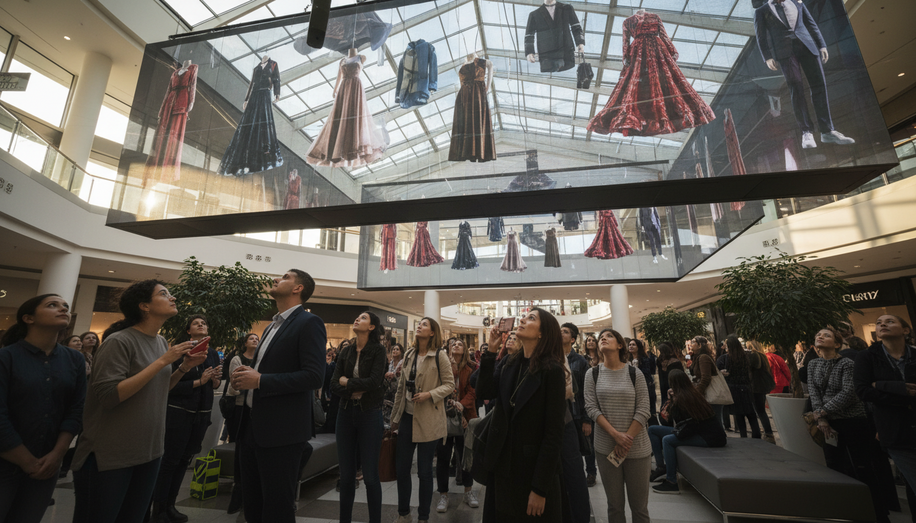

Retail environments have fundamentally transformed into battlegrounds for consumer attention, where the final purchasing decision increasingly hinges on what shoppers encounter at the point of sale. In-store out-of-home advertising has emerged as the critical differentiator, moving beyond traditional static signage to become a dynamic, strategically positioned tool that captures high-intent shoppers at their most receptive moment.
The retail landscape of 2026 demands precision. Digital screens positioned at store entrances, within aisles, and near high-conversion zones like pharmacies and checkout areas represent the cutting edge of OOH strategy. These placements work by intercepting customers when purchase intent is highest, creating what marketing professionals recognize as a critical conversion window. Unlike traditional outdoor advertising that builds awareness across dispersed audiences, in-store OOH operates within a compressed timeframe where the consumer has already entered the buying journey.
Context-aware creative represents the technological leap that distinguishes 2026 in-store solutions from their predecessors. Digital networks now adapt messaging based on store context, time of day, and real-time product availability. A pharmacy might display seasonal health promotions during cold months, while a beverage cooler showcases refreshment messaging during afternoon hours when purchase likelihood peaks. This intelligence-driven approach transforms static shelf space into responsive marketing infrastructure that evolves with consumer behavior patterns throughout the day.
The integration of smart signage technology amplifies engagement potential without overwhelming retail environments. QR codes embedded within in-store graphics provide seamless bridges between physical and digital experiences, allowing shoppers to access detailed product information, reviews, or exclusive mobile offers with a single scan. This capability proves particularly valuable for retailers managing high SKU counts or complex product categories where print alone cannot accommodate necessary information density.
Strategic positioning within retail spaces requires understanding the customer journey through the store. Street furniture-style displays in shopping districts create initial touchpoints, but in-store OOH near high-traffic zones—entrance vestibules, main aisles intersecting with popular departments, and queue areas—ensures repeated exposure during critical decision moments. The science of pedestrian flow allows retailers to position messaging where engagement frequency naturally accumulates without feeling intrusive.
Measurement capabilities have fundamentally shifted the economics of in-store OOH. Traditional retail advertising relied on estimated metrics and assumed correlations between visibility and sales. Contemporary programmatic solutions enable verified impression tracking, foot traffic attribution, and precise conversion measurement. Retailers can now determine not just how many shoppers viewed a particular display, but which messaging drove store entries, category visits, and basket additions. This data transparency transforms OOH from a speculative medium into an accountable channel within broader retail marketing strategies.
The expansion of in-store networks reflects recognition that purchase decisions consolidate at the physical point of sale. Brands increasingly invest in securing premium in-store placements well in advance, recognizing that high-traffic retail corridors represent scarce inventory requiring strategic planning. Shopping centers and anchor retailers function as premium media environments where attention concentrates naturally, delivering efficiency that extends media budgets further than dispersed outdoor locations.
Energy-efficient LED technology underpins sustainable in-store OOH infrastructure. Modern retail operators balance visibility demands with operational costs, making LED-powered displays the industry standard. These systems deliver superior brightness and reliability while reducing utility expenses—a critical consideration for retailers managing tight margin environments. The combination of durability and cost efficiency ensures in-store networks remain economically viable investments over multi-year deployment cycles.
Omnichannel integration amplifies in-store OOH effectiveness substantially. When retail point-of-sale messaging coordinates with digital search campaigns, social retargeting, and email sequences, the cumulative brand impression strengthens conversion probability. A shopper exposed to in-store signage, subsequently retargeted through social platforms, and reinforced via email nurturing sequences demonstrates significantly higher purchase intent than those encountering isolated touchpoints.
The emerging ecosystem of in-store OOH solutions reflects a broader market recognition: retail success in 2026 depends on capturing attention where conversion intent peaks. As these networks expand across retail environments, brands and retailers that deploy intelligent, contextually-aware, strategically-positioned OOH solutions will increasingly capture disproportionate share of customer spending within competitive retail categories.