
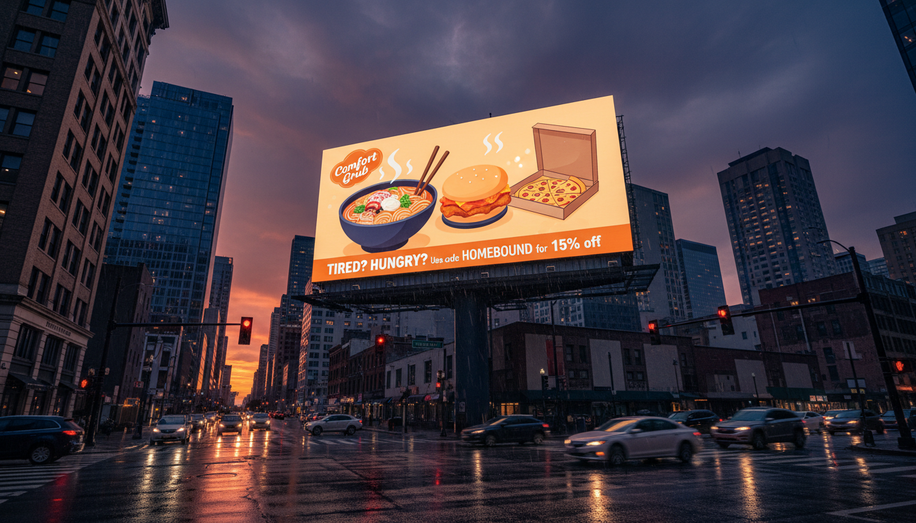

In an advertising landscape increasingly fragmented by digital noise, out-of-home campaigns have discovered a compelling advantage: the ability to reach consumers in moments when contextual relevance transforms a message from background noise into something genuinely meaningful. This power to deliver the right message at the right time and place has become essential for brands seeking to cut through the clutter and create lasting impressions.
Contextual relevance in OOH advertising operates on a simple but powerful principle. When a message aligns with a consumer’s immediate environment, mood, and circumstances, it resonates far more effectively than generic advertising. Research demonstrates this impact clearly: 69% of consumers are more likely to pay attention to contextually relevant ads, and digital out-of-home campaigns employing contextual targeting show an 18% higher consumer brain response compared to non-contextual approaches. This neurological engagement translates directly into business results, with contextually relevant DOOH campaigns delivering a 17% increase in ad recall and a 16% sales uplift.
The strength of contextual OOH lies in its capacity to meet consumers during their daily routines in physical spaces. Unlike digital channels where impressions occur in milliseconds, outdoor exposures typically last significantly longer, particularly in transit environments where captive audiences engage with messaging during commutes. This extended viewing time allows brands to craft more nuanced narratives and build deeper associations. A sequential billboard campaign, for instance, can unfold across multiple installations, revealing different aspects of a message as consumers move through their environment. This uninterrupted engagement creates what some call a “surround-sound effect” that becomes increasingly difficult to achieve in fragmented digital channels.
Weather and environmental conditions represent one of the most powerful contextual signals available to OOH advertisers. A billboard advertising iced coffee on the hottest day of the year, or warm beverages during winter commutes, gains considerable impact through immediate situational relevance. These campaigns don’t feel like traditional advertising but rather useful information delivered at precisely the moment consumers need it. The Weather Company’s work with CVS demonstrates this principle in action. By sponsoring an AI-enabled Flu Insights tool during periods of high flu risk, CVS positioned flu shot messaging exactly when and where consumers were already thinking about illness prevention, effectively reaching 42 million consumers at moments of maximum relevance.
Location-based contextual strategies offer another critical dimension. Posterscope research reveals that 77% of consumers want to see advertisements relevant to their location, and directional DOOH ads near shopping centers and entertainment venues drive tangible results—with 51% of consumers who noticed directional ads subsequently visiting the advertised business. A family entertainment venue, for example, can tailor creative to different contexts: emphasizing birthday party ease when appearing near family-focused content, while highlighting sports amenities when placed adjacent to sports-related articles.
Creating effective contextually relevant campaigns requires strategic thinking from the outset. Brands must identify key environments where their message naturally aligns with consumer mindsets and needs. Are target customers researching hiking trails, browsing camping gear, or stuck in evening traffic looking for dinner solutions? The answer shapes where campaigns should live and how creative should be developed. Involving creative teams early ensures ad copy, visuals, and calls-to-action directly reference or subtly acknowledge their surroundings. A local ice cream shop advertising near a beach during a heatwave might feature the headline “Beat the Heat!” while the same business advertising in a different context emphasizes different attributes entirely.
The most effective OOH campaigns share a common characteristic: they focus on one strong idea and a single, unmistakable message that responds to its environment. This disciplined approach acknowledges a fundamental truth about outdoor advertising. Whether on a transit shelter, digital billboard, or building wrap, the campaign exists within a specific moment and place. By honoring that context and meeting consumers where they are—literally and psychologically—brands transform outdoor advertising from interruption into relevance, creating the conditions for deeper engagement and meaningful business impact.