
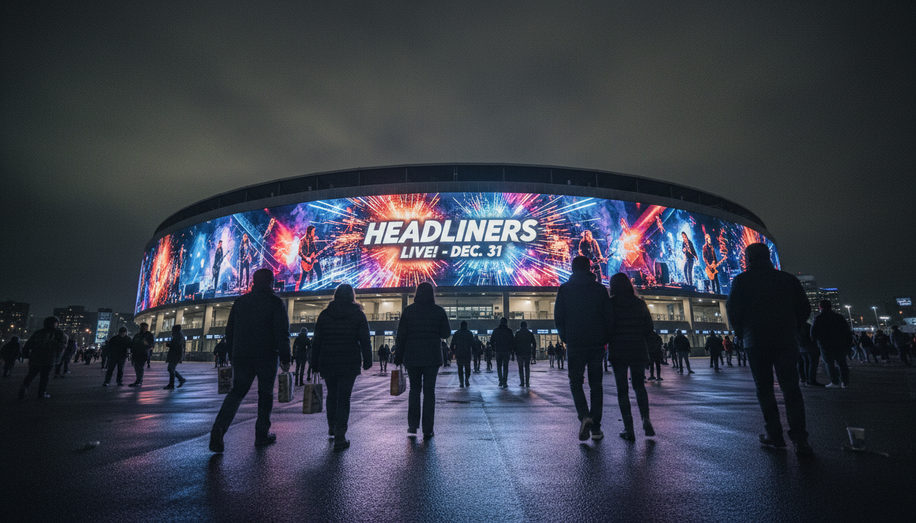

In the bustling streets of Charlotte, digital billboards flickered to life with a live PGA Championship leaderboard, updating in real time as golfers vied for victory, seamlessly transitioning each evening into invitations for happy hour with Elijah Craig bourbon. This dynamic out-of-home (OOH) campaign, powered by Adams Outdoor Advertising and Vistar Media, generated over 15 million impressions across 41 screens, captured 5 million unique devices, and dominated the city before, during, and after the tournament. Far from static brand launches, such integrations of OOH with event marketing transform urban landscapes into extensions of the spectacle itself, driving awareness, attendance, and onsite buzz for concerts, festivals, and sporting events.
Event marketers have long recognized OOH’s unmatched ability to command public attention at scale, but digital out-of-home (DOOH) elevates this to a strategic powerhouse. Unlike product unveilings that build long-term equity, event-driven OOH thrives on immediacy and context, layering real-time relevance onto high-traffic environments. During the Elijah Craig activation, pre-event countdowns built anticipation in the five days leading up to the PGA, shifting to live sports data mid-tournament and celebratory spirits messaging post-round—ensuring the brand resonated when fans were primed to engage. This dayparting precision, enabled by Vistar’s ad server and audience targeting, created a “real-time brand experience” that owned Charlotte during golf’s premier event, proving OOH’s pivot from passive display to active event companion.
Real-world results underscore this shift. A museum promoting an iconic artist’s exhibit deployed socially activated OOH at a New York City transit hub, featuring lyrics, photos, and scannable codes linking to a curated playlist. The campaign shattered attendance records with over 2 million visitors and earned 266 million social and press impressions, blending physical provocation with digital extension to funnel commuters straight to the venue. Similarly, a Los Angeles OOH push wrapped an electric bus and deployed posters, spiking sales by 42 percent and TikTok followers by 14 percent through sustainability-themed messaging tied to local events. These cases highlight OOH’s role in not just raising awareness but converting it to foot traffic and onsite action, distinct from brand launches that prioritize recall over urgency.
DOOH’s interactivity further amplifies event synergy. Weather-responsive ads in New York drove a 35 percent foot traffic increase for fashion promotions, adapting messaging to real-time conditions that mirrored festival vibes or game-day energy. In Tokyo, safety alerts on digital signage boosted app downloads by 47 percent during public gatherings, while London’s interactive “smile campaign” yielded a 22 percent sales lift by gamifying urban encounters. For retailers syncing with seasonal sales or concerts, QR codes on DOOH screens prompted 15 percent more app downloads, bridging street-level intrigue to mobile completion and onsite purchases. A fashion brand’s “Impossible Sale” countdown on screens near parking garages created exclusivity buzz, surging both online traffic and store visits—perfect for festival tie-ins where hype converts to crowds.
Omnichannel fusion takes this further, embedding OOH within broader event ecosystems. A grocery chain’s QR-enabled ads let passersby build shopping lists en route to pop-up markets, while interactive mirrors in retail zones lifted sales 30 percent by teasing event-exclusive deals. Luxury car brands in high-traffic garages saw test drive bookings soar by targeting affluent drivers amid auto shows or races, their DOOH syncing with mobile retargeting for seamless follow-through. At Bridgestone Arena, a permanent wallscape with digital storytelling enhanced fan experiences during games, fostering community ties that spilled into higher attendance and engagement. These tactics differ sharply from brand launches: events demand temporal precision, where OOH acts as a spatial trigger, priming audiences for the main act.
Media mix integration cements OOH’s event dominance. A drink company paired billboards with DOOH displaying live social reactions to TV spots, unifying messaging across channels during major broadcasts or festivals. Fashion labels showcased user-generated content on city screens, spurring in-person visits and social amplification ahead of runway events. Tech brands at bus stops offered interactive demos that resumed on users’ phones, ideal for concert pre-parties or sports tailgates. In parking facilities, A Lot Media’s video-real-time combos for retail chains drove record quarterly sales by coordinating DOOH with mobile pushes, turning transit moments into event gateways.
Critically, these strategies yield measurable lifts: mobile click-through rates rise 15 percent when bolstered by OOH, per industry research, while weather-triggered ads prompt 25 percent more store visits—gold for unpredictable festivals or outdoor spectacles. For venue owners, platforms integrating POS data with OOH provide real-time revenue insights per event, optimizing onsite tactics. Yet success hinges on execution: premium inventory, dynamic creative, and data-driven targeting, as Adams Outdoor’s VP Matt Hood noted, redefine DOOH boundaries for global events.
From street-level provocations to stadium-adjacent immersions, OOH evolves event marketing into a fluid continuum. It doesn’t just advertise the event; it becomes its prelude, amplifying every cheer, ticket scan, and shared moment. As festivals multiply and spectacles draw millions, savvy marketers will lean harder on this street-to-stadium bridge, turning cities into co-stars.