
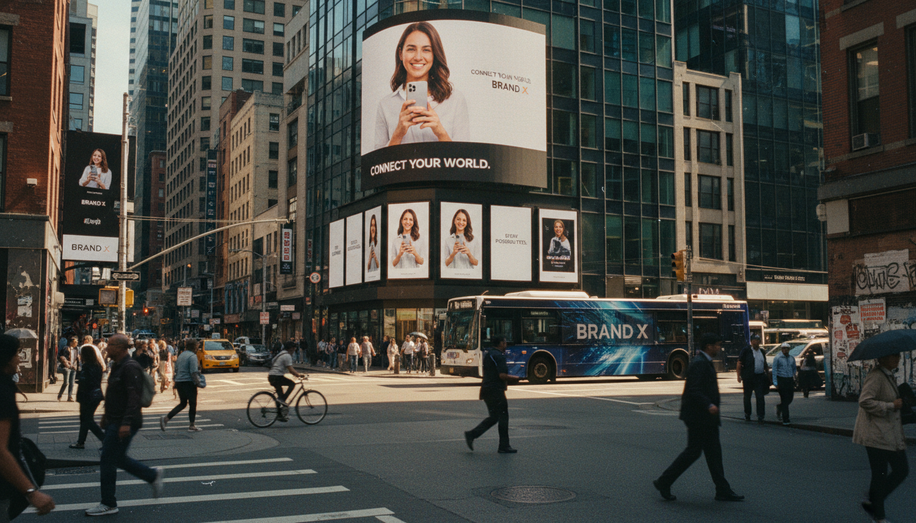

In the crowded arena of modern advertising, where consumers navigate a relentless barrage of digital noise, out-of-home (OOH) campaigns stand out by claiming physical space in the real world. Combining diverse formats—billboards towering over highways, street furniture lining urban sidewalks, and transit ads embedded in daily commutes—unlocks a multiplier effect that single-medium efforts simply cannot match. This holistic approach creates a seamless brand presence, amplifying visibility, recall, and ultimately, return on investment.
The science behind this synergy is compelling. A WARC study reveals that campaigns blending multiple large-format OOH elements deliver a 57% uplift in brand metrics, with exposure to varied formats making consumers two to three times more likely to recall ads compared to control groups. Similarly, research from the Out of Home Advertising Association shows that multi-format strategies boost ROI by 27% over solitary channels, as repeated encounters across environments foster a sense of ubiquity. Participants exposed to two different large outdoor ads, for instance, demonstrated 150% higher brand recall than those with none, proving that diversity in delivery sharpens memory and drives action.
This power stems from how people actually live and move through their days. Billboards command attention through sheer scale on high-speed drives, their massive visuals piercing the periphery where mobile screens falter. Transit advertising, meanwhile, secures prolonged dwell time—commuters staring at subway wraps or bus shelters absorb nuanced messaging during otherwise idle moments. Street furniture, from benches to kiosks, thrives at pedestrian eye level, inviting closer inspection and even tactile engagement in high-footfall zones. When orchestrated together, these formats layer experiences: a driver spots a provocative billboard, reinforcing it later via a transit shelter en route to lunch, then a street poster near their destination. This “surround-sound” effect builds mental availability, turning fleeting glances into lasting impressions.
Strategic cohesion is the linchpin. Consistent branding—unified visuals, colors, typography, and calls-to-action—across formats ensures the message resonates as a single voice, regardless of context. Tailoring content maximizes each channel’s strengths: bold, simple imagery suits fleeting billboard views, while richer narratives fit transit’s extended exposure. Audience insights guide placement; transit dominates for urban commuters, billboards for highway travelers, and street-level assets for local foot traffic near shops or campuses. Synchronized timing further elevates impact—aligning launches with peak hours, events, or seasons when target behaviors peak, such as evening rushes or holiday spikes.
Beyond reach, multi-format OOH bridges to digital realms, sparking cross-channel engagement. Some 78% of viewers search online after OOH encounters, blending physical ubiquity with measurable online lifts. Integrated campaigns with four or more channels outperform dual efforts by up to 300%, guiding consumers from awareness to purchase through repeated, harmonious touchpoints. Unique identifiers like QR codes or campaign-specific URLs on billboards funnel traffic to digital hubs, while geolocation and pedestrian counters quantify real-world impressions.
Creativity amplifies this framework. OOH’s physicality demands visuals that exploit scale, motion, and environment—think illuminated DOOH sequences unfolding narratives across sequential billboards or experiential street installations that invite interaction. In cluttered landscapes, where consumers dodge thousands of daily messages, this dimensionality cuts through: OOH lifts ad awareness by 13.3% over digital or TV, per comprehensive benchmarks. For emerging brands, it accelerates familiarity; for incumbents, it reinforces equity amid fragmentation.
Challenges persist—coordination demands precision, from creative adaptation to scheduling—but data-driven tools like DOOH analytics and traffic modeling mitigate risks, proving performance in real time. Agencies leveraging this holistic lens report not just higher recall but deeper loyalty, as multi-format ubiquity signals authority and investment in the consumer’s world.
Ultimately, in an era of screen fatigue, multi-format OOH campaigns reclaim attention where life unfolds. By weaving billboards, transit, and street elements into a unified tapestry, brands don’t just advertise—they inhabit the consumer journey, driving outsized results that digital silos struggle to replicate.