
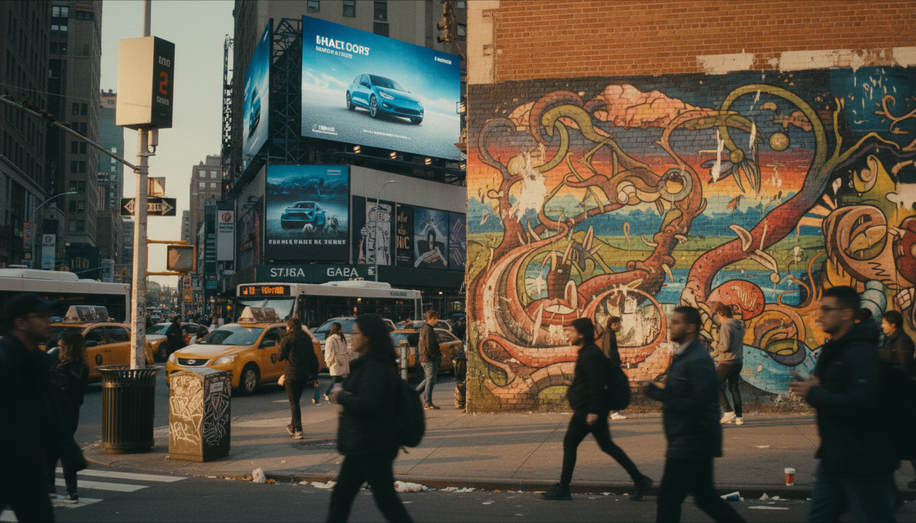

In the crowded arena of out-of-home advertising, where static billboards risk blending into the urban haze, guerrilla and unconventional tactics are rewriting the rules of engagement. These low-cost, often ephemeral interventions—think projection mapping on city facades, street stenciling that surprises pedestrians, or pop-up installations that hijack public spaces—deliver maximum disruption by turning everyday environments into immersive brand experiences. Far from the predictable glow of digital screens, they thrive on surprise, interactivity, and shareability, proving that creativity can outshine multimillion-dollar media buys.
Consider the Milwaukee Bucks’ audacious sky bridge takeover during their NBA playoff run. The team blanketed a major bridge over the Milwaukee River with vibrant green “Performance Clear” window film, transforming the structure into a glowing emblem of their #FearTheDeer campaign. Pedestrians crossing enjoyed unobstructed views while being enveloped in team spirit, a seamless fusion of visibility and virality that amplified buzz without obstructing daily life. This temporary installation exemplifies how guerrilla OOH leverages existing infrastructure for low-cost spectacle, reaching commuters and locals alike in ways a standard billboard never could.
Projection mapping takes this ethos to luminous heights, as AT&T demonstrated with its 4G LTE launch in Las Vegas. Technicians beamed colossal, colorful visuals onto high-traffic buildings, captivating nighttime crowds and reportedly exposing the message to a million people. The tactic’s power lies in its ephemerality: projections flicker to life only when conditions align—dark skies, bustling streets—creating urgency and exclusivity that static ads lack. Similarly, street stenciling offers a gritty, ground-level punch. Bounty paper towels stunned passersby by projecting massive, hyper-realistic messes onto sidewalks—spilled coffee the size of cars—forcing onlookers to confront the brand’s absorbency in visceral, one-sentence clarity.
Pop-up installations elevate disruption into participation. Nike’s Unlimited Stadium in Manila morphed a public space into a glowing LED running track shaped like a colossal shoe, where runners synced Nike footwear sensors to race virtual avatars. This tech-infused pop-up didn’t just advertise; it invited engagement, sparking media coverage and social shares through its blend of athleticism and innovation. Coca-Cola’s Happiness Machines, vending units in high-traffic spots that dispensed flowers, balloons, or pizzas alongside soda, forged emotional bonds. Hidden cameras captured joyful reactions, fueling viral videos that extended reach exponentially. Even simpler executions pack a wallop: KitKat sculpted park benches into oversized chocolate bars emblazoned with “Have a Break, Have a KitKat,” turning rest stops into branded oases that lingered in public memory.
These tactics draw from a guerrilla playbook rich in variety. Wild posting floods walls with clustered posters, as VitaminWater did to spotlight flavor diversity, the sheer volume demanding attention amid urban clutter. Oversized replicas hijack scale for humor and horror—Frontline Flea & Tick Spray’s billboard featured a gargantuan dog overrun by human “fleas,” turning commutes into comedic spectacles. McDonald’s painted crosswalks as french fries and reshaped bus shelters like Happy Meal boxes, weaving branding into the city’s pulse and igniting social media frenzy. Cheltenham Festival’s architectural pods, wrapped in perforated film, doubled as ticket booths on high streets, merging promotion with utility.
What unites these campaigns is their embrace of low barriers to entry. Street marketing, astroturfing disguised grassroots efforts, or temporary sidewalk art like orange spray-painted bikes require minimal budgets but yield high returns through organic amplification. A dangling car from Chicago’s Marina Tower—Allstate’s “Are You in Good Hands?” stunt—halted traffic and sparked conversations, proving urban environments are canvases for the bold. IKEA scattered sofas at Australian bus stops, turning waits into lounges and underscoring product appeal.
Yet disruption demands caution. Ballyhoo Media’s floating barge billboards in New York drew eyes but were swiftly shuttered over regulations, a reminder to scout legal landscapes. Success hinges on context: high-footfall zones, peak hours, and tie-ins to cultural moments maximize impact while minimizing backlash.
In an era of ad fatigue, these unconventional OOH strategies reclaim attention by infiltrating real life. They don’t shout from afar; they embed in the commute, the stroll, the pause, forging connections that static boards can’t match. Brands willing to stencil, project, or pop up beyond the standard board aren’t just advertising—they’re staging unmissable events, proving guerrilla tactics remain the ultimate disruptors.