
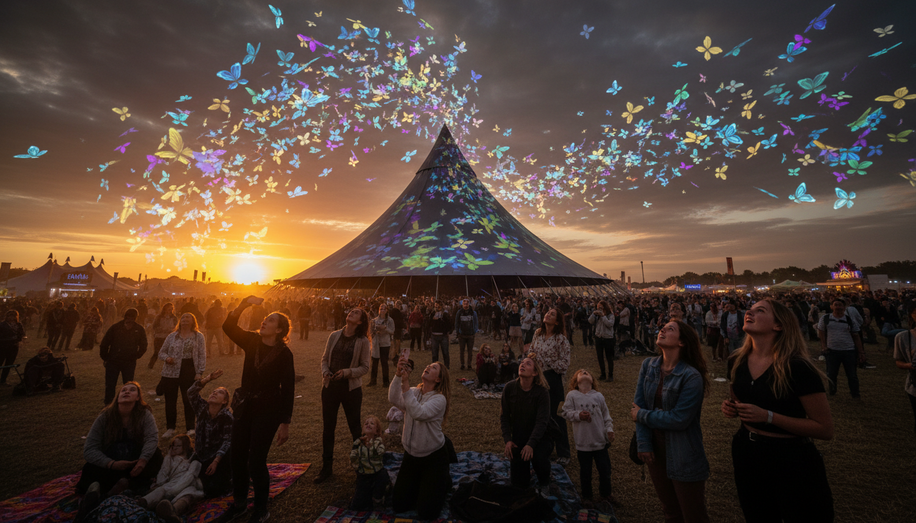

In the bustling heart of a city, a simple scan of a QR code on a subway poster or bus shelter ad can unleash a holographic winemaker stepping out from the frame, ready to chat about his craft. This is the new frontier of out-of-home (OOH) advertising, where augmented reality (AR) overlays digital magic onto the physical world, turning passive glances into unforgettable interactions. No longer confined to static billboards, AR is reshaping OOH into a dynamic medium that captivates commuters, shoppers, and pedestrians, fostering deeper emotional bonds and measurable engagement.
The shift toward digital OOH has made AR more accessible than ever. Traditional billboards are giving way to screens and spatial computing that transform any urban surface into an interactive canvas. Marketers now layer AR experiences atop posters, benches, and massive displays, activated via smartphone cameras without requiring app downloads—thanks to web-based platforms like 8th Wall. This app-less approach lowers barriers, allowing instant immersion that blends the real environment with virtual elements, from exploding asteroids at bus stops to virtual vending machines materializing on sidewalks.
Consider Burger King’s audacious “Burn that ad” campaign in Brazil, where rival fast-food billboards became targets for digital arson. Users pointed their phones at competitors’ posters, ignited them virtually through the BK app, and watched a Whopper coupon emerge from the ashes—driving foot traffic with a cheeky twist on disruption. Similarly, Pepsi Max’s 2015 “Unbelievable” bus shelter in New York created viral pandemonium: hidden cameras composited live street feeds with AR spectacles like giant robots rampaging or tentacles bursting from the pavement, drawing crowds and millions of online views. These stunts prove AR’s power to hijack attention in high-traffic zones, turning everyday waits into shareable spectacles.
Brands are leveraging AR for gamification, too, blending play with promotion to boost recall and loyalty. Ally Bank’s Monopoly-themed treasure hunt sprawled across 36 game-board squares in six U.S. cities, where scanning unlocked AR animations of Mr. Monopoly dispensing points and cash prizes. The campaign racked up 100,000 plays, with 86% of participants completing the board, elegantly tying financial literacy to fun. Vodafone took this further with its “Elf and Seek” AR hunt across UK screens and posters, challenging players to capture digital elves over 13 days for prizes, sparking social media frenzy under #ElfAndSeek. In Germany, Vodafone’s billboard game reached 50 million people, with 40% of engagers visiting stores and 82% expressing excitement for more AR ads—yielding 17,000 minutes of interaction and a 10% lift in brand uniqueness.
Immersive storytelling elevates AR beyond games, forging emotional connections. Jackson Family Wines’ Siduri campaign brought founder Adam Lee as a photorealistic hologram to life via QR scans on in-store billboards and bottles, letting users converse in mixed reality captured by Microsoft’s studio. Malfy Gin’s “Escape to a Malfy World” transported drinkers to Italy’s Amalfi Coast through 360-degree AR portals on 300,000 tagged bottles and OOH posters; users navigated botanical routes, snapped selfies, and shared adventures, targeting style-savvy 24-to-45-year-olds. Even nonprofits shine: the UK’s NHS AR blood donation simulator on posters let scanners “give” virtual blood and witness its life-saving impact, instilling lasting positivity.
OOH’s unique venues amplify AR’s reach. Transit hubs like subways and bus stops offer repeated exposure, as in The Walking Dead’s “Scary Shelter” at Vienna trams, where zombies lurched from live feeds to hype a new season, going viral and winning awards. Red Bull simulated 70-foot cliff dives from QR-scanned ads, immersing fans in the adrenaline of World Series events. BON V!V Spiked Seltzer placed tappable 3D vending machines via murals in Los Angeles and San Diego, while Kinder’s safari portal brought animated animals with fun facts to retail OOH, delighting families app-free.
These campaigns highlight AR’s versatility across scales—from murals to monumental billboards—enhancing transit ads with offers, videos, or games. Results speak volumes: Pizza Hut’s Pac-Man pizza box AR generated 741 million impressions and 10.6 million sales; Toyota’s garage test drives educated on features via digital billboards. Yet challenges persist, like ensuring broad smartphone compatibility and measuring indirect lifts, but web AR’s evolution addresses them, making 2026 a pivotal year for DOOH strategies.
As cities digitize, AR promises to make OOH not just visible, but visceral. By inviting consumers to co-create experiences—burning ads, hunting elves, or diving cliffs—brands are crafting augmented worlds that linger long after the scan. This fusion of reality and augmentation isn’t a gimmick; it’s the future of advertising, where the street itself becomes the screen, and every interaction a potential conversion.