
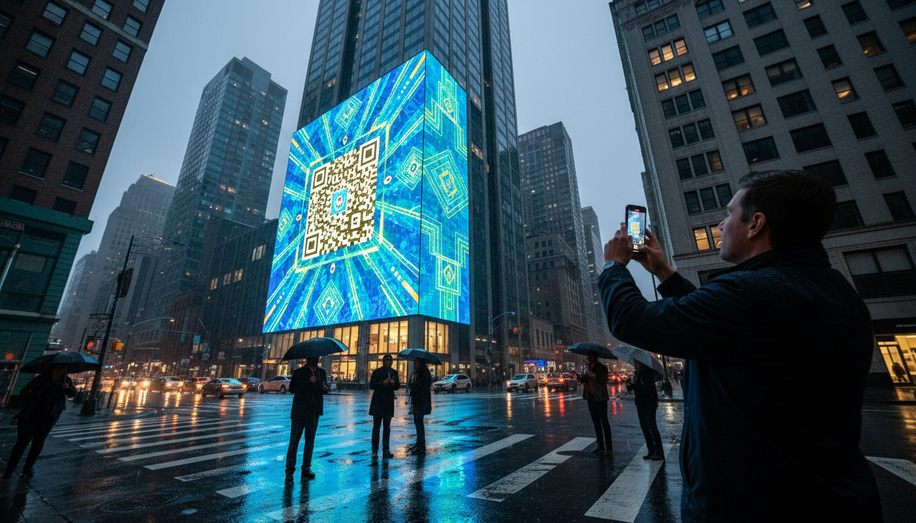

In the bustling streets of modern cities, where billboards loom large and bus shelters capture fleeting glances, QR codes are quietly revolutionizing out-of-home (OOH) advertising by forging an unbreakable link between the physical world and digital realms. Once static canvases shouting messages into the void, OOH ads now invite immediate action with a simple smartphone scan, transforming passive viewers into active participants and driving seamless transitions from sidewalk curiosity to online conversions. This integration is not mere gimmickry; it’s a strategic evolution that meets consumers where they live—half in the real world, half in their screens.
The core appeal lies in instant engagement. Picture a commuter idling at a transit stop, eyes drawn to a vibrant ad promising exclusive content. A quick scan of the QR code unlocks a promotional video, app download, or limited-time discount, all without typing a URL or remembering a brand name. High-dwell-time formats like street furniture, wild postings, and bus shelters amplify this effect, capitalizing on moments when attention lingers just long enough for impulse. Over 70% of smartphone users have scanned a QR code in the past year, making this frictionless entry point a natural fit for OOH’s mass-reach audience. Brands such as retailers or event promoters have seen scans lead directly to ticket bookings, product demos, or social media follows, turning a few seconds of exposure into tangible interactions.
This bridge extends far beyond the scan itself, creating cohesive cross-channel experiences. QR codes tether OOH campaigns to websites, e-commerce pages, or augmented reality previews, reinforcing messaging across touchpoints and boosting brand recall. A billboard glimpsed from a moving car might link to an online store for flash sales, while a street ad near a fashion district offers 360-degree views of new collections, immersing users in the brand narrative. In programmatic digital OOH (DOOH), this connectivity shines brighter: scans reveal peak engagement times, locations, and even weather correlations, enabling real-time tweaks to creative or placements. Dynamic QR codes take it further, allowing marketers to update linked content—say, swapping a seasonal offer—without reprinting or swapping physical ads, ensuring relevance in fast-changing markets.
Measurability, long the Achilles’ heel of traditional OOH, finds its antidote here. Each scan logs data on time, place, and user behavior, providing granular insights unattainable from impressions alone. Advertisers can pinpoint which formats or messages perform best, double down on winners, and refine underperformers mid-campaign. True Impact Media notes that QR tagging turns every ad into a data-rich asset, tracking the full customer journey from scan to purchase. This analytics edge proves especially potent in location-based comparisons, where foot traffic at bus stops or high-visibility billboards yields higher scan rates and sales lifts. Studies show 49% of OOH viewers research advertisers post-exposure, a figure QR codes supercharge by streamlining the path to action.
Contactless convenience adds another layer of advantage, a holdover from pandemic-era shifts now embedded in consumer habits. In a touch-free world, scanning eliminates fumbling with brochures or keypads, aligning perfectly with health-conscious behaviors while minimizing journey friction. For pedestrian-heavy spots, this touchless interactivity enhances safety and appeal, drawing scans from afar on billboards or transit displays. Younger demographics, tech-savvy and reward-driven, respond enthusiastically: exclusive deals or gamified content via QR build loyalty, positioning brands as innovative leaders.
Sales and conversions follow suit. QR-equipped OOH ads have demonstrated multiple-fold increases in purchases, as seen in bus stop promotions linking straight to checkout or event RSVPs. Retailers report boosted traffic from dwell-time spots, where a discount scan prompts on-the-spot shopping. This isn’t hype; it’s backed by trackable results showing elevated buyer intent, with consumers 30% more likely to engage when OOH offers a clear, scannable call-to-action.
Yet success demands smart execution. Eye-catching designs, prominent placement, and compelling incentives—discounts, previews, or AR experiences—are essential to spur scans amid urban distractions. Pedestrian-friendly locations outperform high-speed roadways, maximizing dwell time and visibility. As dynamic tools evolve, QR codes are no longer optional; they’re the linchpin for OOH’s future, blending creativity with data to captivate a hybrid world. By embedding these portals, advertisers don’t just advertise—they connect, measure, and convert, proving OOH’s enduring power in a digital age.