
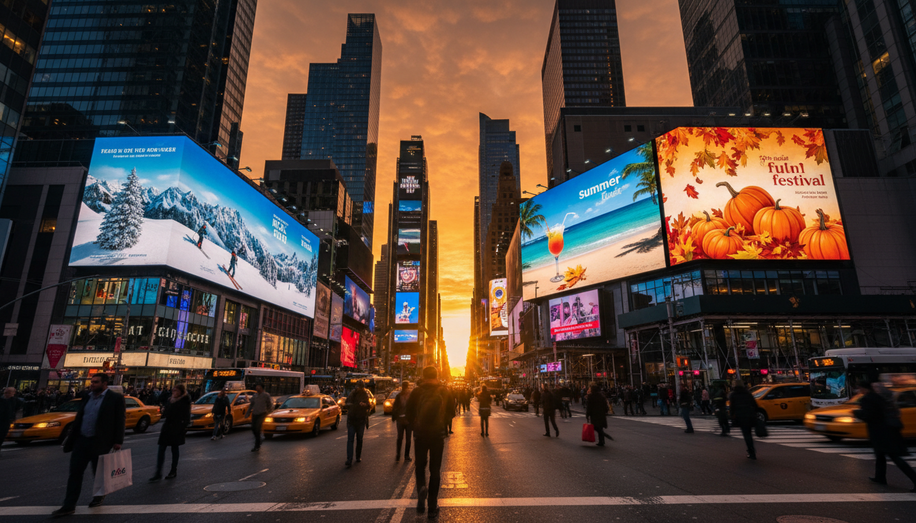

In the ever-evolving landscape of out-of-home (OOH) advertising, seasonal trends serve as a powerful force shaping campaign strategies, turning fleeting moments into lasting consumer connections. From holiday rushes to summer escapes, these cyclical shifts in behavior, weather, and culture demand that advertisers adapt swiftly, leveraging OOH’s unparalleled visibility to capture attention amid daily commutes and urban flows. By aligning bold visuals and messaging with the calendar’s rhythms, brands not only boost recall and engagement but also drive measurable spikes in foot traffic and sales, proving that timeliness is the cornerstone of effective OOH execution.
Seasonal influences manifest most vividly in how audiences interact with their environments. Winter holidays draw consumers indoors, heightening digital and social media consumption while priming them for online shopping sprees, yet OOH thrives here too by dominating high-traffic routes to malls and event venues. Conversely, warmer months propel people outdoors, amplifying mobile and location-based interactions, where billboards and transit ads intercept spontaneous decisions like beach trips or festivals. Weather patterns add another layer of complexity; rain or snow can alter audience flow, making protected locations or digital OOH formats—capable of real-time tweaks—essential for maintaining impact. Regional variations further complicate the picture: a back-to-school push in August might sync perfectly in one market but clash with local school calendars elsewhere, underscoring the need for data-driven localization.
This dynamic interplay explains why seasonal OOH campaigns outperform generic ones. They tap into emotional undercurrents—nostalgia at Christmas, urgency during tax season—making messages feel not just relevant but indispensable. A static billboard promoting tax prep in March doesn’t merely advertise; it mirrors the consumer’s immediate pain point, fostering trust and recall that lingers through weeks of exposure. Research shows such alignment yields higher engagement, with seasonal themes evoking emotions that static formats sustain via their dwell time and fixed positioning along commuter paths. For industries like retail or tourism, peaks align predictably—holidays for shoppers, summer for travelers—allowing brands to concentrate budgets where demand surges.
Adapting OOH strategies begins with meticulous planning around these trends. Start by matching messaging to the moment: a coffee chain’s winter call for “Warm Up with Our Seasonal Lattes” or a ski resort flashing real-time snow reports on digital billboards. Visuals amplify this—snowflakes for cold snaps, sun-drenched beaches for July—drawing eyes amid the visual noise of streets and highways. Placement is paramount; high-traffic zones near shopping districts or events ensure maximum impressions, while static billboards offer cost-effective consistency for campaigns spanning four to eight weeks. Digital OOH elevates adaptability, enabling weather-triggered updates or geo-fenced tie-ins that extend reach to mobile devices.
Best practices emphasize integration and measurement. Pair OOH with digital channels for reinforcement—geofencing delivers follow-up ads to billboard viewers, creating a seamless multi-touch experience. Maintain brand consistency amid seasonal flair: core colors and tone ground festive creativity, preventing dilution. For outdoor gear brands, pre-season testing of creatives around preparation narratives builds momentum without peak-season waste, scaling proven assets when urgency peaks. Industry-specific hacks abound: farmers’ markets swap produce-focused creatives monthly, while tourism operators sync with summer swells. Budget wisely, shifting to value-building in off-seasons to nurture loyalty amid ebbs.
Yet challenges persist, demanding agility. Holidays shift annually, weather defies forecasts, and regional quirks like varying school starts can skew performance. Historical data analysis—tracking past channel efficacy and consumer shifts—mitigates this, identifying optimal timing and formats. Tools like environmental data optimize further: forecast-driven scheduling places ads during favorable conditions, boosting visibility in weather-sensitive spots.
Ultimately, brands mastering seasonal OOH treat the calendar as an ally, not an obstacle. A summer travel deal in June doesn’t just sell vacations; it intercepts daydreams on the drive home, converting impulse into bookings. Static formats provide enduring local punch, digital ones nimble relevance, and together they compound ROI by syncing with life’s natural cadence. As consumer paths grow more mobile and fragmented, those who plan seasonally—tailoring, integrating, and iterating—don’t just survive the peaks and valleys; they dominate them, turning transient trends into enduring growth. In an industry where eyes are the ultimate currency, seasonal savvy ensures OOH remains unmissable, year-round.