

In the hyper-connected world of 2026, where smartphones dictate consumer behavior, digital out-of-home (DOOH) advertising is evolving from static billboards to dynamic, mobile-synced powerhouses. Advertisers who prioritize mobile integration in their DOOH strategies aren’t just adapting—they’re dominating, extending campaign reach by up to 303% and boosting engagement by 46% through seamless cross-channel synergy. This mobile-first approach transforms fleeting roadside glances into lasting digital interactions, leveraging real-time data to bridge physical screens with pocket-sized devices.
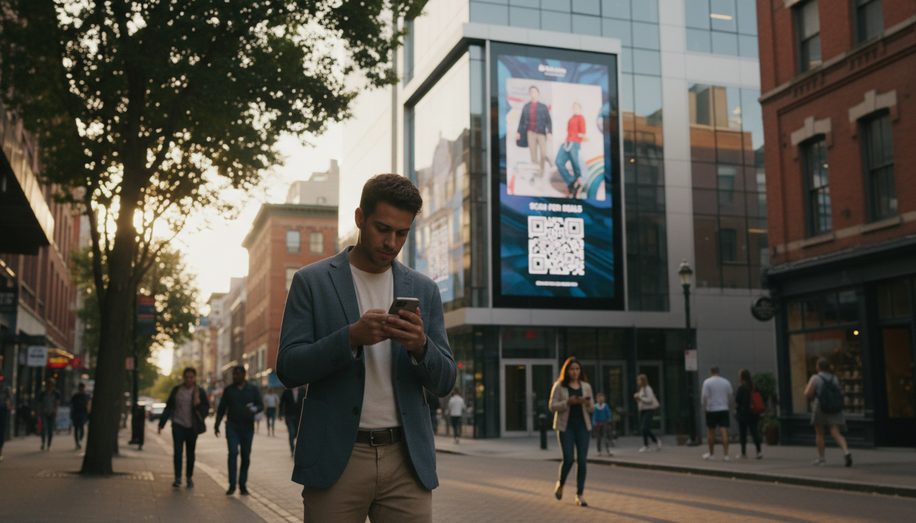
The foundation of a mobile-first DOOH campaign lies in designing content that anticipates mobile responses from the outset. Traditional out-of-home ads commanded attention but often ended there; DOOH flips the script by incorporating scannable QR codes, geo-triggers, and interactive elements that propel viewers straight to their phones. Research from the Out of Home Advertising Association of America (OAAA) reveals that 74% of mobile users take action on their devices after spotting a DOOH ad, whether scanning a code for a deal or visiting a site for more details. For instance, a clothing retailer deploying a QR-linked billboard in a bustling city center can direct commuters to an exclusive online sale, where high-quality, mobile-optimized visuals and one-tap CTAs convert impulse views into purchases.
Geo-targeting emerges as a cornerstone tactic, using longitude and latitude data from DOOH screens to fire precise mobile ads at nearby users. Picture a food delivery service like foodora activating screens in urban hubs: as office workers pass by during rush hour, their phones buzz with tailored promotions, serving 107,000 ads and generating a million impressions in one programmatic push. This proximity-based retargeting aligns with consumer habits—76% act on their mobiles post-DOOH exposure—amplifying frequency without wasting budget on distant audiences. Advertisers should prioritize platforms with robust geofencing, ensuring DOOH triggers mobile creatives optimized for speed and vertical formats, as slow-loading pages or landscape videos can tank conversions on handheld screens.
Programmatic DOOH (pDOOH) takes this integration further, enabling real-time audience matching drawn from mobile behaviors. Mobile-first brands in gaming, fintech, or streaming, which lack physical stores, now tap online signals—like app usage or content preferences—from partners such as T-Mobile or Acxiom to target DOOH inventory. A gaming company might hit heavy mobile gamers commuting through neighborhoods, using the same segments from their app campaigns to deliver consistent messaging across screens. Vistar Media’s platform exemplifies this, tying digital insights to movement patterns for measurable real-world reach, while T-Mobile campaigns have lifted purchase intent by 11% among niche demographics. The result? DOOH becomes an extension of mobile strategies, not a silo, with dynamic impression tracking quantifying lifts in awareness and store traffic—up to 2.5 times more effective when paired with mobile.
Creative execution demands a mobile lens from concept to measurement. Start with bold, unskippable visuals that demand attention in public spaces—DOOH boasts the highest ad recall of any channel, per OAAA’s 2023 data—then layer in mobile hooks like large, tappable CTAs urging “Scan for 20% Off Now.” Samsung’s Texas campaign for the Galaxy S21 illustrates the payoff: programmatic DOOH targeted booming regions, followed by mobile retargeting for QR scanners, yielding a 1.75x increase in in-store visits and sharp gains in brand metrics. Even non-retail brands benefit; energy drinks have raised purchase consideration by 12% via rural DOOH-mobile fusions.
Measurement seals the deal, as mobile analytics close the loop on DOOH’s historical opacity. Nielsen and OAAA studies show 52% of interactive DOOH viewers act on mobiles—redeeming offers or buying—while tools like geofencing track cross-channel lift in engagement (up to 30%) and recall. Advertisers can retarget non-converters with personalized nudges, such as extra incentives for billboard scanners who browsed but bounced. For mobile-first brands, this means importing online audiences into DOOH via DSPs, achieving incremental reach across 850,000 premium screens without overlapping digital fatigue.
Challenges persist, like ensuring ad creatives load lightning-fast on mobiles and navigating privacy regulations around geo-data. Yet, the data is unequivocal: ignoring mobile in DOOH forfeits half the story. A streaming service targeting video bingers on subway screens, followed by app-exclusive trailers, doesn’t just build awareness—it funnels users into digital ecosystems with precision. Retailers geo-fencing stores extend this to foot traffic, while fintech apps prime digital banking users mid-commute for app downloads.
Ultimately, mobile-first DOOH strategies demand rethinking campaigns as unified journeys, not isolated blasts. By geo-targeting, programmatic activation, QR interactivity, and rigorous analytics, advertisers unlock synergies that static OOH could never match. In a mobile-saturated era, those who marry DOOH’s commanding presence with smartphones’ intimacy don’t just reach audiences—they ignite action, driving ROI through every swipe and scan.