
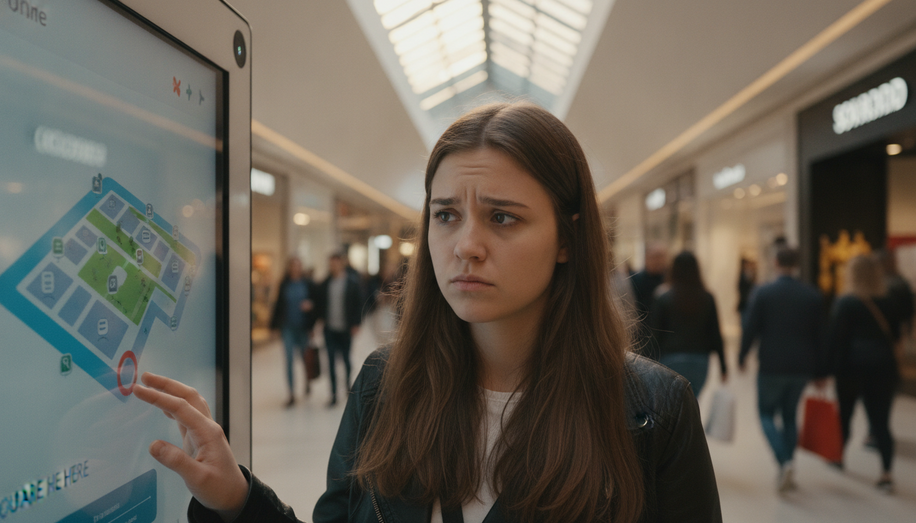

Digital out-of-home (DOOH) advertising has transitioned from estimated traffic counts to verifiable, real-time data, driven by edge-AI computer vision and anonymous audience measurement technologies. By mounting physical optical sensors directly on or near digital screens, media networks can process raw visual feeds locally to capture precise metrics like impressions, dwell time, and immediate audience attention. These advanced platforms ensure absolute user privacy by immediately discarding video frames and only transmitting aggregated metadata, allowing DOOH operators to offer programmatic buyers the same level of accountability and dynamic optimization they expect online.
Quividi
As an established pioneer in the anonymous video analytics space, Quividi provides high-fidelity audience impressions and engagement metrics for both DOOH and retail media networks. Its edge-based software, VidiReports, runs locally on media players to analyze the visual gaze of passersby, calculating precise attention time, dwell duration, and demographic cohorts like age and gender with over 90% accuracy. The platform generates an Interactive Advertising Bureau (IAB)-compliant “impression multiplier” that integrates directly with major programmatic supply-side platforms (SSPs) to facilitate real-time automated transactions. Because the raw video stream is processed entirely on the edge and immediately discarded, the platform remains strictly compliant with global privacy frameworks like GDPR.
AdMobilize
Designed for seamless deployment across complex indoor and outdoor physical spaces, AdMobilize offers a lightweight, computer vision-powered audience intelligence platform. Their software connects directly to on-screen cameras to count unique viewers, measure length of stay, classify vehicles, and evaluate demographic distributions without ever capturing or storing personally identifiable information. Media owners can utilize AdMobilize’s intuitive analytics dashboard to track engagement in real time, making immediate programmatic adjustments based on who is looking at the screen. The platform’s silicon-agnostic architecture supports both Windows and Linux, allowing operators to easily upgrade their existing hardware into smart billboard sensors in under five minutes.
Sightcorp
Acquired by experience management platform Raydiant, Sightcorp utilizes advanced deep learning and computer vision to deliver highly accurate audience and shopper analytics. Its edge-processed software analyzes face and body movements to measure real-time metrics such as visual attention span, absolute viewer counts, and detailed demographic profiles. This audience intelligence allows brick-and-mortar networks and DOOH publishers to dynamically trigger contextual on-screen content based on the immediate demographics and sentiment of the viewers in front of the screen. By operating strictly at the edge and utilizing a privacy-by-design framework, it provides verifiable proof of play and engagement while ensuring consumer identity remains fully protected.
Aquaji
Developed by Swiss digital signage innovator Navori Labs, Aquaji is an AI-powered marketing analytics software that utilizes computer vision to measure foot traffic and physical engagement. The software runs locally on edge devices equipped with video processing units (VPUs) to count unique visitors, determine demographic classifications, track dwell times, and calculate exact attention spans. By integrating directly with Navori’s QL content management platform, Aquaji can dynamically swap display creatives in real time based on the active audience’s age, gender, or length of stay. All captured video feeds are instantly analyzed, facial features are blurred on-premise, and only fully anonymized, aggregated KPI metadata is sent to the cloud dashboard.
VSBLTY
Focusing on the intersection of media measurement and public safety, VSBLTY offers an AI-driven software suite that transforms physical retail and public venues into smart environments. Its core analytics module, DataCaptor, leverages on-screen cameras and edge computing to generate highly precise, real-time measurements of audience traffic, demographics, sentiment, and repeat exposure. Unlike passive sensors, the platform measures three distinct consumer behavior zones—enticement, engagement, and interaction—which allow brands to track exactly how deeply a viewer is connecting with interactive display content. Because the processing occurs locally at the edge, the platform delivers instant content triggers and secure audience attribution while maintaining complete privacy compliance.
Final Thoughts
The integration of edge-AI and computer vision marks a monumental shift for the out-of-home advertising industry, moving it away from speculative projections and into the realm of empirical, real-time analytics. As programmatic DOOH buying continues to expand globally, these privacy-compliant audience measurement tools provide the vital verification and impression multipliers that modern, performance-driven advertisers demand. Ultimately, transforming digital screens into smart, context-aware assets not only elevates the return on investment for brands but also ensures a highly relevant, non-intrusive experience for the modern consumer.
Frequently Asked Questions
Do these edge-AI camera systems collect and store personal data or violate GDPR?
No, these tools are built on a strict “privacy-by-design” framework where all raw video streams are processed instantly on local edge players and immediately discarded. No actual images, video recordings, or facial recognition templates are transmitted to the cloud or stored on-site; only anonymous, aggregated metadata such as age bracket, gender, and dwell time is compiled. This technical approach guarantees full compliance with global privacy regulations, including the European Union’s GDPR and California’s CCPA, protecting the absolute anonymity of every pedestrian.
How do on-screen sensors differentiate between a casual passerby and an engaged viewer?
Edge-AI software uses advanced head-pose and gaze-estimation algorithms to map the spatial orientation of a person’s eyes and face relative to the screen. If a person’s face is oriented toward the display, the computer vision model registers an “attention impression,” whereas a person who simply walks through the camera’s field of view without looking is only classified as a “foot traffic count.” This distinction allows media networks to separate total physical exposure from actual, verified brand engagement and dwell time.
Can these computer vision tools integrate with my existing programmatic DOOH and SSP platforms?
Yes, most top-tier edge-AI analytics platforms provide seamless integration with major programmatic Supply-Side Platforms (SSPs) and Content Management Systems (CMS) via robust APIs. By delivering real-time impression data directly into these platforms, the software acts as an automated “impression multiplier” that dynamically updates the pricing and availability of ad slots based on current traffic density. This integration enables brands to run highly targeted, programmatically scheduled campaigns that automatically trigger creative changes when specific demographic thresholds are met.
What hardware and infrastructure are required to deploy edge-AI audience measurement?
Deploying these tools typically requires a standard optical sensor or camera mounted directly above or below the digital screen, paired with a compatible media player or dedicated AI computing box. The edge software itself runs on standard hardware configurations and is often optimized using frameworks like Intel’s OpenVINO or dedicated VPUs to process visual data without lagging. This modular setup allows DOOH network operators to easily retrofit existing screen deployments without having to replace their legacy players or upgrade to expensive, high-bandwidth network connections.