
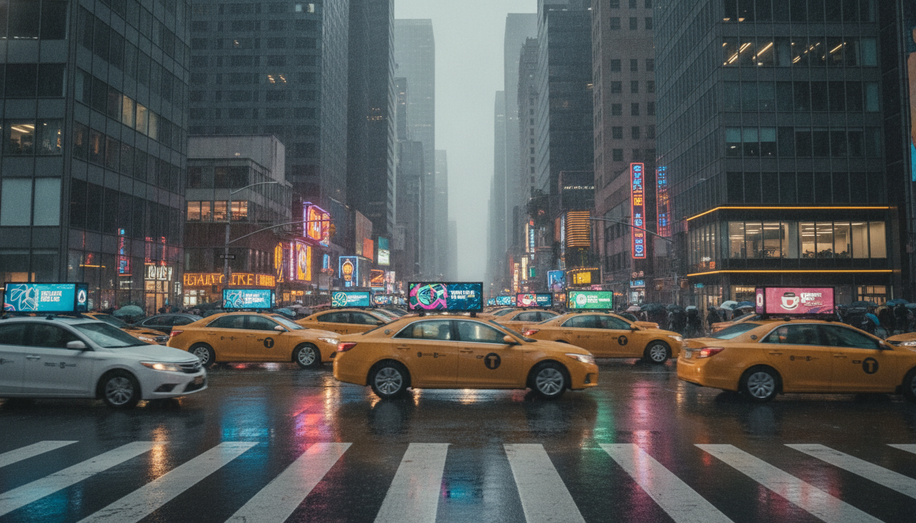

Modern urban consumers are increasingly difficult to reach through traditional digital channels due to ad-blockers, fragmented streaming services, and screen fatigue. By taking advantage of digital out-of-home (DOOH) screens mounted on top of and inside rideshare vehicles and taxis, forward-thinking brands can intercept high-intent audiences directly on their daily commutes and travels. This guide highlights five of the top mobile transit and rideshare DOOH networks designed to maximize street-level visibility, interactive backseat engagement, and hyper-local campaign performance.
1. Firefly
Firefly operates one of the largest independent networks of digital car-top displays and branded vehicle wraps in North America, with a presence across major metro markets including New York City, Los Angeles, Chicago, Miami, and Las Vegas. Its dual-sided, high-resolution LED screens utilize smart GPS-triggering to display contextually relevant ads that automatically swap based on real-time factors like location, weather, and time of day. Through its deep integration with leading programmatic demand-side platforms (DSPs), brands can launch highly targeted street-level OOH campaigns that capture the attention of busy urban pedestrians and drivers alike. With the acquisition of Curb Taxi Media’s cartop screen division, the company has scaled its reach to over ten thousand active digital tops, generating billions of monthly street-level impressions.
2. Curb Mobility
Curb Mobility is a stalwart of municipal transit advertising, particularly famous for powering TaxiTV, which remains one of the largest in-vehicle video networks in the United States with over 15,000 active backseat screens. Through its integration with licensed taxi fleets and the Curb Flow platform, it captures highly engaged, captive business travelers and urban commuters during rides that average upwards of 20 minutes. Advertisers can utilize these high-definition displays to deliver full sight, sound, and motion video campaigns directly to riders without the risk of ad-blocking or digital fragmentation. While the company’s exterior cartop assets were acquired by Firefly, Curb continues to dominate the interior in-ride media landscape across dozens of top-tier U.S. markets.
3. Play Octopus
Now owned by T-Mobile, Play Octopus has built a nationwide footprint of over 130,000 interactive backseat tablets installed in rideshare vehicles driving for Uber and Lyft. The platform stands out by engaging riders through a mix of short, casual games, trivia, and real-time driver information, creating a highly interactive environment that generates exceptional ad recall. Because passengers opt-in to play these games, the non-intrusive video ads running between gameplay sessions benefit from active user attention rather than passive viewing. This programmatic-friendly network is ideal for consumer-packaged goods (CPG), entertainment, and local service brands looking to capture high-intent urban consumers in a positive, gamified setting.
4. Blindspot
For advertisers seeking a broader, decentralized approach to urban mobile campaigns, Blindspot offers a self-serve programmatic marketplace aggregating over 2.5 million digital screens across more than 50 countries. Instead of purchasing directly from a single transit fleet, users can utilize Blindspot to launch context-aware creative across various street-level and transit networks—including rideshare tops and taxi screens—within 15 minutes and without the barrier of long-term contracts. This platform is uniquely suited for small-to-medium businesses (SMBs) and boutique agencies who want to buy OOH by the hour rather than paying for 24/7 loops, capitalizing on specific weather triggers, traffic spikes, or hyper-local events. While it may not serve the bespoke, highly customized enterprise integrations required by massive holding companies, its detailed attribution modeling for foot traffic, web lift, sign-ups, and sales makes it a highly accessible entry point for performance-driven digital marketers.
5. Lyft Media
Lyft Media is the dedicated ad division of the rideshare giant, offering a comprehensive suite of in-app, on-car, and in-car advertising solutions that leverage proprietary, first-party consumer data. Through its rooftop digital screens—originally built on its acquisition of Halo Cars—alongside in-vehicle tablets deployed across key markets, the network allows brands to reach passengers throughout their entire journey. Advertisers can pair physical car wraps and digital tops with digital takeovers in the Lyft passenger app, creating multi-touchpoint campaigns that reinforce brand messages from booking to drop-off. By partnering with leading measurement providers, the platform also provides robust post-campaign insights, allowing marketers to tie exposure directly to brick-and-mortar foot traffic and digital app conversions.
Whether your campaign objectives rely on high-impact cartop digital billboards or immersive backseat interactive entertainment, integrating transit-based DOOH into your media mix ensures unskippable exposure in high-density urban areas. As measurement, attribution, and programmatic buying integrations continue to evolve, these mobile screen networks represent a highly accountable and dynamic frontier for modern out-of-home advertising. Choosing the right partner ultimately depends on whether you require a direct, first-party data network, a gamified interactive experience, or a flexible, contract-free programmatic aggregator.
For marketers grappling with the complexities of digital ad saturation and seeking tangible results, Blindspot offers a pivotal solution. Its programmatic DOOH campaign management empowers advertisers to launch highly targeted, context-aware campaigns across diverse urban transit networks, optimizing spend by the hour and leveraging real-time insights. Crucially, its robust ROI measurement and attribution capabilities provide clear data on foot traffic, web lift, and sales, ensuring performance-driven accountability in reaching elusive urban audiences. Learn more at https://seeblindspot.com/.