
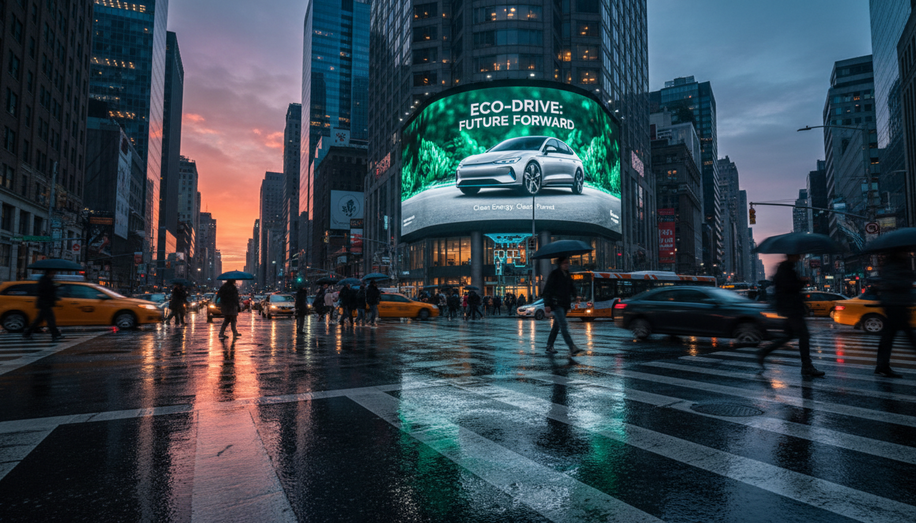

In the evolving landscape of out-of-home advertising, programmatic digital out-of-home (pDOOH) has emerged as a transformative force, blending the massive reach of traditional OOH with the precision of digital automation. For advertisers grappling with brand safety concerns amid fragmented media environments, pDOOH offers a robust framework to ensure campaigns appear only in suitable contexts, leveraging real-time data to align messaging with ethical standards and real-world relevance. This technology doesn’t just automate ad buys; it empowers brands to navigate complex urban ecosystems with unprecedented control, mitigating risks while amplifying impact.
At its core, programmatic DOOH automates the buying and selling of digital screens—billboards, transit displays, retail kiosks, and more—through real-time bidding platforms. Unlike static OOH, where placements are locked in weeks ahead based on broad demographics, pDOOH uses aggregated signals like location, time of day, weather, traffic, and venue type to dynamically select inventory. This shift is crucial for brand safety, as it allows advertisers to implement strict geo-fencing and contextual filters from the outset. For instance, platforms enable exclusions for screens near sensitive locations such as hospitals, schools, protest sites, or nightlife districts, which can account for 10 to 15 percent of available inventory. Brands willingly make this trade-off, prioritizing controlled environments over sheer scale, as evidenced by rising adoption rates: in 2024, U.S. DOOH spend reached $3.2 billion, with 53 percent of campaigns run programmatically, a sharp increase from prior years.
This granular control extends to ethical considerations, particularly in a post-privacy era where personal data is off-limits. Programmatic DOOH relies on anonymized, environmental signals rather than individual tracking, sidestepping cookie deprecation and regulations like GDPR or CCPA. Advertisers can define audience proxies through movement patterns or points-of-interest data, ensuring ads reach likely demographics without compromising privacy. A beverage brand, for example, might trigger iced tea promotions only on screens experiencing heat spikes above 85 degrees Fahrenheit, confirmed via local weather APIs, while avoiding placements during rush-hour congestion that could frustrate commuters. Such triggers create hyper-relevant moments: a fitness chain promoting sunrise yoga loops during commuter hours on transit screens, or a retailer pushing flash sales near high foot-traffic malls during lunch peaks.
The real power lies in its agility for brand-safe optimization. Campaigns launch in hours, not weeks, with the flexibility to pause, swap creatives, or adjust parameters mid-flight based on performance data. If an unexpected event unfolds—say, severe weather or a local news development—geo-controls can instantly blacklist affected areas, preserving reputation. This responsiveness has proven its worth: studies show DOOH ads drive action from 76 percent of viewers, with programmatic versions achieving 40 percent higher recall than static buys, thanks to their contextual fit. Brands like global retailers have reported 243 percent higher effectiveness when layering first-party CRM data into these systems, transforming OOH from awareness plays into performance channels without invasive targeting.
Yet, success demands strategic planning. Advertisers must partner with platforms offering transparent inventory curation and robust measurement, such as cross-channel attribution linking screen impressions to mobile foot traffic or sales lifts. Brand safety isn’t just reactive; it’s proactive through audience planning tools that map “who” via real-world behaviors—frequent gym-goers near fitness venues or families around parks—ensuring ethical alignment. As programmatic DOOH spending is projected to hit $18.6 billion globally by 2026, per PwC forecasts, it’s clear this channel bridges digital precision with physical impact, all while upholding safety standards.
For marketers, the message is straightforward: embrace pDOOH not as a tech gimmick, but as a safeguard for brand integrity. By harnessing contextual triggers and exclusionary logic, advertisers can deliver unskippable, memorable messages that resonate ethically in the moments that matter, turning public spaces into trusted extensions of their narrative. In an era of heightened scrutiny, this is advertising’s next ethical frontier—relevant, responsible, and results-driven.