

In the bustling urban landscapes where out-of-home (OOH) advertising commands attention, a quiet revolution is underway. The industry, long synonymous with towering billboards and fleeting posters, is embracing the circular economy—not as a buzzword, but as a blueprint for survival. By rethinking materials from the ground up, OOH players are designing campaigns that disassemble, repurpose, and regenerate, slashing waste and environmental impact in an era demanding accountability.
At the heart of this shift lies a departure from the linear “take-make-dispose” model that has plagued traditional advertising. Static billboards, once reliant on vinyl wraps and printed panels shipped across continents, generated mountains of landfill-bound waste. Enter digital out-of-home (DOOH): Vistar Media highlights how this innovation aligns seamlessly with circular principles by eliminating physical printing and distribution altogether. No more ink, no more trucking emissions—just pixels delivering endless messages on energy-efficient LED screens. The result? A drastic cut in material waste, with DOOH structures lasting decades and requiring minimal upkeep.
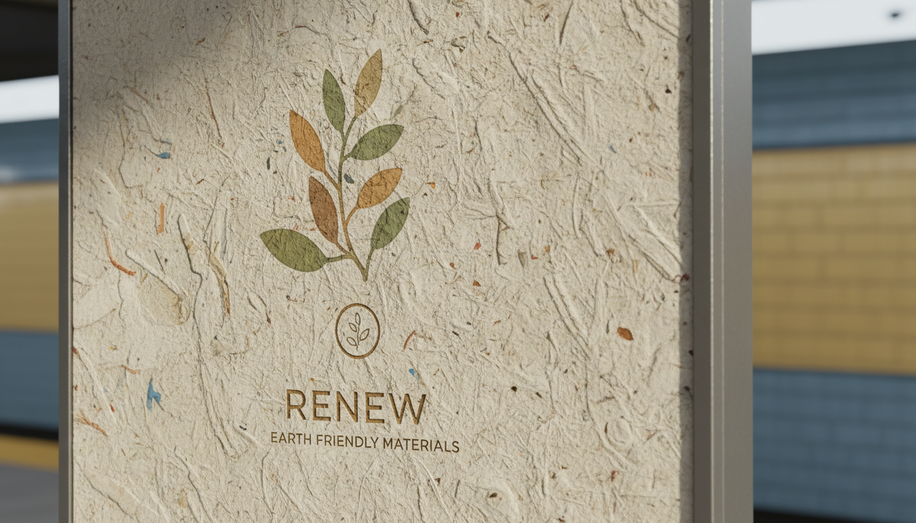
Yet sustainability in OOH extends beyond the digital glow. Firstboard, a proponent of eco-friendly innovations, champions “green materials” like recycled paper, bamboo, and organic fabrics for banners and signage. These choices aren’t mere aesthetics; they’re engineered for longevity and reuse. Imagine a campaign poster crafted from biodegradable substrates that, post-use, dissolve harmlessly or feed into composting cycles. This material intelligence reduces the virgin resource pull, closing loops that once gaped open.
Designing for disassembly takes this further, transforming one-off installations into modular marvels. JCDecaux, a global OOH giant, exemplifies this with street furniture built to endure 30 years or more. Their panels and frames snap apart without tools, allowing components to be swapped for new campaigns or redeployed elsewhere. No demolition debris, no resource extraction for replacements—just a perpetual cycle of adaptation. This modular ethos fosters a circular business model where infrastructure becomes an asset, not a liability, minimizing the carbon footprint from raw material mining and manufacturing.
Repurposing pushes the boundaries even more creatively. In New York City, agencies like Silver Spoon are pioneering closed-loop systems with reusable promotional items and recyclable elements. Billboards clad in fabrics that unravel into shopping bags, or metal frames melted down for the next project’s scaffolding—these aren’t hypotheticals but operational realities. Contextual OOH’s digital billboards take it to extremes, leveraging solar power and recycled electronics to embody zero-waste futures. Energy demands plummet as LEDs supplant older lighting, and end-of-life screens are harvested for rare earth metals, fueling the next generation of displays.
The Ellen MacArthur Foundation’s Marketing Playbook for a Circular Economy provides the strategic scaffolding. It urges marketers to “monetize product life extension” through resale, refurbishment, and refill models—principles ripe for OOH. Brands can now sponsor campaigns that normalize circular lifestyles, weaving narratives into core messaging. Picture a beverage giant’s billboard promoting refill stations, its modular frame later repurposed for community art installations. Such integrations not only engage audiences but resonate with consumers prioritizing eco-conscious brands, as UN Global Compact resources affirm.
Challenges persist, of course. Upfront costs for modular designs and recycled materials can deter smaller operators, and supply chains for sustainable inputs remain fragmented. Regulatory hurdles, like varying waste disposal laws across cities, complicate scalability. Yet industry leaders are countering with collaborations: OOH coalitions recycling paper and plastics at scale, monitoring waste sorting, and auditing carbon footprints. Innovations like AI-optimized content scheduling further trim energy use, ensuring screens dim when foot traffic wanes.
The payoff is profound. OOH’s inherently public nature amplifies its circular potential, reaching millions while modeling responsible behavior. A PwC study cited in industry reports pegs the circular economy’s value at $4.5 trillion by 2030; OOH, with its low per-impression emissions compared to other media, stands to capture a slice. Brands like Patagonia and Unilever are already pivoting, their OOH activations doubling as circular manifestos that boost loyalty among Gen Z and millennials.
As 2026 unfolds, OOH’s pivot to circularity isn’t optional—it’s imperative. By prioritizing disassembly, repurposing, and regenerative materials, the sector is crafting a waste-free future where advertising enlightens as much as it persuades. The billboards of tomorrow won’t just sell products; they’ll sustain the planet, proving that impact can be both massive and minimal. Blindspot’s advanced programmatic DOOH campaign management directly supports this sustainable transformation, enabling AI-optimized content scheduling that minimizes energy waste and ensures every impression is impactful. By leveraging its location intelligence and site selection tools, OOH players can strategically deploy long-lasting digital infrastructure, transforming each screen into a highly utilized, sustainable asset within the circular economy. Learn more at https://seeblindspot.com/