
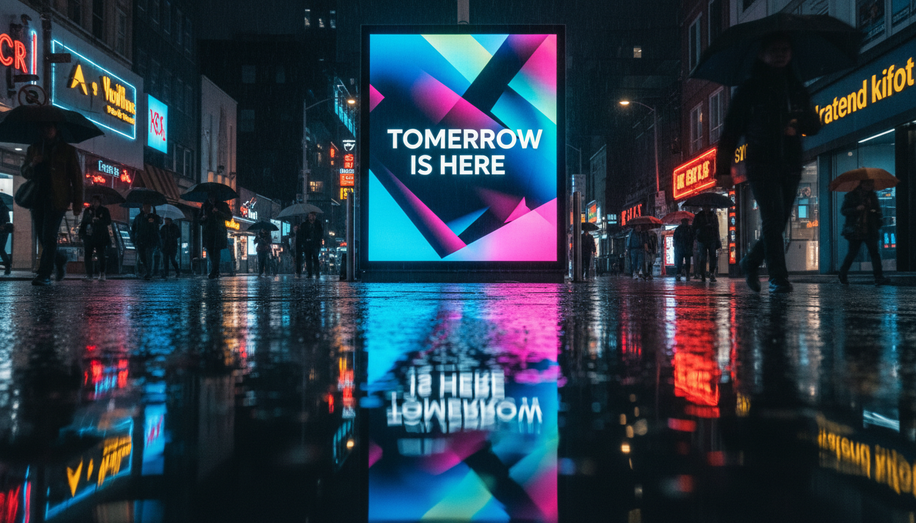

In the relentless barrage of urban life, where commuters scroll endlessly on phones while dodging billboards and digital screens, out-of-home (OOH) advertising faces its greatest challenge: capturing attention in mere seconds. Effective OOH creative thrives on simplicity, stripping away excess to deliver clarity, conciseness, and visual punch that lingers long after a glance. This approach doesn’t just compete in a cluttered world—it dominates by respecting the fleeting nature of human attention.
The “3 Second Rule” defines OOH success: viewers must grasp the core message in three seconds or less, as eyes dart past at highway speeds or city strides. Clutter kills comprehension; a single powerful idea, bold visual, and minimal text cut through the noise like a spotlight in fog. Grand Visual emphasizes that simplicity breaks through digital and physical distractions, allowing campaigns to resonate amid the chaos. Overloading an ad with details mimics the very overload audiences seek escape from—ads packed with fine print work for magazines, but OOH demands digestion in a blink.
At the heart of this power lies bold, high-contrast visuals. A hero image—high-resolution, emotionally compelling, and singular—anchors the design, conveying the message without words. Colors must pop from afar: vibrant hues with stark contrasts between text and background ensure readability day or night, drawing the eye irresistibly. White space, often a print staple, risks dilution outdoors; instead, strategic voids let elements breathe, guiding the gaze via visual hierarchy. Pearl Media notes how intentional color choices and whitespace evoke emotions, amplifying brand recognition without overwhelming the viewer. Consider Apple’s iconic campaigns: vast black expanses framing a gleaming product, or Nike’s stark athlete silhouettes—minimalism that etches into memory.
Conciseness governs the copy. Limit headlines to six to eight words, or even seven or fewer, ensuring they stand alone and spark instant understanding. Punchy taglines highlight benefits, solve problems, or urge action, like “Just Do It” or a snappy call to a shortlink or hashtag. Compelling messaging pairs with these constraints: benefit-oriented, brand-consistent phrases that control focus and intensity. Avoid multiple ideas; one clear call—”Thirsty? Grab a Coke”—outshines convoluted pitches. This brevity fosters recall, as OOH’s repetition in high-traffic spots reinforces the message subconsciously.
Contextual relevance elevates simplicity from tactic to triumph. Tailor creatives to location—local references, seasonal nods, or environmental integration forge instant connections. A billboard near a beach might splash ocean blues; a city projection could mirror surrounding architecture. Yet relevance never trumps consistency: logos and taglines in unobstructed spots ensure instant brand recall, weaving OOH into a cohesive identity across channels. Digital OOH adds layers—2D projections or AR elements—but simplicity persists: clean lines, black-and-white contrasts deliver even in motion.
Memorability blooms from emotional resonance and surprise. Bold statements, imaginative concepts, or curiosity-piquing visuals create “aha” moments that stand out. Positive imagery depicting benefits boosts recall over neutral designs. Guerrilla tactics, like chalk stencils on sidewalks, prove simplicity’s versatility across formats, from static posters to video walls. Testing via the 3 Second Rule—does it convey key info instantly?—validates impact before launch.
Critics might argue complexity suits certain narratives, yet data favors restraint: simple OOH drives awareness, mental availability, and reinforcement where digital falters. Brands mastering this—think bold contrasts from Alliance Media’s guides or Rec Media’s hero-image mandates—reap engagement spikes. In a world of infinite scrolls, OOH’s physical presence demands less, not more.
Ultimately, simplicity empowers OOH to transcend clutter, turning passive passersby into engaged advocates. By prioritizing visual impact, concise messaging, and contextual clarity, designers craft ads that don’t just advertise—they imprint. As audiences evolve with tech, the timeless strategy enduring: less noise, more signal.