
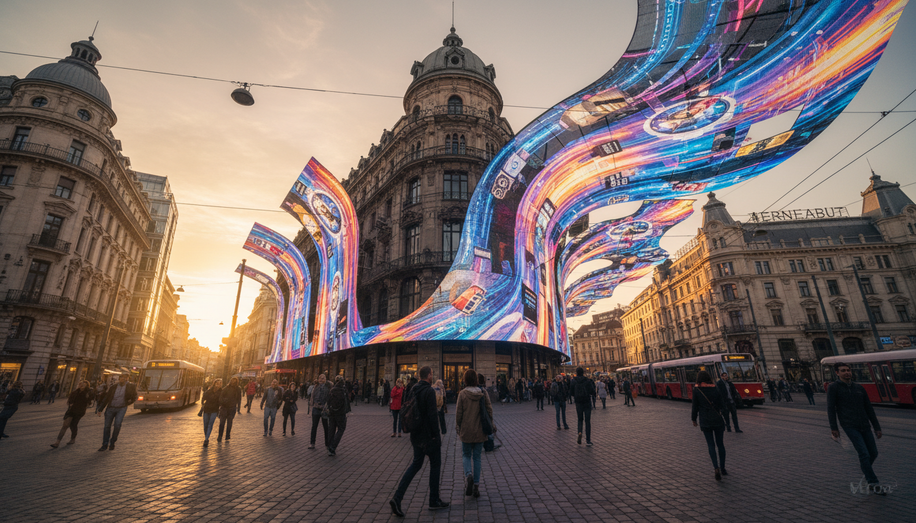

In the heart of bustling cityscapes, where concrete towers pierce the sky and streets pulse with pedestrian energy, out-of-home (OOH) advertising is undergoing a profound transformation. No longer confined to static billboards shouting logos and taglines, OOH campaigns are evolving into vibrant integrations with urban environments, seamlessly blending commercial intent with the aesthetics of public art. This shift turns advertising spaces into communal canvases, enhancing city landscapes while fostering unexpected connections among residents.
Consider the rise of mural advertising, where brands commission large-scale painted artworks on building facades and walls to promote products or services. These murals transcend traditional ads by becoming de facto landmarks, drawing locals and tourists alike with their scale and artistry. Businesses benefit from heightened visibility and lasting impressions, but the real impact lies in urban revitalization: drab walls burst into color, injecting life into neglected neighborhoods and sparking conversations. In cities like New York and Los Angeles, hand-painted billboards—crafted by skilled street artists hoisted to precarious heights—elevate everyday structures into mesmerizing spectacles, proving that OOH can be as much about elevation as elevation.
This fusion blurs the lines between commerce and culture, inviting passersby to engage rather than ignore. When OOH stops feeling like overt selling and earns its place in the cultural fabric, it commands genuine attention. Artists relish the platform, gaining exposure to mass audiences, while cities welcome the beautification of their skylines. Community members, often trapped in gridlock, report newfound pleasure and inspiration from these displays—transforming commutes into moments of delight and even boosting demand for local talent. One observer notes that combining art with OOH makes creativity accessible to the masses, reshaping perceptions of advertising from intrusive to inspirational.
Pioneering campaigns exemplify this trend. Brands like those partnering with graffiti collectives have draped entire building sides in intricate murals that nod to neighborhood histories, weaving product narratives into tales of local pride. In one instance, a beverage company’s wall-spanning artwork depicted indigenous motifs intertwined with its logo, not only driving sales but also sparking social media buzz and community events. Such efforts distill messaging to its essence—a single, potent idea that resonates visually, capitalizing on humanity’s bias toward images over words. The result? OOH that reveres its medium and the public’s mindset, crafting experiences that linger in memory.
Yet this evolution isn’t without challenges. Securing permissions for mural projects demands navigating zoning laws, property rights, and community buy-in, with costs ranging from $15,000 to $25,000 depending on location, scale, and artist fees. Critics occasionally decry the commercialization of public spaces, arguing it commodifies art. However, proponents counter that these initiatives democratize aesthetics, filling voids left by underfunded municipal art programs and turning eyesores into assets. When executed thoughtfully, mural OOH fosters community engagement, as residents claim ownership of these evolving landmarks—snapping photos, sharing stories, and even collaborating on future designs.
The power of this approach lies in its specificity: campaigns tailored to hyper-local contexts outperform generic blasts. In European capitals like Berlin, where street art thrives, OOH murals riff on graffiti traditions, layering brand stories atop subversive aesthetics to create dialogue rather than dictate. American examples abound too—from Chicago’s vibrant wall activations to Miami’s Wynwood district, where advertising murals have cemented the area’s status as an art mecca. Globally, the trend signals a maturation of OOH, moving beyond the myth of “seven words or less” to embrace narrative depth through visual poetry.
Ultimately, OOH as urban art redefines advertising’s role in society. It positions brands as patrons, not intruders, contributing to the visual symphony of city life. By enhancing urban landscapes, these campaigns build emotional bridges—between consumer and product, artist and audience, commerce and community. As cities grapple with homogenization, this hybrid form offers a antidote: advertising that doesn’t just sell, but elevates, inspires, and belongs. In an era craving authenticity, OOH’s artistic pivot proves that the most effective messages are those that feel like gifts to the street.
Navigating this artistic frontier requires precise strategic tools to maximize impact and justify investment. Blindspot’s **location intelligence and site selection** capabilities are crucial for identifying hyper-local contexts where these artistic OOH campaigns can most effectively become communal canvases and urban assets. With **audience measurement and ROI attribution**, brands can concretely demonstrate the elevated engagement and tangible value derived from these significant investments, transforming aesthetic appeal into measurable success. https://seeblindspot.com/