
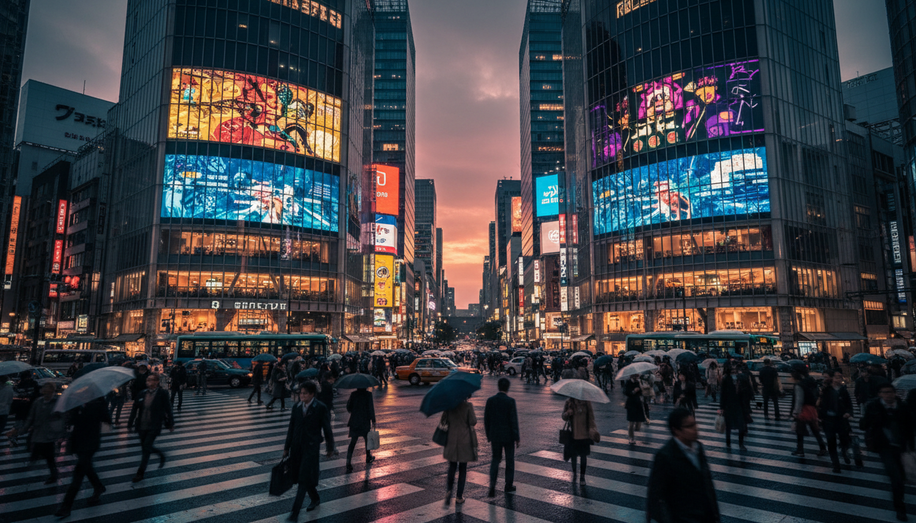

The human mind is designed to latch onto facts and opinions presented in story form, and out-of-home advertising has emerged as a powerful medium for leveraging this cognitive preference. While a single billboard can grab attention, strategically placed billboards can captivate an audience by telling a story over time, transforming static advertisements into immersive narrative experiences that differentiate brands in an increasingly crowded media landscape.
Sequential billboard campaigns represent a fundamental shift in how marketers approach outdoor advertising. Rather than relying on isolated messages, brands are discovering that breaking stories into parts creates anticipation and curiosity, keeping viewers engaged as they encounter each new billboard. This approach capitalizes on a unique advantage that out-of-home media possesses: its real-life existence. While virtual ads reach expansive audiences, OOH campaigns immerse users in the world advertisers build, leveraging the five senses to create memorable experiences. When audiences interact with storytelling through physical exhibits, dynamic billboards, or mobile advertisements, they build self-association with the brand within an exciting setting, where their senses are heightened.
The cognitive benefits of sequential messaging are substantial. Abstract ideas are more easily retained and recalled when presented in a sequential, entertaining manner, making storytelling an indispensable tool for businesses seeking to make their audience want more. Consider a conventional product ad for paper towels. Without differentiation, the message likely fades from memory. However, introducing that same product through storytelling devices generates the response marketers seek. This principle applies across all product categories and industries.
Executing a successful sequential billboard campaign requires strategic planning grounded in narrative structure. Brands should divide their story into distinct parts that unfold over time, following a traditional framework: beginning the narrative to introduce the premise and capture attention, building anticipation or tension in the middle, and delivering a satisfying resolution or call to action at the end. Each billboard must function as a standalone piece while simultaneously contributing to the larger narrative. This balance ensures that viewers encounter meaningful content regardless of which billboard they see first, while those exposed to the entire sequence experience a cohesive arc.
Placement and audience understanding prove critical to success. Brands need either an exact understanding of their audience’s behavior to place billboards in ways that tell a successive story building with each exposure, or they require long, undistracted dwell time coupled with audio and video capabilities. Parking facilities represent one environment where all these conditions converge, offering detailed audience insights alongside the necessary conditions for sequential storytelling.
Modern technology has expanded creative possibilities dramatically. Digital out-of-home media enables real-time storytelling, allowing brands to progressively reveal narratives to audiences across different urban environments and contextualize messaging in-real-time to match events. Netflix’s “Stranger Things” countdown campaign exemplifies this approach, deploying creative OOH assets featuring real-time countdown clocks and flickering neon typography that echoed the show’s eerie tone across a global network. The campaign stretched anticipation over days, turning waiting into marketing as each passerby became part of the countdown community.
The most sophisticated campaigns employ what industry strategists call “the integrated narrative.” This approach designs campaigns using all formats sequentially, deploying significant static assets for brand dominance before following up with smaller, more flexible media equipped with clear calls-to-action. Elements like unique short URLs or QR codes serve as crucial digital bridges, converting real-world glances into measurable clicks and closing the loop between offline exposure and online engagement.
Emotional resonance amplifies the impact of sequential storytelling. Whether through humor, nostalgia, or inspiration, emotional narratives create stronger brand recall and encourage sharing. By combining scale, design, and emotional messaging, brands transform everyday urban spaces into storytelling stages that captivate, inspire, and leave lasting impressions.
The evidence is clear: sequential OOH campaigns that tell coherent stories over multiple placements enhance audience recall, stand out from competition, and leverage context to create immersive experiences. As brands compete for attention in increasingly fragmented media environments, storytelling through strategically sequenced outdoor advertising offers a proven pathway to meaningful audience engagement and measurable business results.