
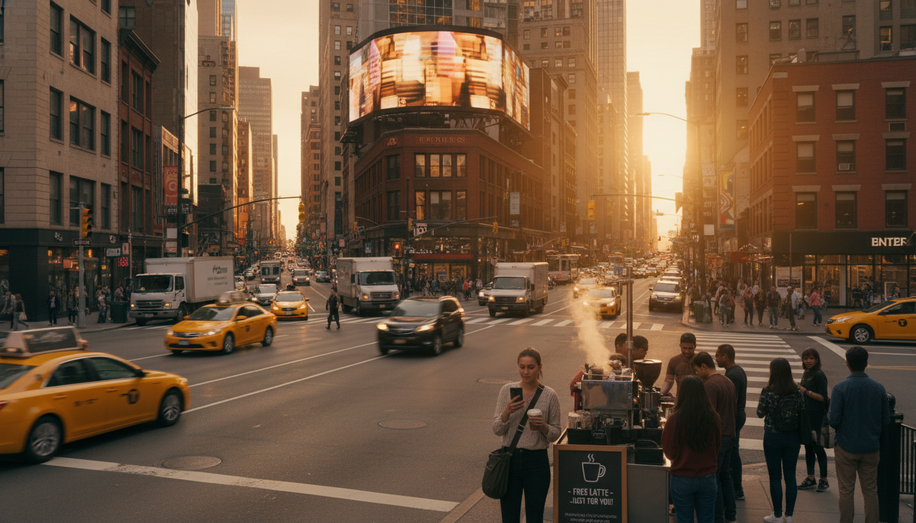

Geofencing technology is transforming out-of-home (OOH) advertising by creating invisible digital boundaries around physical billboards, transit ads, and storefront displays, triggering personalized mobile notifications or ads precisely when consumers pass by. This fusion of location data and real-time targeting bridges the gap between static OOH messages and dynamic digital engagement, delivering hyper-relevant content that boosts recall, foot traffic, and conversions.
At its core, geofencing relies on GPS, Wi-Fi, and cellular signals from smartphones to monitor user locations. Advertisers draw virtual perimeters—often as small as a few hundred feet—around key OOH sites using mapping tools and latitude-longitude coordinates. When a device enters or exits these zones, it activates predefined actions, such as push notifications, app banners, or in-app ads tailored to the nearby physical ad. For instance, a billboard promoting a new restaurant might prompt passersby with a mobile coupon for 20% off their first meal, turning passive exposure into immediate action. This precision elevates OOH from broad awareness to measurable interaction, as brands reinforce their message across channels without relying on guesswork.
The advantages are compelling. Hyper-local targeting ensures ads reach consumers in context, dramatically improving engagement rates. A stadium billboard, for example, can geofence attendees to serve mobile promotions for nearby concessions or post-game deals, capitalizing on real-time excitement. Timing adds another layer: campaigns can schedule triggers for peak hours, like rush-hour commuters near transit ads, when receptivity peaks. Data flows back to marketers too, tracking how OOH exposure drives mobile clicks, app opens, or store visits, enabling attribution across the customer journey. This measurability addresses a long-standing OOH challenge—proving ROI—by linking physical impressions to digital behaviors and in-store lifts.
Real-world campaigns illustrate the power. Burger King’s audacious “Whopper Detour” exemplifies aggressive geofencing: users near a McDonald’s received app notifications offering a Whopper for one cent, provided they ordered via the BK app. The stunt drove millions of downloads and visits, blending competitive provocation with OOH proximity for viral impact. Retailers like coffee chains geofence billboards to push “stop in now” alerts with time-sensitive offers, while event organizers target festivals with complementary mobile content, such as app downloads for schedules or vendor deals. Even transit ads gain teeth; a bus wrap for a gaming app can trigger nearby users to install it instantly, fostering seamless omnichannel paths from sight to screen.
Implementation demands strategy. Start by mapping high-traffic OOH placements—billboards in urban corridors, digital screens at malls, or transit hubs—and layer geofences around them, extending slightly to capture drive-by or walk-up exposure. Partner with mobile ad platforms that integrate device tracking ethically, respecting opt-ins and privacy regs like GDPR or CCPA. Complement OOH creatives with digital CTAs: if the billboard teases a product launch, the geofence delivers video demos or quizzes. For retargeting, identify OOH-exposed users and serve reinforcing ads in adjacent zones, like a car billboard followed by financing offers near dealerships. Hyper-local twists include fencing competitors’ sites to intercept shoppers with superior deals, or events for captive audiences primed for relevance.
Challenges persist, but they’re surmountable. Battery drain from constant location pings can deter users, so optimize for low-power modes and cap frequency. Accuracy hinges on signal strength—urban Wi-Fi boosts precision, while rural GPS suffices for broader fences. Privacy concerns loom large; transparent consent and anonymized data are non-negotiable to build trust. Yet, as smartphone penetration nears ubiquity, adoption surges. Brands report 30-50% lifts in engagement when pairing OOH with geofencing, with footfall attribution proving the gold standard for proving cross-channel synergy.
Looking ahead, geofencing evolves with AI-driven predictions, forecasting user paths to preemptively engage, and AR overlays that scan OOH via phone cameras for interactive rewards. Shadowfencing—targeting non-app users via probabilistic modeling—expands reach. For OOH pros, this isn’t just tech—it’s a renaissance, making physical media as agile as digital. By triggering mobile magic from real-world encounters, geofencing ensures no impression goes untapped, propelling campaigns from seen to sold.