
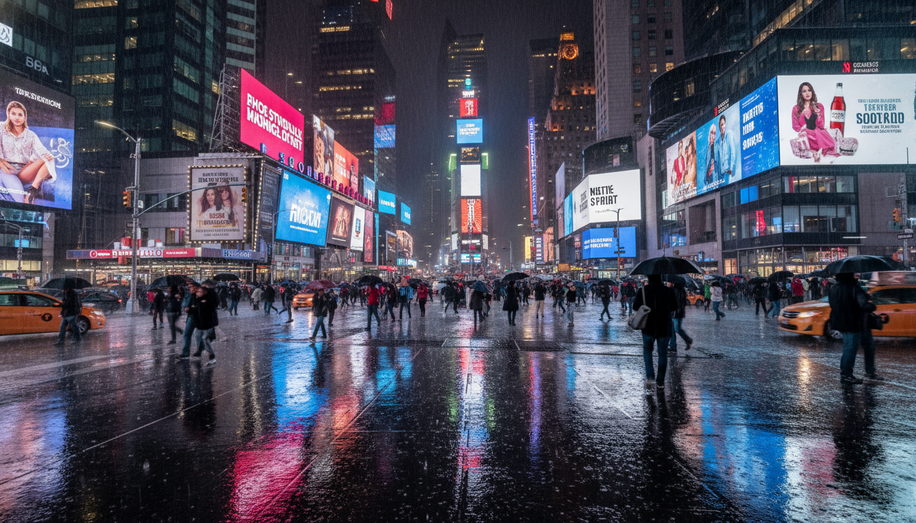

Out-of-home advertising has long been celebrated for its massive reach, but proving its return on investment demands more than impressions alone. Advanced methodologies like brand lift studies and sales attribution are transforming how marketers quantify OOH’s influence on brand perception, recall, and actual sales conversions. These tools reveal not just exposure, but tangible shifts in consumer behavior, bridging the gap between billboard visibility and bottom-line results.
Brand lift studies stand at the forefront of this evolution, offering rigorous, data-driven evidence of OOH’s impact. By comparing exposed and control groups—matched for demographics such as age and gender—these studies isolate the campaign’s true effect on metrics like ad recall, awareness, consideration, and purchase intent. For instance, ABCS Insights reports that digital out-of-home (DOOH) ads generate 54% higher gains in ad recall compared to benchmarks across all media types, thanks to dynamic content rotation and animations that deliver up to 60% more impressions than static formats. A streaming service campaign, measured via mobile panels, achieved a 20% lift in consumer awareness and a 22% increase in likelihood to consider the product. Such insights guide future targeting, creative refinements, and placements, turning subjective exposure into actionable strategy.
Sales attribution takes this further by linking OOH exposure directly to revenue. Integrating OOH with mobile tracking—through QR codes, custom URLs, or social handles—uncovers downstream effects like increased web traffic, conversions, and in-store visits. Research from Outsmart shows top-performing OOH campaigns drive a 38% uplift in short-term brand actions via mobile, with 66% directed straight to the brand; one case even proved an 86% lift in store visits among exposed consumers. ABCS normative data underscores the efficiency: OOH alone delivers a median incremental return on ad spend (iROAS) of $2.61, rising to $2.00 when combined with other channels—an 80% lift over digital-only efforts. Analytic Partners research adds that blending four OOH formats within the same budget yields over 30% stronger returns than a single channel, boosting customer conversion by 16% and doubling new customer acquisition rates.
Creative quality emerges as a critical multiplier in these measurements. Studies from WARC and System1, analyzing 304 campaigns, found high-quality creative (rated 4-5 stars) produces an average revenue ROI of 8.1, compared to 3.3 for low-quality work; strong long-term creative yields 5.7 versus 1.7 for weak efforts. OOH’s cost-efficiency amplifies this: at $6.41 CPM versus $12.20 for the all-media average, it matches linear TV’s favorability and purchase intent at a fraction of the price, per Ipsos and Clear Channel/Kantar findings. Digital billboards excel here, with 78% of customers engaging recently, fostering brand trust and recall through rotation that combats fatigue.
OOH’s synergy with digital channels further elevates ROI proof. Campaigns pairing OOH with mobile see up to 15% higher click-through rates and 1.1 million earned social impressions in a week, alongside 9% brand awareness gains and 10% app usage increases. Frequency management ensures reinforcement without burnout, while before-and-after surveys capture shifts in recognition and intent. Effie award-winners highlight this potency: 58% incorporated OOH, versus 33% of all entrants.
These methodologies dispel OOH’s “black box” reputation. By leveraging panels, surveys, and cross-channel attribution, brands move beyond reach to demonstrate uplift in perception and sales—often at superior efficiency. As tools like DOOH platforms enable real-time control and measurement, OOH proves indispensable for upper- and mid-funnel impact, driving not just visibility, but verifiable profit. Marketers embracing these approaches position OOH as a high-ROI powerhouse in an increasingly accountable media landscape.