

Digital billboards have long served as the canvas for brand messages in bustling urban centers, but their role is undergoing a fundamental transformation. As cities worldwide embrace smart infrastructure, these omnipresent screens are evolving from advertising-only channels into critical components of urban connectivity and public service delivery.
The shift represents a profound reimagining of what outdoor of-home media can accomplish. In today’s smart cities, digital billboards now function as real-time communication hubs that seamlessly integrate with municipal infrastructure, traffic systems, public transportation networks, and emergency services. This integration creates a dual-purpose ecosystem where commercial messaging coexists with vital civic functions, fundamentally expanding the value proposition of outdoor media beyond traditional advertising metrics.
Consider a practical scenario: when severe weather approaches a city, these integrated systems activate instantly. Digital billboards that moments before displayed consumer product advertisements pivot to disseminating emergency alerts, evacuation routes, and shelter locations directly to residents and visitors. This capability isn’t merely an ancillary benefit—it positions digital signage as essential urban infrastructure. The transition from reactive advertising to proactive civic communication happens with a single click through centralized management systems, demonstrating how technology enables billboards to serve multiple stakeholders simultaneously.
The infrastructure underpinning this evolution relies on Internet of Things connectivity and centralized cloud-based management platforms. These systems grant operators unprecedented control over networked displays, automating lighting adjustments, monitoring energy consumption, and scheduling content in real time. More importantly, they enable cities to leverage sensor data across their networks, allowing billboard operators to respond intelligently to environmental conditions, traffic patterns, and emergency situations. This sensor integration creates opportunities for predictive management—anticipating disruptions before they impact either advertising campaigns or public services.
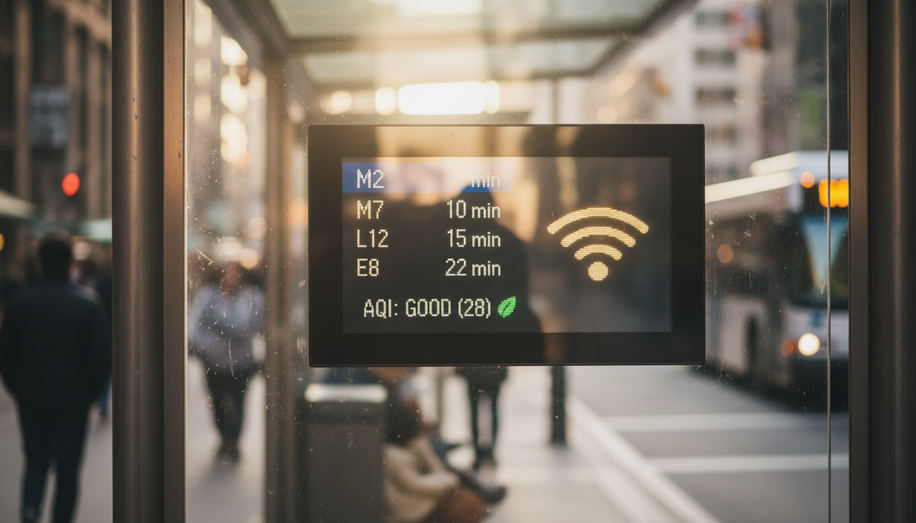
Smart city integration also enhances urban mobility and sustainability initiatives. Digital billboards now display real-time traffic conditions, public transportation schedules, and parking availability, information that directly reduces congestion and improves travel efficiency. Some installations promote sustainable transportation solutions by highlighting electric vehicle charging stations, bike-sharing programs, and car-sharing services. Solar-powered screens and low-energy LED components further contribute to cities’ environmental goals, demonstrating how advertising infrastructure can support broader sustainability objectives.
The data-sharing partnerships emerging between billboard networks and municipal agencies open additional avenues for intelligent urban planning. Information collected through digital signage systems—how people move through different spaces, their engagement patterns, and real-time behavioral data—informs better urban planning decisions. This feedback loop transforms billboards from one-way communication devices into two-way data collection points that enhance city management at scale.
Advanced analytics powered by artificial intelligence enable personalization previously impossible in outdoor advertising. Future iterations may incorporate facial recognition technology to deliver contextual information tailored to individual users, combining commute updates, weather announcements, and local news relevant to specific audiences. This level of personalization maintains advertising relevance while simultaneously serving public information needs through the same screens.
The convergence of digital out-of-home advertising with smart city infrastructure reflects a broader industry maturation. Rather than competing with civic functions, modern billboard networks enable programmatic advertising that responds instantly to weather, traffic, and local events. This precision targeting makes advertising more effective while reducing the disconnect between brand messaging and urban context.
As cities worldwide invest in connected infrastructure, the opportunities for synchronized billboard messaging continue expanding. The line between traditional outdoor advertising and smart city services increasingly blurs, inviting deeper audience interaction and more comprehensive urban connectivity. Digital billboards have transcended their original purpose, becoming integral components of how modern cities communicate with, serve, and understand their populations. For the out-of-home advertising industry, this evolution represents not a displacement of traditional advertising but its integration into a larger ecosystem where public service and commercial messaging coexist on the same screens.