
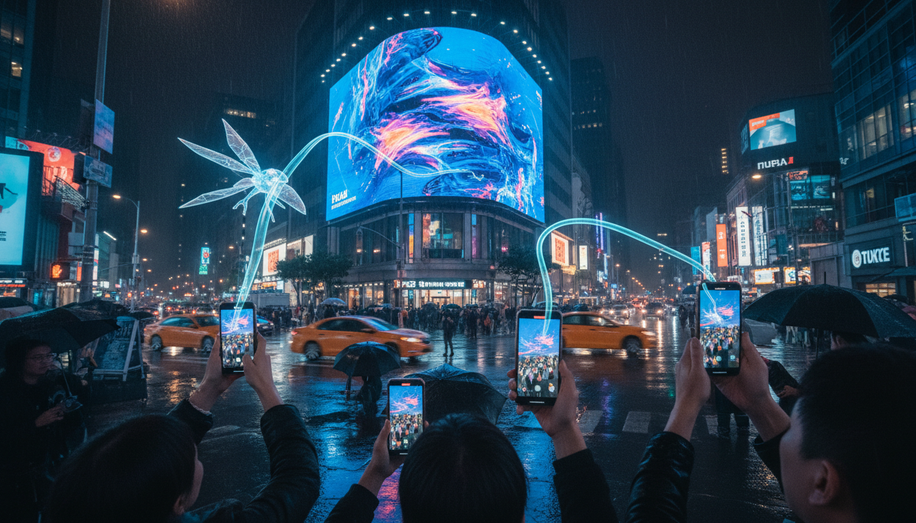

In the bustling streets of urban centers, where static billboards once commanded fleeting glances, augmented reality is reshaping out-of-home advertising into a portal of interactivity. By overlaying digital elements onto physical displays via smartphones, AR transforms passive posters and screens into dynamic experiences that viewers can manipulate in real time, extending campaigns far beyond their tangible footprint. This fusion of the physical and virtual not only captures attention but propels brands into users’ pockets and social feeds, creating lasting impressions in an era of short attention spans.
The mechanics are elegantly simple yet profoundly effective. A QR code on a billboard invites passersby to point their phone camera at the ad, triggering computer vision technology to recognize the image and unleash 3D models, animations, or interactive games that “pop out” from the surface. No specialized hardware is required—just a standard smartphone app or web-based AR filter. This democratizes access, leveraging the ubiquity of devices to turn a 6-sheet poster into a hovering logo or a massive billboard into a perch for a lifelike animated dragon. Brands like Vodafone exemplified this in Germany, where eight billboards with QR codes invited scans to activate 3D games offering prizes, blending real-world visibility with gamified engagement.
This versatility spans OOH formats, from murals to digital screens, adapting to any environment. AR overlays detailed 3D graphics onto or around the ad space, effectively expanding its dimensions into virtual realms that traditional media cannot match. A static creative hooks the eye, prompting activation, while the AR layer introduces movement, environmental responsiveness, or directional cues—such as guiding users to a nearby store. Pepsi Max pushed boundaries with a bus stop illusion, using AR to simulate transparent windows revealing street-blending 3D scenarios that startled commuters into sharing the “unbelievable” moments online. Such innovations increase dwell time, as users linger to interact, and embed the brand deeper in memory through hands-on play.
Beyond captivation, AR delivers measurable advantages that address longstanding OOH challenges. Engagement metrics soar, with interactive content holding attention longer than flat visuals, while built-in tracking captures user behavior, preferences, and location data for precise analytics. Campaigns become shareable spectacles, amplifying reach organically on social media as users post their encounters, turning one ad into viral exposure. A 2023 ARtillery Intelligence report projected the AR advertising market hitting $8 billion by 2025, underscoring the shift toward these immersive tactics amid rising smartphone penetration and AR app downloads, which surged from 1 billion in 2016 to over 5.5 billion by 2022.
Location-based AR further elevates the medium, tying virtual content to real-world contexts for hyper-relevant experiences. Billboards gain “virtual space” that responds to surroundings, measuring impressions via engagement data and website traffic from pop-ups. This bridges the online-offline divide, allowing stagnant displays to evolve: a mural might unfold a dynamic story, or a digital screen could personalize content based on the viewer’s position. Far from replacing physical OOH, AR enhances it, boosting retention, analytics, and emotional connections without demanding full infrastructure overhauls.
Challenges persist, including technical glitches in varying light or device compatibility, yet rapid advancements are smoothing these edges. Accessibility is improving as web AR eliminates app downloads, broadening participation. For advertisers, the competitive edge is clear: in a crowded market, AR stands out by making ads participatory, fostering loyalty through novelty. As seen in campaigns worldwide, from Germany’s interactive billboards to street-level illusions, this technology redefines OOH as a launchpad for extended narratives—physical displays as mere invitations to digital adventures.
Looking ahead, AR’s integration promises even bolder frontiers. Environmental interactivity could let ads react to weather or crowds, while AI-driven personalization tailors experiences per user. With the AR industry eyeing $160 billion by 2023 and beyond, OOH advertisers who embrace these overlays position themselves at the vanguard, blurring worlds to craft campaigns that don’t just advertise but immerse. In doing so, they convert urban thoroughfares into canvases of endless possibility, where every scan sparks a story that travels with the audience.
As AR transforms OOH into interactive, trackable experiences, platforms like Blindspot provide the critical intelligence for advertisers to effectively navigate this new frontier. Its real-time campaign performance tracking and robust audience analytics precisely measure engagement with AR overlays, providing invaluable data on user behavior and digital shares that extend the campaign’s reach. This ensures that every physical display, now a portal to a digital adventure, delivers demonstrable ROI. Discover more at https://seeblindspot.com/