
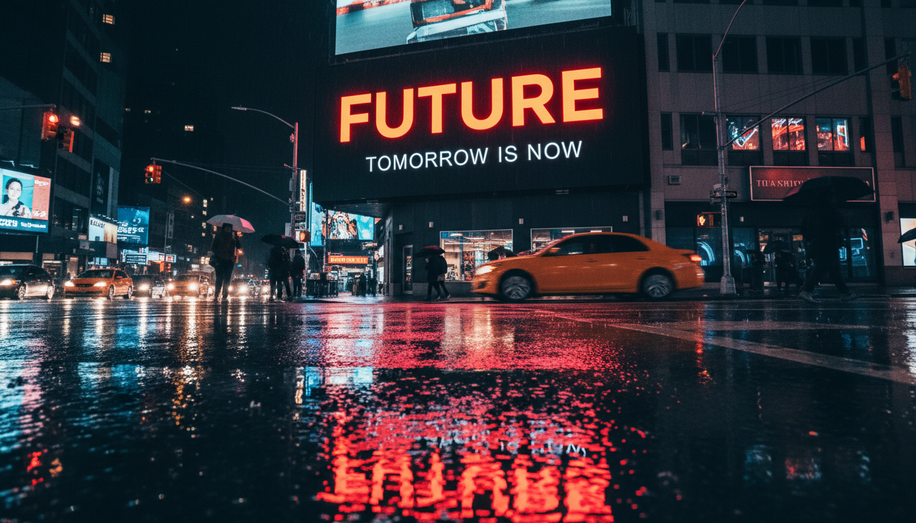

In the split-second world of out-of-home advertising, where a driver zipping by at highway speeds or a pedestrian dodging crowds has mere moments to register a message, design choices become psychological weapons. Colors, fonts, and layouts do not merely decorate billboards and digital displays; they hijack the brain’s visual processing, triggering emotions, shaping perceptions, and etching memories before conscious thought kicks in. This fleeting encounter—often governed by the “3-Second Rule,” where the core idea must land in three heartbeats—relies on principles rooted in neuroscience and cognitive psychology to cut through urban visual noise.
Color acts as the first emotional gatekeeper, striking the reticular activating system, the brain’s filter for relevant stimuli amid chaos. Red surges with urgency and excitement, igniting passion or hunger, which explains its dominance in fast-food chains like McDonald’s and clearance-sale banners that scream “now.” Blue, by contrast, radiates trust and calm, a staple for banks and tech firms like PayPal, reassuring viewers in an instant. Yellow grabs attention with optimism, pulling eyes like a beacon in cluttered cityscapes, while green evokes health and stability for wellness or eco-brands. These are not arbitrary; warm hues stimulate and energize, cool ones soothe, and high-contrast pairings—like yellow on deep blue or white on black—boost readability at distance, enhancing cognitive uptake. Research underscores the stakes: consistent color schemes across campaigns lift brand recognition by up to 80 percent, turning ephemeral glances into lasting recall.
Yet color’s power amplifies when synced with typography, the silent voice that dictates how quickly a message decodes. In OOH’s high-speed theater, sans-serif fonts triumph over ornate serifs for their stark simplicity, ensuring legibility from afar without taxing the brain’s pattern-recognition machinery. Bold, oversized headlines dominate first, mimicking the eye’s natural scan from top-left to bottom-right, while subordinate text recedes, guiding viewers through a predetermined narrative flow. Consider IKEA’s vibrant yellow lettering exploding against red: it commands focus, aligns with brand energy, and lingers psychologically. Dior flips the script with elegant black-and-white type on muted grounds, whispering luxury through restraint. Poor choices backfire—fussy fonts or low-contrast text dissolve into blur, squandering those precious seconds and dooming the ad to oblivion.
Layout seals the triad, orchestrating visual hierarchy to choreograph attention like a conductor. Whitespace breathes, preventing overload; balanced elements create subconscious trust, making the design feel intuitive and dependable. Strategic placement reigns supreme: human faces with direct eye contact hijack neural wiring, as the brain prioritizes them above all, spiking engagement. A smiling figure amid bold color and punchy type doesn’t just inform—it evokes, leveraging the mere exposure effect where repetition during commutes shifts messages from short-term working memory to enduring long-term storage. High-contrast layouts amplify this, with dominant visuals pulling the gaze, followed by hierarchy that funnels to the call-to-action.
These elements converge to influence behavior beyond sight. Emotionally charged designs—red-fueled urgency paired with sans-serif imperatives and a centered face—trigger visceral responses, bypassing rational filters to spark impulse. Studies affirm colorful, hierarchical ads outpace drab ones in recall days later, cementing brand loyalty through subconscious familiarity. Coca-Cola’s bold red pulses energy; McDonald’s yellow-red duo whets appetite instantly. In Mexico’s bustling OOH markets or global highways, this science yields ROI: psychologically attuned billboards don’t just get seen—they persuade, converting passersby into customers.
Mastery here demands precision, not flair. Designers must align colors with brand ethos, fonts with speed-born readability, and layouts with innate eye paths, all while testing for real-world glare and motion. As urban environments thicken with digital DOOH screens, these principles evolve but endure: in three seconds, they don’t sell products—they sell feelings, memories, and actions, invisibly steering viewer behavior in a glance.