
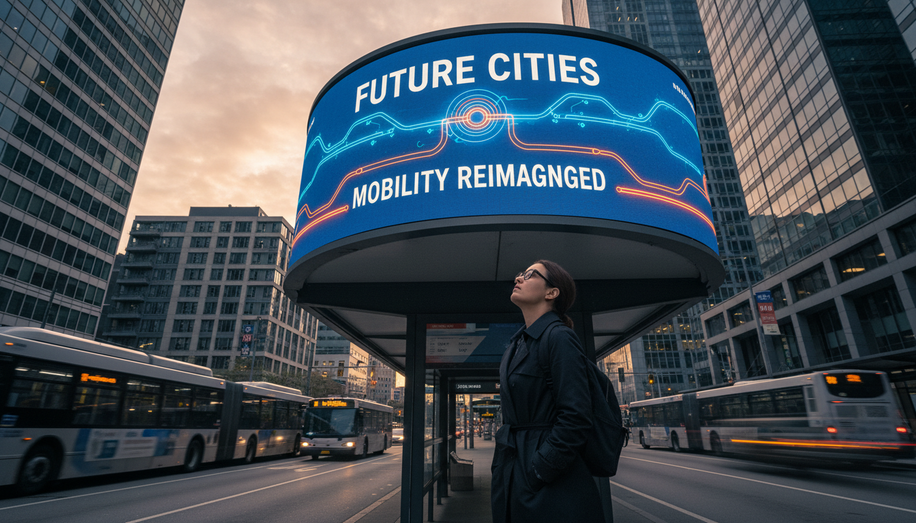

In the fleeting rush of urban life, where eyes dart past billboards in milliseconds, out-of-home (OOH) advertising demands a silent eloquence. Here, words often yield to images, typography, and minimalist design, crafting narratives that brands imprint on passersby without uttering a syllable. This visual alchemy turns passive glances into lasting impressions, proving that the most potent stories in OOH are those told at a glance.
At the heart of this craft lies simplicity, the unyielding principle that clarity trumps complexity every time. OOH viewers have mere seconds—often three to five—to absorb a message amid traffic, distractions, and motion. Overloaded designs drown in visual noise, but minimalist approaches cut through like a blade. Consider the 70/30 rule, where 70 percent of the space breathes with negative space, funneling attention to the vital 30 percent: a single evocative image, a punchy headline, or a brand logo. This restraint isn’t mere aesthetics; it’s strategy. High-contrast colors—bold reds against black, or vibrant yellows piercing gray skies—ensure readability from afar, even in harsh sunlight or at highway speeds.
Imagery emerges as the storyteller’s prime tool, conveying emotion and intent faster than any caption. A compelling visual doesn’t just show a product; it evokes a mood, sparks desire, or mirrors the viewer’s world. Grand Visual emphasizes strong visuals that create immersive, emotionally resonant experiences, elevating campaigns above the clutter. On billboards, this means leveraging the full canvas height and width for drama—think a towering silhouette of a lone figure against a sunset, implying freedom for a car brand, or a child’s wide-eyed wonder before a toy, stirring parental nostalgia. The key is relevance: images must align with context, nodding to local landmarks or cultural cues to forge instant connection. A campaign in New York might silhouette the skyline, while one in Tokyo weaves in neon-lit streets, making the narrative feel personal and urgent.
Typography plays the role of the understated narrator, its form speaking volumes where content must be sparse. Bold, sans-serif fonts in massive scale dominate, with headlines capped at seven words or fewer to land like a gut punch. High legibility reigns: avoid script or decorative styles that blur at distance; opt instead for contrasts that pop, like white text on midnight blue. This isn’t about filling space but sculpting it—typography guides the eye through a deliberate hierarchy, from dominant headline to subtle tagline, ensuring the brand’s voice lingers. In digital projections, black backgrounds make text leap forward, their clean lines looping seamlessly to reinforce the tale without fatigue.
Minimalist design binds these elements into a cohesive whole, embodying the “less is more” ethos. The three-element rule ruthlessly prioritizes: logo, hero image, tagline—no more. This discipline transforms potential chaos into flow, using composition, color, and contrast to dictate the viewer’s path. Size differentiates the star from supporters; spatial isolation spotlights the core message; restrained palettes—never more than three hues—amplify impact. Negative space acts as a spotlight, drawing focus to what’s absent as much as present, much like a silhouette that registers iconically even in blur.
Real-world mastery abounds. Coca-Cola’s classic billboards often feature a single, dew-kissed bottle against endless sky, the curve of glass and red script whispering refreshment and joy. Apple’s OOH campaigns strip to essence: a sleek device floating in void, “Think Different” in crisp Helvetica, inviting rebellion through purity. These aren’t accidents; they’re engineered for recall, where emotional resonance via visuals outpaces verbose pitches. Research underscores this: strong imagery boosts engagement and memorability, while contextual ties enhance brand favorability.
Yet challenges persist. Lighting variances, viewer speeds, and diverse demographics test designs. High-quality, vector-based assets at 600 DPI minimum combat pixelation, while testing in real environments—day, night, rain—refines the narrative. QR codes or micro-CTAs like “Scan for More” bridge to digital without cluttering the visual story, inviting deeper dives post-glance.
Ultimately, the art of wordless OOH storytelling redefines branding as visual poetry. By wielding imagery for emotion, typography for direction, and minimalism for focus, creators don’t just advertise—they narrate lives in a blink. In an era of information overload, these silent spectacles remind us: the best stories don’t need voices to echo.