
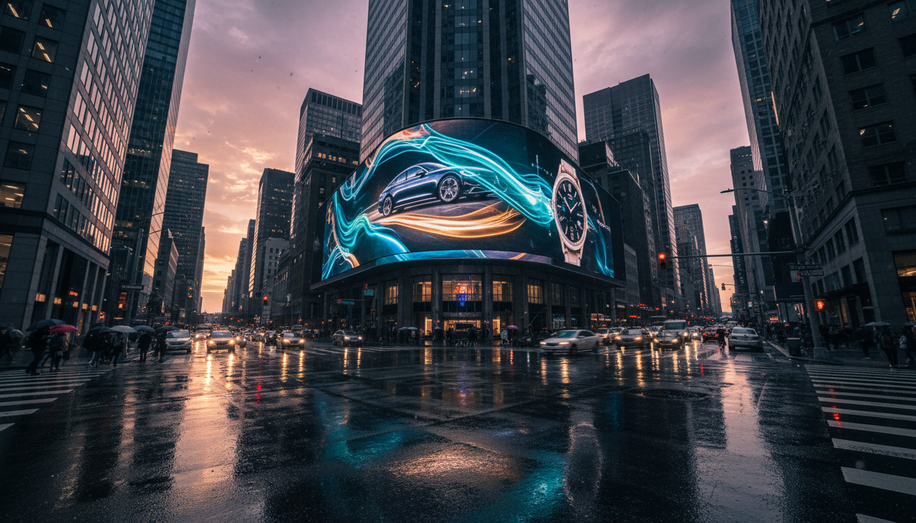

In the bustling streets of modern cities, where digital billboards flicker to life and adapt to the passing crowds, artificial intelligence is rewriting the rules of out-of-home advertising. No longer confined to static messages broadcast to indifferent passersby, OOH campaigns are now delivering hyper-relevant content in real time, powered by AI’s ability to analyze vast data streams and respond instantaneously. This shift toward AI-powered personalization is transforming DOOH—digital out-of-home—from a broad-reach medium into a precision tool for smarter ad placements, predictive audience targeting, and adaptive creative optimization.
At the heart of this evolution lies smarter audience targeting. Traditional OOH relied on estimates and broad demographics, but AI changes that by sifting through real-time data from mobile devices, geolocation, and social media to pinpoint who is present and what they might need. Platforms now identify behavioral patterns, such as commute habits or shopping preferences, enabling advertisers to serve messages tailored to specific segments. For instance, AI can detect a cluster of fitness enthusiasts near a gym and prioritize sportswear promotions, shifting from blanket coverage to hyper-targeting that boosts efficiency. Media operators like those using StreetMetrics’ tools leverage this to offer brands placements that align with audience context, ensuring messages land when and where they matter most.
Predictive analytics takes this further, forecasting audience movement and behavior to preemptively position ads. By integrating historical data, weather feeds, traffic sensors, and even event calendars, AI models predict foot traffic peaks or demographic shifts. A coffee brand might ramp up iced drink ads during a heatwave, automatically switching to hot beverages as temperatures drop, avoiding the pitfalls of mismatched messaging. This predictive edge, drawn from machine learning that uncovers patterns in consumer data, allows campaigns to anticipate needs rather than react after the fact. Brands report tangible gains: AI-driven DOOH has driven a 60% increase in website visits for PODS through hyperlocal, dynamic billboards generating over 6,000 unique messages, while Kia saw an 8% sales uplift at EV charging stations.
Adaptive creative optimization represents the pinnacle of real-time relevance, where AI doesn’t just select placements but dynamically alters the ad itself. Dynamic DOOH platforms trigger content changes based on environmental cues—promoting quick-service restaurants during traffic jams or event-specific deals near stadiums. Generative AI amplifies this by producing thousands of contextual creatives on the fly, adapting to screen formats, time of day, or live performance data without agency delays. Facial recognition and gaze tracking provide instant feedback, measuring engagement duration and demographics to refine messaging mid-campaign. “Now I can take data as it’s coming in and say, ‘This copy is working better for these audiences,’ and move it around or change it on the fly,” notes Shawn Spooner, Global Chief Technology Officer at Billups.
Real-time performance tracking closes the loop, turning OOH into a responsive ecosystem. AI monitors impressions, actions like website visits or purchases, and even compares scenarios via ML modeling to suggest pivots. This granular visibility—far beyond static estimates—enables mid-flight adjustments, with feedback loops that improve accuracy over time. Companies using these systems see 15-25% performance lifts in the first three months, compounding as algorithms learn from each interaction. The OAAA’s 2025 DOOH Trends Report underscores the impact, citing up to 40% higher ad recall for AI-personalized formats versus static ones.
Yet this power comes with caveats. Privacy remains paramount; successful strategies rely on aggregated, anonymized data to balance personalization with ethical standards. As AI synchronizes messaging across digital and physical touchpoints, from billboards to apps, it fosters cohesive experiences that deepen customer connections. Retailers, hospitality, and automotive brands are leading the charge, proving AI’s role in elevating OOH ROI.
Looking ahead, the convergence of generative AI, edge computing, and richer datasets promises even more seamless integration. Billboards could soon evolve into virtual vending machines, dispensing offers based on live audience signals, as demonstrated in award-winning campaigns like Coca-Cola’s with JCDecaux. What was once a game of approximations is now a symphony of precision, where every screen anticipates the viewer. AI isn’t just enhancing OOH—it’s redefining it as the most contextually intelligent medium in advertising’s arsenal.