
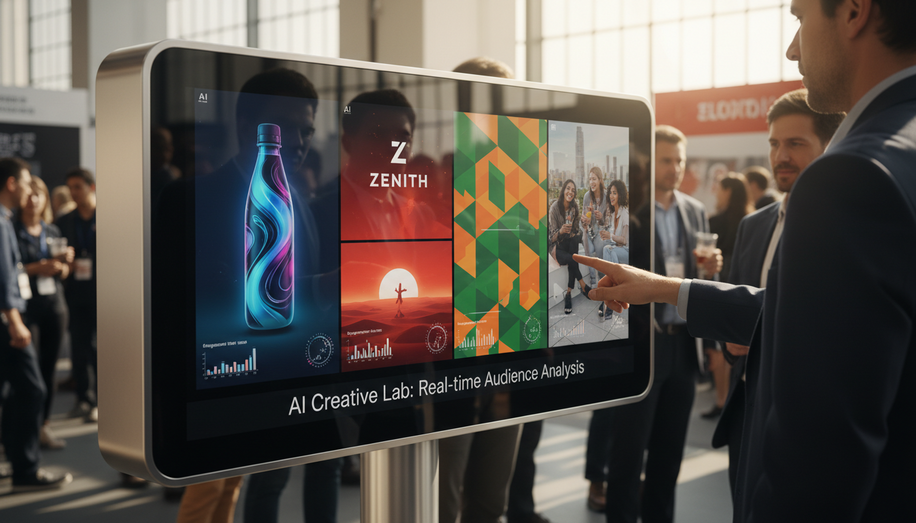

Artificial intelligence is reshaping out-of-home (OOH) advertising by serving as a collaborative creative partner, streamlining the generation of compelling headlines, refining visual designs, and forecasting campaign performance with unprecedented precision. Once confined to brainstorming sessions and manual iterations, OOH creatives now benefit from machine learning algorithms that analyze vast datasets to produce tailored content optimized for billboards, posters, and digital signage. This shift allows designers and copywriters to focus on strategic oversight rather than rote tasks, elevating the quality and efficiency of campaigns in a competitive landscape.
At the heart of AI’s role in OOH is its ability to craft optimized headlines that capture attention in fleeting moments. Tools like AdCreative and Amazon Ads’ agentic AI platforms ingest audience demographics, brand details, and performance history to generate multiple headline variations, complete with explanations of their appeal. For instance, these systems evaluate factors such as readability at high speeds, emotional resonance, and alignment with local contexts, producing concise copy that drives engagement. Amazon’s Creative Studio, for example, draws on retail insights and product data to brainstorm concepts and taglines, ensuring headlines not only intrigue passersby but also align with conversion goals. Copywriters report that this process accelerates ideation, transforming hours of drafting into seconds of generation, followed by human refinement for brand voice.
Visual elements, crucial for OOH’s large-scale impact, undergo similar enhancement through generative AI. Platforms like Canva’s Magic Design and Glorify enable designers to input keywords—such as product attributes or campaign themes—and receive diverse visual concepts, from striking imagery to full billboard layouts. These tools, trained on extensive art datasets, explore styles and compositions that might elude human intuition, broadening creative possibilities while adhering to OOH constraints like limited space and distant viewing. Adobe Creative Cloud integrates AI features in Photoshop and Illustrator to automate refinements, such as enhancing contrast for visibility in varying light or scaling elements for realism. A key advancement is AI billboard mockup generators, like Artificial Studio’s, which place designs into real-world urban contexts without photoshoots or 3D modeling. Designers upload a creative, and the AI renders it on city billboards, revealing issues in scale, typography hierarchy, or messaging at actual viewing distances—validating visuals before production and reducing costly revisions.
Predicting OOH creative performance represents AI’s most transformative edge, bridging design with data-driven foresight. Machine learning models process audience data, traffic patterns, weather conditions, and historical metrics like click-through rates to simulate outcomes. Predictive analytics from platforms like Dragonfly AI and specialized OOH tools forecast impressions and engagement by correlating creatives with real-time movement data from GPS and mobile sources. This allows advertisers to test variations—A/B scenarios for headlines, colors, or layouts—anticipating which will resonate most in specific locations. For example, AI might flag a visually bold design as high-performing during peak traffic but suggest text tweaks for rainy conditions. Early adopters note up to 30% improvements in efficiency, as these insights enable scalable campaigns without extensive field testing.
Integrating AI into OOH workflows demands a structured approach to maximize its partnership potential. Advertisers begin by defining targets: audience profiles, placement locations, and objectives like brand awareness or lead generation. Feeding this data into AI tools yields initial creatives, which teams review for authenticity—ensuring high-quality source materials and clear calls-to-action maintain human polish. Continuous monitoring refines the process; as campaigns launch, performance data loops back to train models, creating a feedback cycle that sharpens future outputs.
Yet, AI’s hype warrants scrutiny in OOH, where simplicity reigns. Videos emphasize that billboards thrive on single, powerful visuals and minimal text to cut through urban clutter, a principle AI must amplify rather than complicate. Tools excelling in predictive traffic analytics deliver tangible value over flashy generators that underperform at scale. Agencies blending AI with creative intuition—using it for ideation and validation, not replacement—report the strongest results, fostering targeted, engaging ads that convert fleeting glances into action.
As OOH evolves, AI stands not as a disruptor but an enhancer, democratizing high-impact design for agencies large and small. By generating, refining, and predicting creatives with data precision, it empowers advertisers to craft experiences that captivate on the move, ensuring outdoor campaigns remain bold, relevant, and measurably superior.