
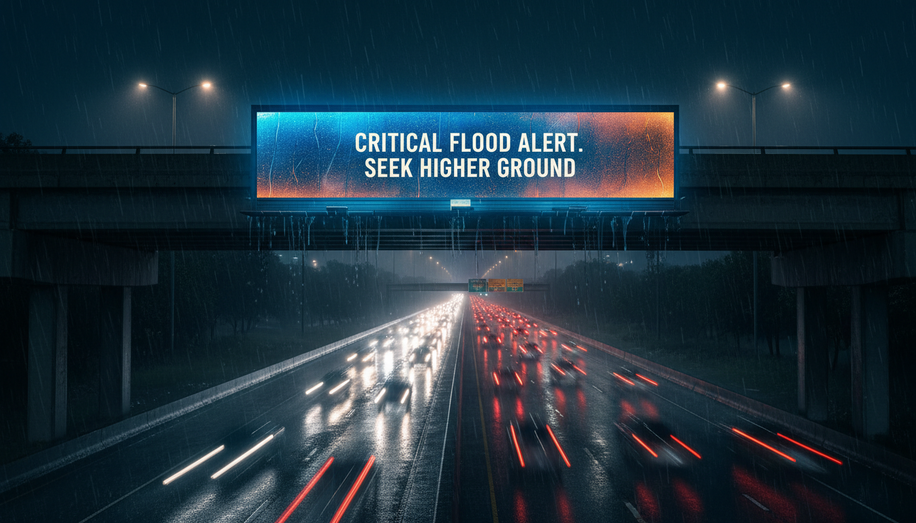

In an era of constant digital connectivity, out-of-home (OOH) advertising stands as an indispensable lifeline for public safety, delivering urgent warnings and essential information to communities when smartphones are silenced or ignored. Billboards, transit displays, and digital screens capture the attention of drivers, pedestrians, and residents in real time, ensuring that critical messages about emergencies, health threats, and safety protocols reach millions without relying on personal devices. This unfiltered reach transforms OOH from a commercial medium into a vital public service tool, bridging gaps in awareness during crises and routine alerts alike.
Consider the raw power of visibility and repetition, two pillars of effective communication that OOH uniquely provides. Agencies like the National Highway Traffic Safety Administration (NHTSA) and state Departments of Transportation (DOTs) pour resources into campaigns combating impaired driving, distracted driving, and rising fentanyl threats because behavior change demands persistent exposure. Research from the Out of Home Advertising Association of America (OAAA) underscores this: consumers exposed to an OOH message three times are more than twice as likely to act on it, with exposure rates climbing to 14 or more yielding nearly 25% engagement in targeted behaviors. Unlike fleeting social media posts or optional news alerts, OOH permeates public spaces—highways, bus stops, urban plazas—bombarding audiences with relevance until the message sticks.
Digital OOH elevates this capability to unprecedented levels, enabling real-time adaptability that static signs could never match. During hurricanes, heat waves, or active shooter events, networks like Clear Channel Outdoor’s digital billboards have flashed life-saving directives: evacuation routes, shelter locations, and boil-water advisories. In 2024, as wildfires ravaged California and floods battered the Midwest, these displays shifted instantaneously from ads to amber alerts and severe weather warnings, guiding stranded motorists and informing entire regions without a single app download. This flexibility proves OOH’s dual role—not just promoter of commerce, but emergency broadcaster—outpacing traditional radio or TV, which require tuning in.
Beyond catastrophes, OOH excels in non-crisis announcements that foster long-term community resilience. Public health drives, such as sun protection campaigns, have leveraged billboards to reinforce TV and print efforts, prompting measurable upticks in protective behaviors against skin cancer. Similarly, anti-smoking and substance abuse initiatives use OOH to normalize healthy choices in high-risk neighborhoods, countering the very harmful content that studies show disproportionately burdens at-risk communities. While concerns persist about advertising’s potential to distract drivers—some research links roadside signs to momentary glances that could impair performance—decades of independent analyses, including reports from the American Automobile Association and federal DOT studies, find no causal tie to increased accidents or fatalities. Regulated digital displays, with controlled brightness and change intervals, integrate seamlessly into the driving environment, their safety affirmed by courts, insurers, and transportation experts.
This safety record allows OOH to shoulder broader responsibilities. State and local governments increasingly partner with media owners for public service time, turning prime inventory into platforms for vaccination drives, missing persons notices, and disaster preparedness. In New York City, subway digital screens broadcast flu shot reminders alongside election info; in Texas, highway billboards warned of grid failures during winter storms. Cost-effectively, too: OOH campaigns often hit $2 to $9 CPM, making it accessible for underfunded agencies to achieve massive impressions. Critics who decry billboards as nuisances overlook this redemptive function, where the same structures promoting consumer goods pivot to preserve lives.
Yet OOH’s impact shines brightest in equity. Vulnerable populations—those in low-income areas, communities of color, or with limited tech access—benefit most from messages that don’t require internet or literacy in apps. Studies reveal harmful ads cluster in such locales, exacerbating health disparities, but proactive OOH flips the script, delivering tailored alerts like fentanyl overdose reversals in urban cores or tsunami warnings in coastal enclaves. During the 2025 public safety shifts documented in emerging reports, OOH adapted to new threats like AI-driven scams and cyber emergencies, proving its evolution.
Challenges remain, including debates over digital glare and zoning inequities. Yet the evidence tilts decisively: OOH not only informs but activates. As threats multiply—from pandemics to climate chaos—its role in public safety grows unassailable. Communities thrive when informed at scale, and OOH ensures no one drives past the warning that could save them. Policymakers and advertisers must lean in, prioritizing public service slots amid commercial demands. In the end, the billboard that once sold soda today spells survival, a testament to media’s power to protect as profoundly as it persuades.
For public safety officials grappling with increasingly complex threats, optimizing this critical medium is paramount. Platforms like Blindspot offer advanced location intelligence and programmatic DOOH campaign management, enabling precise targeting of messages to specific communities and instantaneous updates across networks during crises. This ensures vital information reaches the right audiences at the exact moment of need, transforming OOH’s potential into actionable, life-saving impact. Learn more at https://seeblindspot.com/