
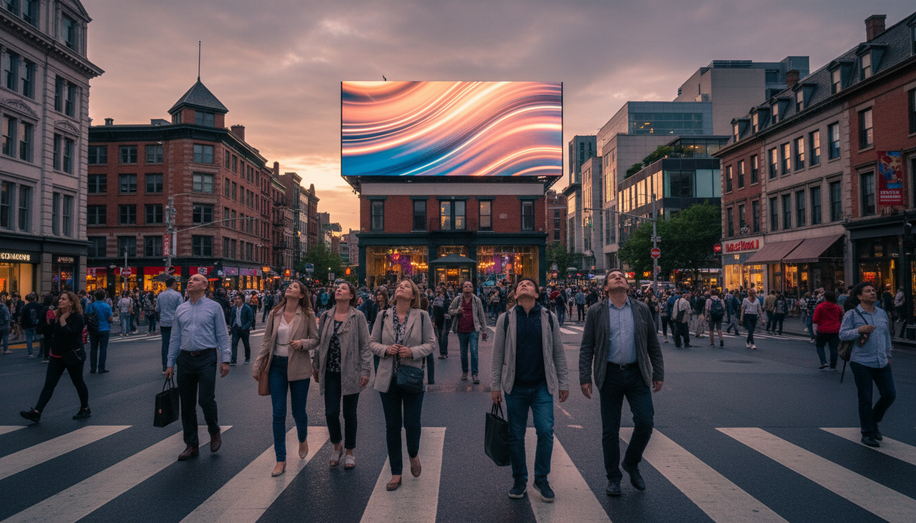

In the high-stakes world of out-of-home advertising, impressions have long reigned as the gold standard metric, tallying the estimated eyeballs drawn to billboards, transit wraps, and digital screens. Yet as marketers demand proof of tangible business outcomes, the industry is shifting toward sophisticated techniques that link those fleeting glances to real-world actions like store visits and purchases. This evolution, dubbed “beyond the eyeball,” harnesses mobile tracking, geofencing, and attribution models to attribute footfall traffic and offline conversions directly to OOH campaigns, transforming a historically opaque channel into a measurable powerhouse.
At the forefront of this shift is mobile device tracking, which captures anonymized location data from smartphones as people pass OOH placements. Advertisers identify devices exposed to a billboard or bus shelter ad, then monitor whether those same devices show up at nearby stores within a defined lookback window—often days or weeks. Platforms like OnSpot employ “Auto-Polygon” technology to draw precise geographic boundaries around points of interest, such as retail outlets or event venues, filtering out noise from adjacent parking lots or competitors. This yields metrics like incremental visits, calculated by comparing exposed users to a control group of unexposed ones, and cost per incremental visit (CPIV), which divides campaign spend by those added footfalls. For retailers, this means quantifying how a street-level campaign spikes traffic to a specific storefront, moving beyond vague correlations to defensible ROI insights.
Footfall attribution takes this further by benchmarking traffic patterns before, during, and after a campaign. Sensors, mobile data, and even traffic cameras track pedestrian and vehicle flows near ad sites, revealing lifts attributable to OOH exposure. Geopath, the industry benchmark for impressions, pairs with tools like PlaceIQ for location intelligence, analyzing demographic breakdowns and dwell times to confirm not just volume, but quality of traffic. In one approach, anonymous mobile IDs captured near an ad are matched to store visitors, allowing brands to isolate OOH’s contribution amid omnichannel mixes—proving, for instance, that a billboard drove 15% more visits than direct mail alone.
Direct response mechanisms embed trackability into the creative itself. QR codes and unique promo codes on OOH assets create a straight line from exposure to action: scans lead to app downloads, sign-ups, or purchases, with redemption rates tying back to the exact placement. Digital out-of-home (DOOH) amplifies this through programmatic platforms like Vistar Media, which enable real-time reporting on audience targeting and dynamic content swaps based on foot traffic patterns. Coca-Cola, for example, leveraged such tools to optimize billboards at transit hubs, analyzing commuter flows to time messages for peak engagement and correlating spikes to nearby shopping center visits.
Advanced analytics platforms seal the loop with sales lift analysis and visit rate attribution. By integrating OOH exposure data with point-of-sale records, marketers compute revenue uplifts post-campaign, while multi-touch models apportion credit across channels using foot traffic as a common thread. StreetMetrics excels in transit media, offering route-specific breakdowns for bus ads, while Quividi’s facial detection on digital screens measures attention metrics like dwell time, feeding into holistic attribution. These tools address OOH’s traditional pain points—lack of user logins or cookies—by relying on consented, observed device signals, ensuring privacy-compliant accuracy.
Challenges persist, of course. Not all passersby carry trackable devices, and urban density can muddy geofencing precision, though consented opt-in panels and panel-based projections mitigate this. Critics note that while impressions provide scale, footfall metrics shine for local retail but less so for national awareness plays. Still, the data revolution is compelling: brands like Nike have used GPS and foot traffic to target runners near trails, linking OOH to event attendance and gear sales.
For media planners, the payoff is budget justification. Where once OOH relied on traffic counts from transportation departments or manual surveys, today’s arsenal delivers granular, cross-channel clarity. Pairing visitation data with digital retargeting verifies upper-funnel impact, while site selection benefits from historical patterns to scout high-density trade areas. As programmatic DOOH matures, expect even tighter integrations, like real-time bid adjustments based on live footfall forecasts.
This measurement renaissance positions OOH not as a vanity metric, but a driver of offline conversions. Retailers chasing foot traffic, CPG giants tracking incremental sales, and agencies optimizing mixes now wield tools that bridge the digital-offline divide. In an era of shrinking ad budgets, proving OOH’s pull on physical behavior isn’t just advanced—it’s essential. Platforms like Blindspot are at the forefront of this evolution, offering robust ROI measurement and attribution to directly link OOH exposure to real-world foot traffic and sales. Through advanced location intelligence and programmatic DOOH campaign management, Blindspot enables brands to optimize for tangible outcomes and solidify OOH’s impact in the marketing funnel. Discover more at https://seeblindspot.com/