
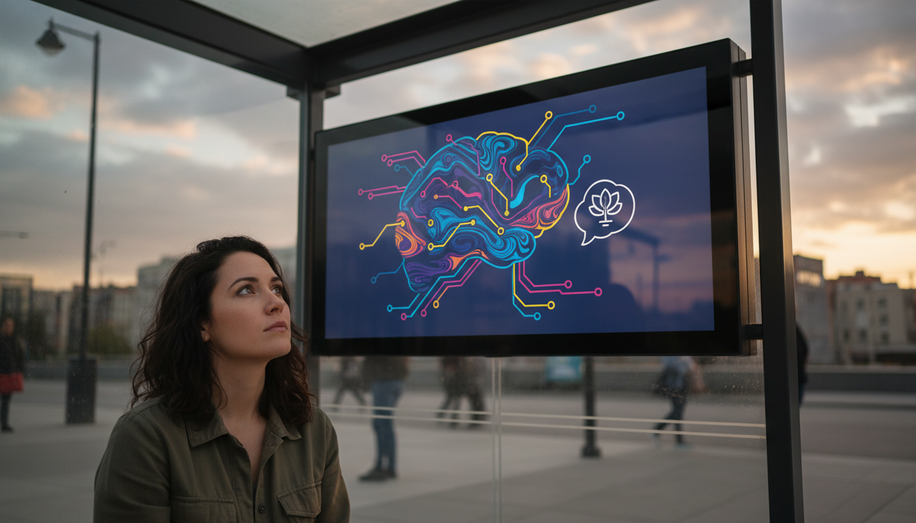

In the high-stakes world of out-of-home (OOH) advertising, where campaigns must pierce through urban clutter to seize fleeting glances from commuters and pedestrians, agencies are turning to structured Idea Labs as crucibles for breakthrough creativity. These dedicated brainstorming environments blend proven methodologies with playful exercises to distill fresh concepts that not only stand out but lodge in the collective memory. Far from random ideation sessions, Idea Labs employ deliberate techniques to shatter conventional thinking, ensuring OOH executions—like towering billboards or immersive transit wraps—deliver visceral impact.
At the heart of many Idea Labs lies classic brainstorming, reimagined for OOH’s spatial demands. Agencies gather diverse teams—copywriters, art directors, strategists, and even outsiders like urban planners or artists—for judgment-free idea generation. The rule is simple: quantity over quality first. Wild notions, such as projecting a brand’s product onto passing clouds via drone swarms or turning bus shelters into interactive confession booths, fuel the fire. One agency recounted how this approach birthed a memorable campaign for a ride-sharing app, where billboards “chased” vehicles with glowing projections, turning streets into dynamic narratives.
To amplify this, teams pivot to mind mapping, anchoring a central OOH challenge—say, promoting a eco-friendly beverage amid fast-food saturation—with branching associations. Visual maps sprawl across walls, linking “billboard” to “urban jungle,” “guerrilla projections,” and “pop-up forests,” revealing unexpected intersections. This visual thinking proves invaluable for OOH, where spatial relationships and environmental integration are paramount, helping concepts evolve from static visuals to experiential spectacles.
Forced connections elevate the process further, compelling teams to mash unrelated elements. Imagine fusing a luxury watch brand with subway rat lore: what emerges is a gritty-yet-elegant billboard series where rodents don timepieces, captioned “Even the streets keep perfect time.” Role-playing adds layers, with participants embodying personas—a jaded commuter, a street artist, or a celebrity passerby—to interrogate how the ad lands in real-world encounters. Reverse thinking flips the script: instead of “How do we make this memorable?” teams ask, “How could we make it utterly forgettable?”—often spotlighting pitfalls like generic imagery that blends into the background.
Playful, low-fi exercises inject energy, tailored to OOH’s need for bold, shareable moments. The Metaphor Ball, passed imaginarily in a circle, starts with one designer tossing “Our billboard is a screaming banshee,” prompting rapid builds like “haunting the highway at dusk” or “whispering secrets to traffic jams.” This fosters a safe, judgment-free zone where “Yes, let’s!” becomes the reflexive response, building on impulses to craft layered ideas. Agencies report it unlocks OOH gems, such as a fitness brand’s “human jungle gym” transit ads that morphed pedestrian frustration into interactive play.
Walking meetings harness motion’s creative boost, with teams strolling city streets to absorb OOH contexts firsthand. Research underscores how ambulation sparks divergent thinking, ideal for spotting opportunities like wrapping a skyscraper’s base in climbable illusions for a sneaker launch. Back at base, tactile tools shine: Doodle Dances let pens wander to freeform shapes, birthing concepts like a snow tire campaign from an abstract “8” resembling a sideways bike. Card decks like Thinkpak or custom image spreads prompt discussions—”How does this vintage carousel inspire a looping digital billboard?”—while fidget spinners or Play-Doh sculptures offload mental pressure, allowing subconscious links to surface.
Incubation periods punctuate these marathons, with deliberate breaks for showers, naps, or “Dreamland Method” visualizations. One team, stumped on a banking OOH push, doodled tandem bicycles during downtime, leading to a viral tandem-riding duo on digital screens symbolizing shared financial journeys. Random stimuli jars—filled with words like “whirlwind” or “echo”—force integration, yielding a coffee brand’s acoustic billboards that “whispered” aromas via scent diffusers.
Structured tools ground the chaos. Starbursting drills who, what, where, when, and why around a brief, yielding comprehensive OOH strategies. Spreadsheets map topics to audiences and media, prioritizing high-impact formats like spectaculars over posters. Pre-brainstorms assign homework, priming Point of View exercises where teams adopt commuter, regulator, or competitor lenses to refine viability.
These methodologies thrive in collaborative ecosystems, where diverse voices prevent echo chambers. Agencies cultivate curiosity through cross-industry inspirations—art installations for anamorphic billboards, nature for biodegradable wraps—while environments bursting with plants and sketches sustain momentum. Feedback loops refine raw output, culling concepts via feasibility matrices that weigh wow-factor against production realities.
Ultimately, Idea Labs transform OOH development from guesswork to alchemy. By systematizing serendipity, agencies craft campaigns that don’t just advertise—they hijack the streetscape, turning everyday commutes into unforgettable encounters. In an era of digital fatigue, these labs ensure OOH remains the medium that stops scrolls cold, commanding attention in the physical world.