
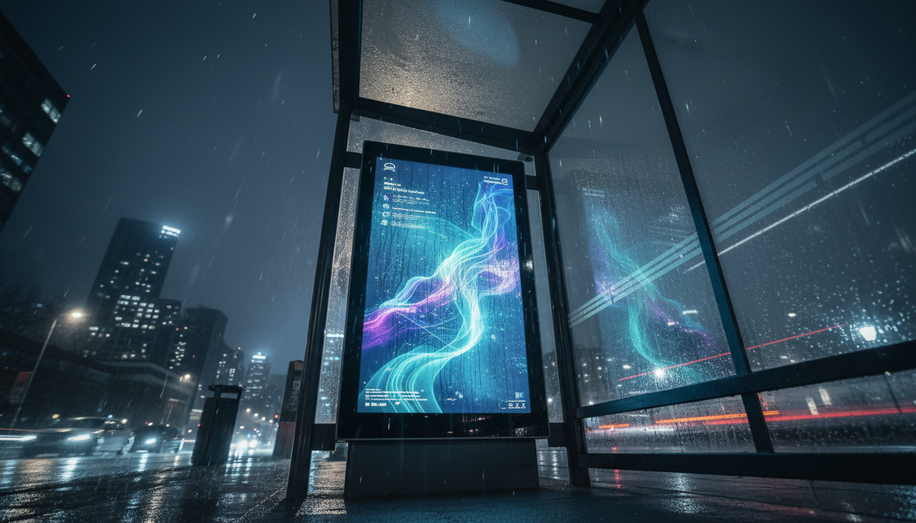

Out-of-Home advertising has long relied on the durability and visibility of physical assets, but the industry is entering a new era where intelligence matters as much as engineering. Artificial intelligence is fundamentally transforming how operators manage digital billboards and signage networks, shifting from reactive maintenance that responds to failures to predictive systems that prevent problems before they occur.
The challenge facing OOH operators has always been straightforward: keep screens running. A failed billboard represents lost revenue, disappointed advertisers, and diminished brand presence in high-traffic locations. Traditional maintenance approaches required constant manual oversight, with technicians responding only after problems emerged—a costly and inefficient model that plagued networks of any significant size. Today, AI-powered predictive maintenance is redefining this operational paradigm entirely.
Modern AI systems continuously monitor the health of every screen in a digital signage network, detecting early warning signs that would otherwise go unnoticed until catastrophic failure. These intelligent platforms track rising temperatures, identify failing pixels, flag connectivity issues, and anticipate hardware degradation with remarkable precision. Rather than waiting for a billboard to go dark, the system automatically generates service tickets before most operators would even realize a problem exists. This proactive approach ensures networks operate at peak performance while dramatically reducing costly downtime.
The financial implications are substantial. While initial investment in AI-powered maintenance systems may be higher than traditional approaches, the long-term cost savings are compelling. Automation reduces labor expenses, predictive analytics minimize emergency repairs, and extended hardware lifespan means advertisers see better returns on their inventory investments. For operators managing city-wide networks of outdoor digital signage, these efficiencies compound across hundreds of screens, creating meaningful competitive advantages.
Beyond simple equipment monitoring, AI enhances operational efficiency through predictive analytics that optimize content scheduling and audience delivery. By analyzing historical engagement data, these systems identify patterns—such as which product promotions perform better at specific times—and automatically recommend optimized content calendars that maximize ROI. This intelligence transforms the Content Management System from a manual scheduling tool into a strategic command center that adapts dynamically to audience behavior and market conditions.
Environmental adaptation represents another crucial application of AI in outdoor digital signage. AI-powered systems use ambient light sensors to continuously measure sunlight intensity throughout the day, automatically adjusting screen brightness to maintain perfect visibility while optimizing energy consumption. As the sun rises, brightness increases automatically; as clouds roll in or evening approaches, the display dims intelligently. This sophisticated environmental response ensures consistent viewer experience while reducing operational costs and extending hardware lifespan—a meaningful consideration for operators managing sustainability goals alongside profitability.
For advertisers using mobile billboards and dynamic placements, AI adds another dimension entirely. These systems analyze GPS data, mobile device signals, and traffic patterns to forecast audience movement in real time, enabling dynamic route optimization that ensures advertisements reach target demographics at peak traffic moments. Rather than following static predetermined routes, AI-powered mobile billboards can adapt their movements to maximize impressions and audience relevance. Some platforms even integrate sentiment analysis, allowing operators to detect viewer mood through camera data and trigger responsive content that addresses audience concerns or emotions.
The competitive landscape is shifting rapidly as operators recognize that the infrastructure supporting screens matters as much as the screens themselves. Networks powered by AI-driven maintenance systems experience fewer unexpected outages, maintain higher advertiser satisfaction, and optimize inventory utilization more effectively than those relying on legacy approaches. Media owners managing diverse placements—billboards, urban panels, transit displays—find that AI facilitates seamless communication across their entire asset portfolio, streamlining operations at scale.
As we move deeper into 2026, the distinction between operators embracing AI-powered predictive maintenance and those maintaining traditional approaches has become stark. The former operate networks characterized by reliability, efficiency, and data-driven optimization. The latter struggle with reactive firefighting, higher costs, and missed revenue opportunities. For OOH media owners and operators seeking sustainable competitive advantage, predictive maintenance powered by artificial intelligence is no longer an emerging technology—it is an operational necessity that separates market leaders from the rest.
As operators increasingly embrace AI for foundational network reliability and efficiency, platforms like Blindspot become essential for leveraging that robust infrastructure into strategic advantage. By providing sophisticated inventory management, comprehensive audience measurement and analytics, and precise ROI measurement, Blindspot empowers OOH media owners to not only ensure their networks are always running but also to dynamically optimize content delivery and strategically maximize the value of every impression and investment. Learn more about optimizing your OOH strategy at https://seeblindspot.com/