
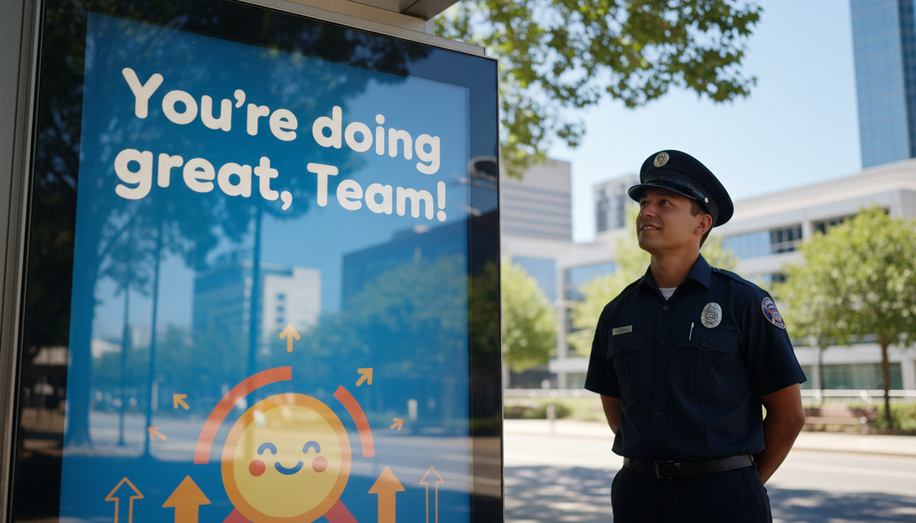

In the sprawling campuses of multinational corporations, where employees dash between buildings, commute across cities, or navigate remote offices, traditional internal communications often fall flat. Emails stack up unread, intranet posts gather digital dust, and town halls reach only those who can tune in. Yet out-of-home (OOH) advertising, long a staple for consumer brands, offers a fresh, unorthodox solution: turning everyday environments into dynamic channels for employee engagement. By deploying bold digital screens, striking billboards, and immersive installations in high-traffic corporate spaces, large organizations can deliver timely, unavoidable messages that foster connection, motivation, and alignment across dispersed workforces.
Consider a global tech firm with 50,000 employees spread over 20 countries. During a pivotal company-wide push for innovation, standard memos might inspire yawns, but a network of OOH displays in parking garages, cafeterias, and shuttle stops could pulse with vivid challenges: “Your Idea Could Change Everything—Scan to Submit Now.” Research underscores why this works. Outdoor media thrives on the peripheral route to persuasion, as outlined in the Elaboration Likelihood Model, where short exposures leverage eye-catching visuals, large fonts, and repetition to bypass deep analysis and spark immediate emotional responses. In corporate settings, this translates to commuters glancing at a highway billboard en route to headquarters or factory workers spotting motivational murals during breaks—moments when minds are receptive but not overwhelmed.
The power lies in OOH’s inherent inescapability. Unlike voluntary digital channels, these formats command attention in transitional spaces: lobbies humming with morning arrivals, elevators ferrying shifts, or even external billboards visible from office windows. Studies show larger ad sizes and strategic placements significantly boost engagement, with general, relatable messages outperforming niche ones. For internal use, this means prioritizing broad appeals like “We’re in This Together: Share Your Wins” over jargon-heavy policy updates. Photography, artwork, and humor further enhance recall, while concise copy—under seven words—ensures readability at speed. A manufacturing giant, for instance, might wrap elevator doors in celebratory graphics highlighting safety milestones, creating a daily ritual of pride that peripheral cues imprint on the subconscious.
Adapting consumer OOH tactics proves especially potent for multi-location firms. Experiential elements, such as interactive kiosks in break rooms where staff snap photos of a 3D company milestone sculpture, transform passive viewing into active participation. These setups build emotional ties akin to brand loyalty campaigns, but directed inward: employees “check in” via QR codes for instant recognition, fueling a sense of belonging. Placement is paramount—high-traffic zones like entry points or cafeterias maximize dwell time, while digital screens enable real-time tweaks, such as swapping messages for quarterly goals or crisis updates. For remote or hybrid teams, OOH extends to partner sites or transit hubs, ensuring a unified narrative. One logistics company reported a 25% uptick in intranet engagement after rolling out synchronized OOH across warehouses, attributing it to the medium’s visual saliency and contextual relevance.
Beyond motivation, OOH excels at behavioral nudges. Create urgency with “Next Shift: Wellness Challenge Starts Now” on rotating factory billboards, or FOMO via limited-time promotions like “First 100 Sign-Ups Get VIP Parking.” Integrate mobile seamlessly—QR codes link to pulse surveys or training modules, turning fleeting glances into actions. This mirrors successful outdoor strategies for busy audiences, emphasizing work-life balance and convenience: think flexible messaging that positions company values as stress relievers amid commutes. Humor softens policy reminders—”Don’t Let Compliance Crash Your Day: Quick Quiz Inside”—while consistent branding reinforces culture, from logos to taglines, making the workplace feel alive and aligned.
Challenges exist, of course. Budgets must justify OOH alongside digital tools, and messaging requires audience insight to avoid overload. Yet for large organizations, the ROI shines in metrics like participation rates and retention. A recent analysis found creative OOH not only raises awareness but persuades action, particularly when visuals dominate and calls-to-action are immediate. Hybrid models amplify this: pair lobby screens with social sharing prompts, encouraging employees to post selfies with campaign hashtags, virally extending reach.
Ultimately, OOH reimagines internal comms as an ambient force, not an interruptive one. In factories echoing with machinery, offices buzzing with hybrid hustle, or campuses sprawling across suburbs, these displays weave corporate purpose into the fabric of daily movement. Large firms ignoring this overlook a tool that engages “on the go,” turning transient employees into invested advocates. As workplaces evolve, OOH stands ready to bridge distances, ignite enthusiasm, and prove that the most overlooked medium might just be the most engaging.