
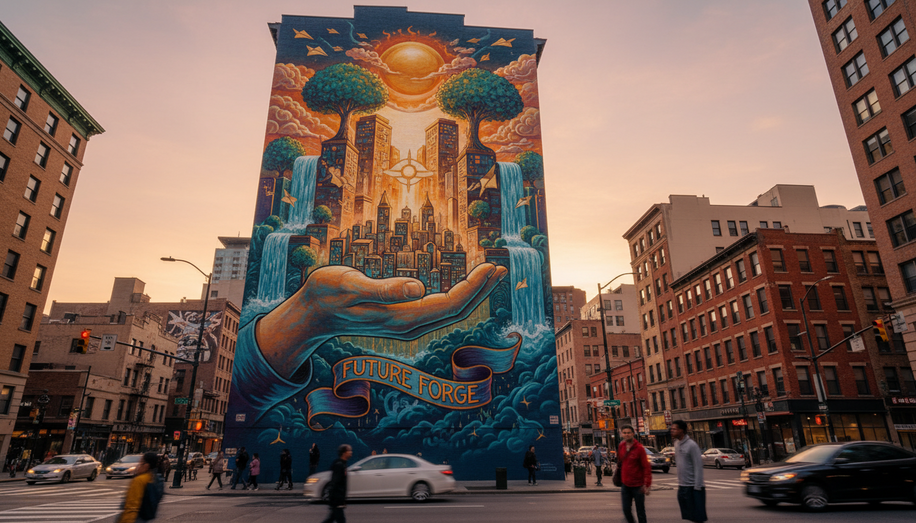

Once relegated to the dustbin of advertising history, hand-painted murals have experienced a remarkable resurgence, proving that in an era dominated by digital screens and algorithmic feeds, the most memorable brand statements often come from the oldest forms of communication. This revival represents far more than nostalgia—it reflects a fundamental shift in how brands connect with audiences seeking authenticity and human craftsmanship in an increasingly commoditized media landscape.
The renaissance of hand-painted outdoor advertising began in earnest in 2004 when Colossal Media, a Brooklyn-based company, made a bold bet on a craft that many in the industry had abandoned. What started as a risky venture has since transformed into a thriving sector, with Colossal now operating as the nation’s largest provider of hand-painted campaigns, maintaining satellite offices across major metropolitan areas and serving as the driving force behind the industry’s resurrection. The company’s success was far from guaranteed—co-founder Paul Lindahl acknowledged the skepticism surrounding the investment, noting that “technology was taking over and there was really no need for hand painting at the time.” Yet Lindahl’s conviction that the craft held intrinsic value proved prescient.
What distinguishes hand-painted murals from their digital and printed counterparts is their inherent capacity to generate genuine human engagement. Unlike static digital displays or pre-printed advertisements, these works operate as performance art. The visible creation process itself becomes part of the brand experience, with painters laboring over several days or weeks in plain view of passersby who pause to witness the transformation. This theatrical element generates organic social media content without relying on manufactured virality—when people encounter artists actively creating a mural, they naturally document and share the experience, lending authenticity that algorithms cannot replicate.
The data underscores this effectiveness. Brands from global giants like Netflix, Apple, and Adidas to local businesses have seen their hand-painted campaigns achieve double-digit million online impressions, with some campaigns reaching over 8.5 million social media engagements. These aren’t metrics born from paid promotion, but rather from the genuine appeal of watching artisans transform urban environments. The murals become landmarks—Instagram destinations, backdrops for editorial shoots, and cultural touchstones that embed brands into the fabric of their communities.
This creative revival also addresses a deeper consumer appetite emerging in 2026. In a society increasingly characterized by instant gratification and device-dependent living, hand-painted murals offer a counterintuitive solution: they ground audiences in their physical environment while simultaneously connecting them online. Consumers are demonstrating hunger for meaningful brand interactions and transparent craftsmanship, qualities that resonate against the sterile efficiency of programmatic advertising.
The economic viability has followed the creative success. What was once dismissed as expensive and slow has become a sought-after premium product. Companies like Colossal have grown from startup uncertainties to operations with over 70 employees (as of 2017), painting 450 to 500 murals annually across major U.S. cities. More significantly, the company established itself as the first outdoor advertising firm built specifically to hire and train full-time sign painters with benefits, ensuring a sustainable pipeline of craftspeople and validating hand-painted advertising as a legitimate career path rather than a temporary trend.
The resurgence also reflects broader design movements converging around humanized visual identity and organic textures—aesthetic priorities increasingly central to contemporary branding strategy. Hand-painted murals naturally embody these values, offering visual authenticity that cannot be algorithmic-generated.
As outdoor advertising continues commanding over $9 billion annually in spending, hand-painted murals represent a distinct and growing segment. These campaigns succeed because they acknowledge what audiences increasingly crave: proof of human effort, emotional resonance, and art that transcends mere commerce. In cutting through digital noise, brands have discovered that the most powerful statement often comes not from innovation, but from revival—reclaiming the craft of hand-painting to create moments that demand attention in an attention-scarce world.