
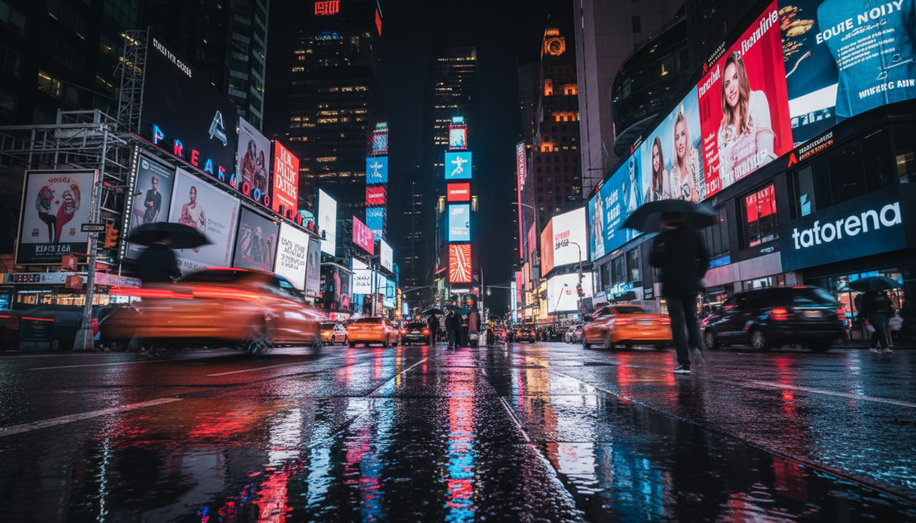

Out-of-home advertising has shed its reputation as an unmeasurable, traditional medium. New research and advanced analytics now demonstrate that strategic budget reallocation toward OOH can deliver substantial returns regardless of business size, making it an essential component of optimized media planning.
A landmark study by the Out of Home Advertising Association of America, conducted by Benchmarketing, reveals the significant untapped potential within existing marketing budgets. The research analyzed budget optimization across three sectors—Automotive, CPG Food, and Retail Grocery—using advanced econometric modeling to assess how incremental OOH increases impact return on ad spend and key brand metrics. The findings challenge conventional media allocation practices and offer a clear roadmap for marketers seeking efficiency gains without inflating overall budgets.
The most striking discovery involves the scale of returns from modest budget shifts. In the Automotive sector, increasing OOH allocation from just one percent to two percent of the media mix generates $52.1 million in overall media plan revenue gains, representing 75 percent of total optimization improvements. For Retail Grocery, a shift from eight percent to 14 percent OOH allocation produces $16.04 million in revenue gains, accounting for 61 percent of optimization benefits. Even in the more budget-constrained CPG Food category, raising OOH from five percent to six percent allocation yields $2.42 million in gains, representing 70 percent of optimization improvements. These results underscore a critical insight: businesses don’t need massive budget increases to improve performance—strategic reallocation is sufficient.
The mechanism driving these gains involves shifting spending away from channels operating beyond optimal efficiency levels, typically television and digital. Rather than advocating for budget expansion, the research supports a measured, incremental approach where small, strategic increases to OOH spending yield near-optimal media performance while decreasing allocation to overspent channels. Notably, the initial incremental increase in OOH generates the largest portion of total optimization gains, suggesting that even modest budget adjustments can produce outsized returns.
Cross-channel analysis further validates OOH’s position within an integrated media mix. Research by WARC demonstrates that including OOH increases sales revenue ROI for search channels by 40 percent and print by 14 percent, positioning OOH as a powerful amplifier of other channels’ effectiveness. When combined with digital and television, OOH spend has been shown to boost overall ROI by up to 27 percent, according to Analytics Partners.
Beyond aggregate returns, success requires strategic implementation aligned with business objectives. Effective OOH campaigns demand precise audience targeting in the physical world, using behavioral data to identify where target demographics move and congregate throughout the day. For retailers, positioning ads near point-of-sale locations can drive immediate purchase intent and measurable foot traffic increases. Young professional audiences might be more effectively reached through subway station and business district placements during commuting hours than through alternative formats.
Format selection should align directly with key performance indicators. Billboards and transit advertising excel at building brand awareness across broad audiences, while place-based media near retail environments target consideration and purchase intent more effectively. Digital out-of-home platforms add flexibility through dynamic content capabilities, enabling real-time message adjustments based on weather, events, or performance metrics.
Measurement has traditionally challenged OOH practitioners, yet modern analytics capabilities now enable comprehensive ROI tracking. Brands can leverage foot traffic analysis, QR code engagement metrics, surveys, and sales lift attribution to quantify campaign impact. Mobile location data and geofencing provide additional insights into audience movement patterns following ad exposure. When OOH integrates with digital campaigns through geotargeted advertising, marketers gain comprehensive cross-channel tracking that reinforces offline messages with online engagement opportunities.
For businesses of any scale, the strategic imperative is clear: OOH represents an underinvested channel with demonstrable efficiency gains available through modest budget reallocation. Rather than viewing OOH as a complementary expense, forward-thinking marketers should treat budget optimization toward OOH as a straightforward path to improved overall media performance, stronger brand metrics, and measurable sales impact across their customer journey.