
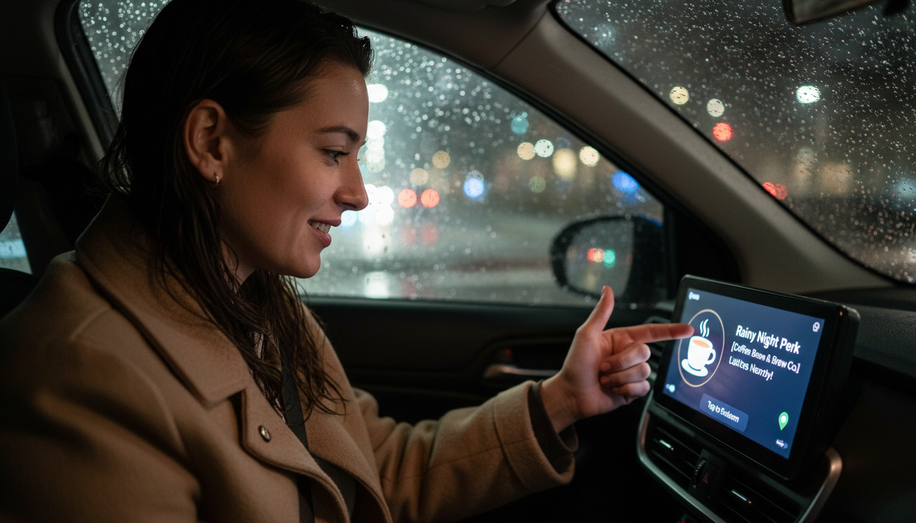

As connected cars evolve from novelty to necessity, out-of-home (OOH) advertising stands at the cusp of a transformative integration, delivering hyper-relevant messages directly into vehicles via infotainment systems, navigation apps, and real-time data streams. With projections estimating 180.9 million connected car drivers in the US by 2028—up from 164.9 million in 2025—this fusion promises to redefine how brands reach motorists and passengers, blending the scale of roadside exposure with the precision of in-car targeting. Industry leaders envision a seamless ecosystem where dynamic billboards “talk” to dashboards, triggering personalized ads based on location, trip intent, and even audio preferences.
The connected car market, propelled by advancing location technology and surging in-vehicle media consumption, is accelerating OOH innovation. Automakers are embedding large infotainment screens and Wi-Fi hotspots as standard features, opening new avenues for advertisers to access vehicle data streams. Kym Frank, president of Geopath, which audits OOH ratings across the US, highlights how these developments enable “limitless possibilities” for targeting. Vehicles can now communicate with digital OOH displays, such as dynamic billboards that comprise up to 50% of US billboard purchases, to serve contextually optimized creative. Frank predicts two-way interactions will become routine: a car signals its approach to a billboard, which in turn pushes in-app promotions to the driver’s interface, creating a holistic travel experience.
Real-world campaigns already demonstrate this potential. McDonald’s geofenced hundreds of billboards, pairing them with complementary ads on the Waze navigation app for drivers entering defined zones; over 8,400 users opted to navigate to nearby locations. Waze’s integration with Apple CarPlay has amplified its role, leveraging navigation intent—distinct from mere location data—to guide consumers to physical stores. This navigation-driven approach marks a shift from passive exposure to action-oriented marketing, where brands predict and influence journeys in real time.
Deeper data integration is unlocking even richer opportunities. Platforms like Otonomo aggregate connected car signals, including trip histories, location patterns, and in-cabin behaviors such as audio usage, to measure OOH exposure’s true impact. Advertisers gain analytics that link roadside impressions to in-vehicle engagement, proving return on investment amid rising media fragmentation. Meanwhile, acquisitions like inMarket’s purchase of Thinknear’s connected car ad division from Telenav enable location-specific offers delivered directly in parking lots of major retailers, bridging OOH with automotive ecosystems.
Mobility media extends this vision beyond private vehicles. Rideshare platforms and in-car screens are deploying AI-driven “trip intent” analytics to serve hyper-targeted content—think food delivery ads for evening commuters or event promotions for nightlife-bound passengers. Vugo, a leader in this space, combines these with real-time adjustments, outpacing static billboards by responding to live trends and optimizing mid-campaign. Firefly and Nickelytics push boundaries further with data-first networks for digital car-top displays and wrapped vehicles, incorporating GPS tracking for attribution.
Automotive brands themselves are fueling the synergy. Outfront Media notes that nine in ten adults encounter OOH ads monthly, making it ideal for dealership promotions near highways and transit hubs. Cadillac’s campaign for the Escalade IQ electric vehicle spanned liveboards, video urban panels, and a Times Square “roadblock,” immersing audiences in high-impact environments. These efforts not only boost awareness but drive foot traffic, especially as tariffs and market shifts demand precise messaging.
Yet challenges persist. Privacy concerns loom large as data from connected cars—encompassing everything from speed and routes to passenger demographics—fuels targeting. Regulations and consumer opt-ins will shape scalability, while automakers balance OEM partnerships with ad revenue streams like infotainment licensing. Still, the momentum is undeniable. As in-car entertainment emerges as the next attention frontier, OOH evolves from roadside shouts to intimate, data-enriched conversations.
Looking ahead, omnichannel integration will dominate. RADARConnect-like tools extend billboard reach via mobile retargeting, following OOH viewers with digital follow-ups. Brands blending in-vehicle ads with social retargeting or push notifications create seamless journeys, turning exposure into measurable action. Geopath’s Frank sums it up: “We are at the very beginning of seeing what is possible and measuring those impacts.” For OOH publishers and advertisers, the connected car isn’t just a vehicle—it’s the ultimate mobile canvas, propelling the industry toward a future of precision, relevance, and unprecedented engagement.