
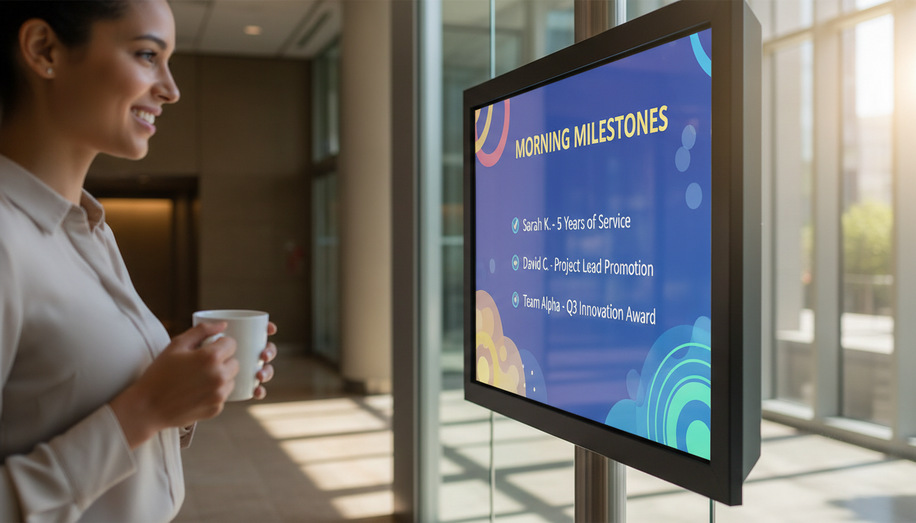

In the bustling corridors of modern corporate headquarters, digital screens flicker not with consumer ads, but with messages tailored for the people who power the business: employees. Out-of-home (OOH) advertising, long a staple for capturing public attention on billboards and transit hubs, is finding a bold new role inside company walls. Forward-thinking organizations are deploying digital displays, murals, and internal billboards to communicate updates, celebrate achievements, and nurture a sense of belonging, turning everyday spaces into dynamic hubs of engagement.
This shift taps into the hyper-local precision of place-based OOH, where ads thrive in high-dwell environments like office lobbies, elevators, and break rooms. Unlike fleeting emails or intranet posts, these visual spectacles demand attention during natural pauses in the workday—coffee runs, elevator rides, or lunch queues. A tech education startup, for instance, placed transit-style ads inside metro trains and buses to target students and professionals, building awareness in confined spaces with extended dwell times. Scaled internally, this approach could transform company cafeterias into morale-boosting arenas, with screens flashing real-time kudos for team wins or wellness tips synced to seasonal needs.
Consider the mechanics: digital out-of-home (DOOH) screens, already proven in public campaigns, adapt seamlessly to corporate settings. Mad Mex’s restaurant chain used store-level sales data to dynamically tailor ads—emphasizing taste, health, or value based on local trends—driving a 9% sales uplift. Imagine HR applying similar programmatic logic to employee communications: screens in a manufacturing plant shifting from safety reminders during shifts to recognition of production milestones at day’s end. DoorDash blended static and video OOH with mobile retargeting to boost recruitment intent by 6% and consideration by 22%. Internally, such tactics could retarget staff via company apps after exposure, reinforcing messages like open enrollment deadlines or volunteer opportunities.
Real-world precedents hint at the potential. Place-based OOH in gyms, elevators, and office buildings allows hyper-local targeting, delivering context-specific content where audiences linger. A skincare brand’s bus shelter campaign in New York saw a 25% rise in QR scans from clear calls-to-action amid urban foot traffic. Translated to a corporate campus, QR codes on lobby murals could link to internal training videos or feedback surveys, fostering participation without disrupting workflows. Jack in the Box’s proximity targeting within a 2-mile radius of stores drew 1.3 million customers using vivid video creatives indoors and out. Companies could mirror this by geo-fencing digital signs near high-traffic internal zones, like near time clocks, to promote town halls or highlight peer-nominated “employee of the month.”
Leadership buy-in amplifies the impact. At A+E Networks EMEA, the managing director records smartphone videos for biweekly updates via an internal app, breaking down barriers between executives and staff. Pair this with OOH flair: a towering internal billboard replaying the CEO’s clip alongside live metrics, like “Our Q1 revenue up 15%—thanks to you!” Woodies DIY retailer publishes a CEO blog every Thursday at 3 p.m., reaching 1,400 employees directly and contributing to 12 Great Place to Work awards. Elevate it with DOOH: dynamic screens rolling out the blog in visually punchy formats, complete with polls like “What’s your take on our new sustainability push?” Such integrations make dry updates feel celebratory, boosting morale amid hybrid work challenges.
The creative edge of OOH seals the deal. Nike’s 3D Tokyo billboard unveiling Air Max shoes created viral suspense, turning a local display into a global sensation. Internally, a product launch could feature a lobby screen “unboxing” new company initiatives with immersive animations, sparking buzz before all-hands meetings. Roku’s holiday DOOH quips about escaping in-laws resonated through timely, updatable digital messaging. For employee engagement, screens could pivot from “Summer picnic Friday!” to “Wellbeing Wednesday yoga signup,” mirroring JUST Egg’s flu-season tweaks outside grocery stores.
Challenges persist, of course. Content must avoid overload—rotating messages every 7-10 seconds keeps eyes engaged without annoyance. Measurement draws from external successes: Church’s Texas Chicken generated 2.4 million store visits from 19.6 million impressions via location data. Internal analytics could track footfall via screen sensors or QR redemptions, quantifying engagement lifts. Privacy matters too; anonymized data ensures compliance while personalizing, say, shift-specific safety alerts.
Yet the rewards are clear. In an era of remote and hybrid teams, OOH bridges the physical gap, making intangible culture tangible. UNiDAYS’ UK-wide OOH blitz for students across undergrounds, buses, and halls doubled awareness and intent. A corporate equivalent—murals in parking garages welcoming night shifters with personalized shoutouts—could reclaim that “watercooler” magic. As workplaces evolve, OOH’s untapped internal power promises not just informed employees, but inspired ones, driving retention and productivity from the inside out. Companies ignoring this overlook a canvas already primed for impact.
For organizations ready to transform their internal spaces into dynamic communication hubs, advanced platforms become indispensable. Blindspot offers the programmatic DOOH campaign management capabilities to dynamically tailor messages – from real-time kudos to critical safety alerts – ensuring content resonates with specific employee groups and moments. With robust real-time performance tracking and audience analytics, companies can precisely measure engagement, optimizing their internal OOH strategy to truly inspire and inform their workforce from within. Learn more at https://seeblindspot.com/