
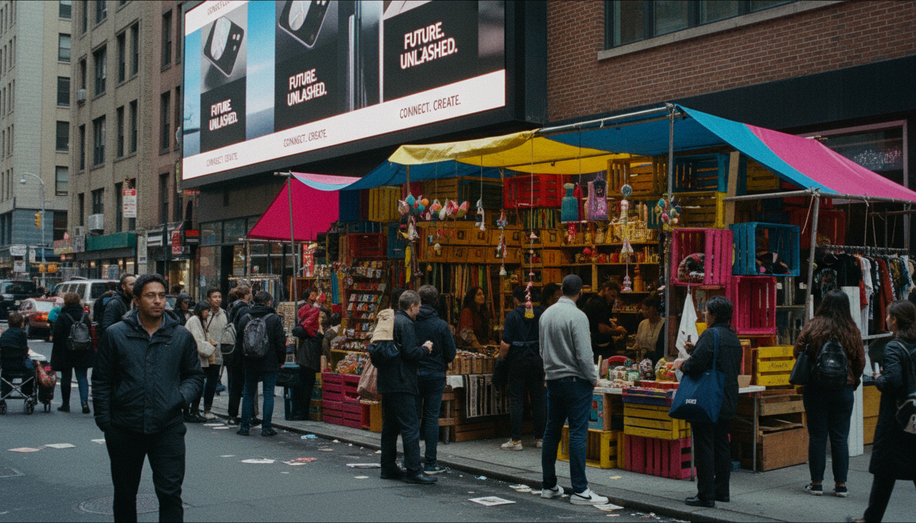

In the fast-paced world of retail, where permanence feels increasingly optional, pop-up shops have emerged as fleeting yet formidable powerhouses, captivating audiences with their impermanence and experiential allure. These temporary retail ventures—ranging from mobile trucks to immersive brand activations—thrive on urgency, drawing crowds through a potent mix of novelty and exclusivity. But what truly amplifies their reach? Out-of-home (OOH) advertising, the bold billboards, transit wraps, and digital displays that blanket urban landscapes, serving as the indispensable spark to ignite awareness and funnel foot traffic directly to these ephemeral doorsteps.
OOH’s role in pop-up success is rooted in its unmissable presence and proven recall. With 98% of consumers exposed to OOH weekly, it ensures brands cut through digital noise, achieving over 80% recall rates—far surpassing mobile and social ads at around 50%. For pop-ups, this translates to immediate buzz: research shows fashion and apparel pop-ups boost nearby foot traffic by 42%, with 46% increases in sales and social media engagement during activations. Nearly 80% of consumers have engaged with an OOH ad in the past 60 days, priming them for real-world action like visiting a limited-time store. Consider Warby Parker’s “Class Trip,” a repurposed school bus that roamed cities as a traveling pop-up. Paired with strategic OOH placements teasing its route, it tested markets, gathered feedback, and built early loyalty without the commitment of bricks-and-mortar.
The synergy shines in measurable outcomes. Pop-ups hosting fashion events see 150% spikes in social engagement and 18% conversion rates—outpacing permanent stores’ 11%—while 29% more new customers emerge post-event. OOH drives this by creating FOMO, the fear of missing out that accounts for up to 60% of pop-up sales. A skincare direct-to-consumer brand, for instance, used mobile pop-ups with NFC-linked OOH promos, lifting regional sales 62% in two weeks by bridging offline visits to online purchases. Globally, the pop-up market is projected to hit $95 billion in sales by 2025, with 80% of retailers deeming them successful and 58% planning repeats. OOH amplifies this flexibility: short-term digital out-of-home (DOOH) campaigns allow real-time tweaks via geo-targeting and QR codes, tracking foot traffic lifts and optimizing on the fly.
Brands leverage OOH’s wide reach for hyper-local precision, turning pop-ups into cultural magnets. Nordstrom’s dedicated NYC flagship pop-up space signals retail’s embrace of the format for more than sales—it’s about community, testing, and visibility, yielding 63% boosts in brand awareness and customer ties. Benemart’s supermarket-themed activation, with its pink decor and Instagrammable baskets, drew crowds via OOH teasers that framed it as a must-visit spectacle, sparking media coverage and social shares. Similarly, the NYC Marathon pop-up festival used transit ads and street displays to rally runners, brands, and locals, fostering collaborations that extended loyalty beyond the event. In a post-pandemic era craving connection, 73% of shoppers prefer physical touchpoints, and OOH funnels them there, enhancing omnichannel strategies where 58% follow brands online after buying.
This partnership excels in cost-effectiveness and adaptability. Pop-ups slash overhead with short leases and modular setups, while OOH delivers low CPMs and high ROI, synergizing with digital for extended reach. Mobile units—branded trucks hitting high-traffic zones—pair perfectly with programmatic DOOH, enabling promo codes tied to locations for precise attribution. Fashion, beauty, and DTC brands dominate, using OOH for launches and seasonal pushes, validating demand in new demographics without long-term risk. IKEA and others test layouts and pricing via these labs, refining for scale.
Yet, the magic lies in buzz generation. Pop-ups’ transience sparks curiosity, but OOH provides the siren call—visually striking creatives tied to cultural moments that go viral organically. A 51% market visibility surge accompanies 46% engagement jumps, as seen in apparel activations. Local tie-ins amplify this: with 82% of consumers backing community businesses, OOH spotlights pop-ups in partner stores, building trust through hands-on demos and influencer meet-ups.
As retail evolves, OOH remains the crucial accelerator for pop-up power. It doesn’t just advertise; it mobilizes, converting passive passersby into eager participants. In 2025’s projected boom, brands ignoring this duo risk fading into permanence’s shadow, while savvy ones harness it to drive not just traffic, but lasting loyalty.